Saudi Arabia warns of regional escalation as it doubles down on Palestinian statehood demand
Riyadh signals growing alarm over Middle East instability, condemns violence in Gaza and Lebanon while reaffirming that any durable peace must include an independent Palestinian state
SYSTEM-DRIVEN dynamics define this story: the evolving regional security and diplomatic framework in the Middle East, where state positions on the Israel–Palestine conflict continue to shape broader geopolitical stability, escalation risks, and diplomatic alignment.
What is confirmed is that Saudi Arabia has publicly warned of worsening regional conditions while simultaneously reaffirming its long-standing position that a sovereign Palestinian state is a prerequisite for lasting peace.
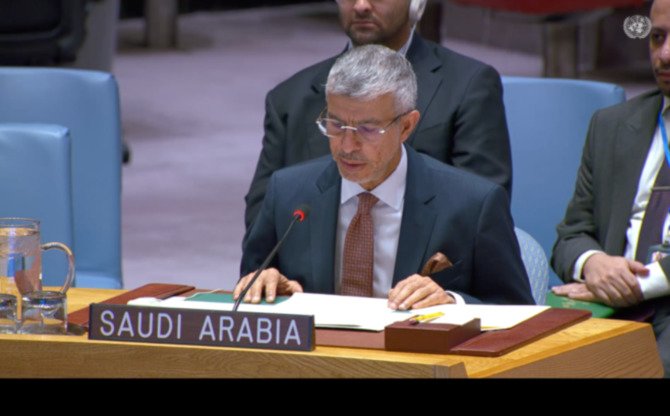
The statement was delivered at the United Nations through the kingdom’s permanent representative, who outlined Riyadh’s assessment of current instability and its diplomatic priorities.
The key issue is that Saudi Arabia is linking multiple overlapping conflict fronts into a single warning about systemic deterioration.
The kingdom condemned Israeli military actions in Gaza and Lebanon, describing them as contributing to regional instability, while also criticizing Iranian attacks on civilian infrastructure and their broader human impact.
This dual framing reflects Saudi Arabia’s attempt to position itself as opposing escalation from multiple regional actors rather than aligning with any single bloc.
At the core of the statement is a reaffirmation of Saudi Arabia’s central political demand: the establishment of a Palestinian state based on pre-1967 borders, with East Jerusalem as its capital.
Riyadh also reiterated its rejection of unilateral actions that could alter the legal or historical status of Jerusalem and its Islamic holy sites, as well as its opposition to settlement expansion in occupied territories.
The statement comes amid a period of intensified regional volatility, including sustained violence in Gaza and periodic cross-border escalation involving Lebanon.
Saudi officials framed these developments as undermining the prospects for a negotiated settlement and increasing the risk of broader destabilization across the Middle East.
Beyond immediate conflict dynamics, Saudi Arabia also emphasized that peace requires specific structural steps: a ceasefire, prevention of forced displacement, withdrawal from Gaza, and restoration of a political pathway toward Palestinian statehood.
This positions Riyadh’s stance not as symbolic diplomacy but as a conditional framework for regional normalization.
The broader implication is that Saudi Arabia is reinforcing its role as a central diplomatic actor in the Palestinian issue while simultaneously signaling that continued escalation by any party threatens wider regional stability.
This posture is consistent with its recent efforts to shape international consensus around a two-state solution as a prerequisite for broader Middle East normalization and security.
In practical terms, the statement underscores a hardening of diplomatic lines: Saudi Arabia is explicitly tying regional stability to progress on Palestinian statehood while warning that continued military escalation across multiple fronts risks further deterioration of the regional order.
What is confirmed is that Saudi Arabia has publicly warned of worsening regional conditions while simultaneously reaffirming its long-standing position that a sovereign Palestinian state is a prerequisite for lasting peace.
The statement was delivered at the United Nations through the kingdom’s permanent representative, who outlined Riyadh’s assessment of current instability and its diplomatic priorities.
The key issue is that Saudi Arabia is linking multiple overlapping conflict fronts into a single warning about systemic deterioration.
The kingdom condemned Israeli military actions in Gaza and Lebanon, describing them as contributing to regional instability, while also criticizing Iranian attacks on civilian infrastructure and their broader human impact.
This dual framing reflects Saudi Arabia’s attempt to position itself as opposing escalation from multiple regional actors rather than aligning with any single bloc.
At the core of the statement is a reaffirmation of Saudi Arabia’s central political demand: the establishment of a Palestinian state based on pre-1967 borders, with East Jerusalem as its capital.
Riyadh also reiterated its rejection of unilateral actions that could alter the legal or historical status of Jerusalem and its Islamic holy sites, as well as its opposition to settlement expansion in occupied territories.
The statement comes amid a period of intensified regional volatility, including sustained violence in Gaza and periodic cross-border escalation involving Lebanon.
Saudi officials framed these developments as undermining the prospects for a negotiated settlement and increasing the risk of broader destabilization across the Middle East.
Beyond immediate conflict dynamics, Saudi Arabia also emphasized that peace requires specific structural steps: a ceasefire, prevention of forced displacement, withdrawal from Gaza, and restoration of a political pathway toward Palestinian statehood.
This positions Riyadh’s stance not as symbolic diplomacy but as a conditional framework for regional normalization.
The broader implication is that Saudi Arabia is reinforcing its role as a central diplomatic actor in the Palestinian issue while simultaneously signaling that continued escalation by any party threatens wider regional stability.
This posture is consistent with its recent efforts to shape international consensus around a two-state solution as a prerequisite for broader Middle East normalization and security.
In practical terms, the statement underscores a hardening of diplomatic lines: Saudi Arabia is explicitly tying regional stability to progress on Palestinian statehood while warning that continued military escalation across multiple fronts risks further deterioration of the regional order.