Trump Announces Review of US Troop Reduction in Germany
President Trump reveals consideration for a decrease in the number of American troops stationed in Germany, sparking debate over military presence and NATO alliances.
Washington, D.C. - President Donald Trump has announced that his administration is examining the possibility of reducing the United States' troop presence in Germany.
In a statement posted on Truth Social, Trump stated, "The United States is studying and reviewing the possible reduction of Troops in Germany, with a determination to be made over the next short period of time".
A senior White House official had previously indicated that Trump has discussed the removal of some US troops from Europe.
As of December 2025, according to data from the US Defense Manpower Data Center (DMDC), there are just over 68,000 active-duty military personnel stationed permanently in overseas bases across Europe.
More than half of these troops, approximately 36,400, are based in Germany.
This number pales in comparison to the 250,000 US troops that were stationed in Germany in 1985, before the fall of the Berlin Wall and the end of the Cold War.
The potential reduction has arisen amid ongoing tensions between Trump and German leaders.
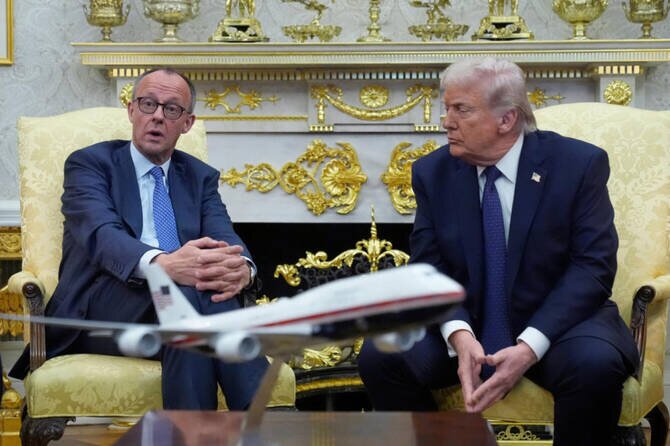
Recently, Trump engaged in a dispute with German Chancellor Friedrich Merz concerning Iran's response to the war initiated by the US and Israel.
Trump criticized Merz for suggesting that Iran was humiliating the US during negotiations to end the conflict.
Despite this exchange, both sides maintain that their relationship remains good.
In response to these developments, Germany's top general, Carsten Breuer, met with US defense officials to discuss Berlin’s new military strategy, which aims to position Germany as Europe’s largest conventional force outside of NATO since World War II.
The German document outlining this strategy was praised by Defense Undersecretary Elbridge Colby for demonstrating a clear path forward and indicating that Germany is taking on a leadership role within the alliance.
Breuer reported that US officials showed appreciation for Germany's commitment to increasing its military capabilities and assuming a greater leadership position in NATO.
There has been no official comment from the German embassy or the Pentagon regarding Trump’s statement.
Trump has long criticized European countries, including Germany, for not investing sufficiently in their defense.
Tensions have further escalated as NATO allies refused to provide the support requested by Trump for the conflict against Iran.
Additionally, his attempt to acquire Greenland from Denmark has strained political ties.
Jeff Rathke, a former US diplomat and president of the American-German Institute at Johns Hopkins University, noted that the US military benefits significantly from its forward presence in overseas bases, including Ramstein in Germany.
Rathke emphasized that these forces are not merely a charitable contribution to ungrateful allies but are integral to America's global military reach.
Despite Trump’s occasional social media posts suggesting withdrawal from NATO or troop reductions, the working relationship between US and German military officials remains strong.
In a statement posted on Truth Social, Trump stated, "The United States is studying and reviewing the possible reduction of Troops in Germany, with a determination to be made over the next short period of time".
A senior White House official had previously indicated that Trump has discussed the removal of some US troops from Europe.
As of December 2025, according to data from the US Defense Manpower Data Center (DMDC), there are just over 68,000 active-duty military personnel stationed permanently in overseas bases across Europe.
More than half of these troops, approximately 36,400, are based in Germany.
This number pales in comparison to the 250,000 US troops that were stationed in Germany in 1985, before the fall of the Berlin Wall and the end of the Cold War.
The potential reduction has arisen amid ongoing tensions between Trump and German leaders.
Recently, Trump engaged in a dispute with German Chancellor Friedrich Merz concerning Iran's response to the war initiated by the US and Israel.
Trump criticized Merz for suggesting that Iran was humiliating the US during negotiations to end the conflict.
Despite this exchange, both sides maintain that their relationship remains good.
In response to these developments, Germany's top general, Carsten Breuer, met with US defense officials to discuss Berlin’s new military strategy, which aims to position Germany as Europe’s largest conventional force outside of NATO since World War II.
The German document outlining this strategy was praised by Defense Undersecretary Elbridge Colby for demonstrating a clear path forward and indicating that Germany is taking on a leadership role within the alliance.
Breuer reported that US officials showed appreciation for Germany's commitment to increasing its military capabilities and assuming a greater leadership position in NATO.
There has been no official comment from the German embassy or the Pentagon regarding Trump’s statement.
Trump has long criticized European countries, including Germany, for not investing sufficiently in their defense.
Tensions have further escalated as NATO allies refused to provide the support requested by Trump for the conflict against Iran.
Additionally, his attempt to acquire Greenland from Denmark has strained political ties.
Jeff Rathke, a former US diplomat and president of the American-German Institute at Johns Hopkins University, noted that the US military benefits significantly from its forward presence in overseas bases, including Ramstein in Germany.
Rathke emphasized that these forces are not merely a charitable contribution to ungrateful allies but are integral to America's global military reach.
Despite Trump’s occasional social media posts suggesting withdrawal from NATO or troop reductions, the working relationship between US and German military officials remains strong.