Bali Struggles with Trash Pileup After Landfill Closure
Indonesia's resort island faces a growing waste crisis as the government enforces a ban on open landfills.
Bali, Indonesia: The picturesque resort island of Bali is facing an environmental challenge as its largest landfill was declared off-limits for organic waste in April.
This move by the government aims to enforce a longstanding ban on open tips.
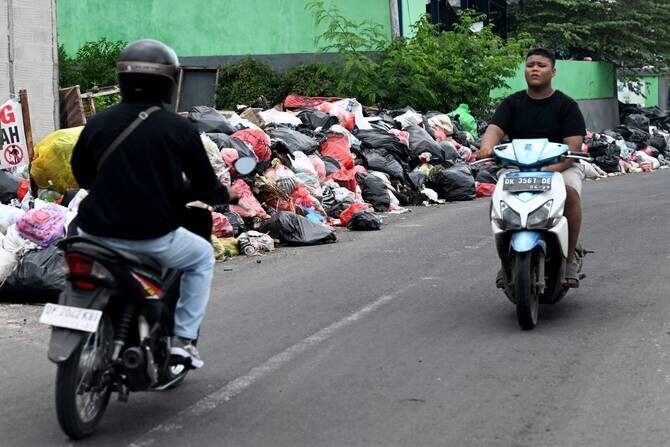
However, without immediate alternatives provided, trash is accumulating in the streets, attracting rats and being set alight by frustrated residents, causing health concerns.
Yuvita Anggi Prinanda, a 34-year-old business owner of a flower stall, has taken matters into her own hands by paying a private company to remove the waste from near her stall.
The waste generated daily at her shop alone amounts to approximately four large black bags filled with organic materials such as leaves and flower cuttings.
Bali produces an estimated 3,400 tons of daily garbage output.
The ban on open landfills in Indonesia has been in place since 2013, but its implementation is now being fully pursued.
The island's waste problem is further exacerbated by the influx of around seven million tourists annually, significantly exceeding Bali's native population of approximately 4.4 million people.
The local government faces criticism for not addressing the issue adequately.
Sanitation workers protested on April 16 by driving waste-filled trucks to the governor’s office in a bid to highlight their plight.
The government responded by allowing limited disposal at Suwung as a temporary measure until July, with plans to end all open landfills nationwide from August.
Nur Azizah, a waste management expert from Gadjah Mada University, points out that the Suwung landfill is already overcapacity and poses risks due to high levels of organic waste.
She emphasizes the need for public education on proper waste management practices such as composting to tackle the issue effectively.
The government aims to break ground on several waste-to-energy projects in June, including one in Bali capable of processing about 1,200 tons of waste daily.
However, these projects are expected to take years to become operational, highlighting the immediate need for sustainable solutions to manage Bali's growing waste crisis.
This move by the government aims to enforce a longstanding ban on open tips.
However, without immediate alternatives provided, trash is accumulating in the streets, attracting rats and being set alight by frustrated residents, causing health concerns.
Yuvita Anggi Prinanda, a 34-year-old business owner of a flower stall, has taken matters into her own hands by paying a private company to remove the waste from near her stall.
The waste generated daily at her shop alone amounts to approximately four large black bags filled with organic materials such as leaves and flower cuttings.
Bali produces an estimated 3,400 tons of daily garbage output.
The ban on open landfills in Indonesia has been in place since 2013, but its implementation is now being fully pursued.
The island's waste problem is further exacerbated by the influx of around seven million tourists annually, significantly exceeding Bali's native population of approximately 4.4 million people.
The local government faces criticism for not addressing the issue adequately.
Sanitation workers protested on April 16 by driving waste-filled trucks to the governor’s office in a bid to highlight their plight.
The government responded by allowing limited disposal at Suwung as a temporary measure until July, with plans to end all open landfills nationwide from August.
Nur Azizah, a waste management expert from Gadjah Mada University, points out that the Suwung landfill is already overcapacity and poses risks due to high levels of organic waste.
She emphasizes the need for public education on proper waste management practices such as composting to tackle the issue effectively.
The government aims to break ground on several waste-to-energy projects in June, including one in Bali capable of processing about 1,200 tons of waste daily.
However, these projects are expected to take years to become operational, highlighting the immediate need for sustainable solutions to manage Bali's growing waste crisis.