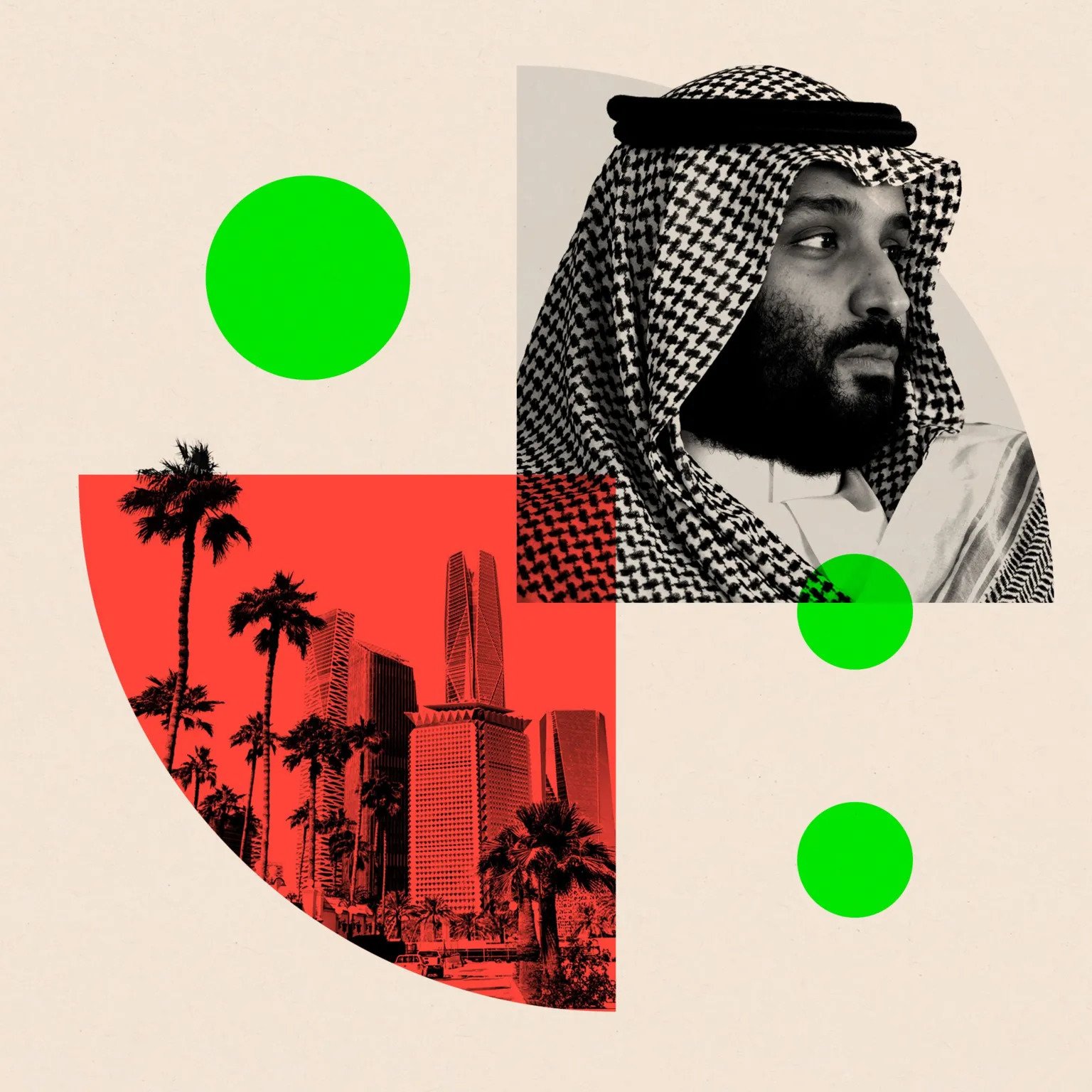
Saudi Arabia’s Megaproject Slowdown Signals the Limits of Its Spending Spree
A wave of fiscal pressure, regional instability, and project reprioritization is forcing Riyadh to scale back or pause flagship Vision 2030 developments, including NEOM’s most ambitious elements.
The story is system-driven: a structural shift in Saudi Arabia’s state-led investment model under fiscal pressure is reshaping the kingdom’s Vision 2030 development agenda and constraining its flagship megaproject pipeline.
Saudi Arabia’s decade-long push to transform its economy through massive state-directed spending is entering a phase of retrenchment as fiscal constraints, rising regional risk, and project overruns converge.
What is confirmed across recent reporting is a broad reassessment of the kingdom’s most ambitious developments, especially those tied to the Public Investment Fund and the NEOM giga-project in the northwest of the country.
NEOM’s most symbolic component, The Line—a planned 170-kilometre linear city designed to house millions—has seen further delays and restructuring.
Recent reporting indicates that additional construction has been paused or pushed beyond 2030, with the project effectively reduced to limited early-stage development rather than the original full-scale buildout.
Earlier ambitions to rapidly populate the city have been sharply revised downward, with internal targets reduced repeatedly as costs, logistics, and feasibility concerns mounted.
The core issue is not a single cancellation but a progressive contraction of scope.
At the same time, other NEOM components have been reprioritized.
Industrial and infrastructure-focused zones such as Oxagon are receiving continued investment, while tourism-heavy or prestige-driven elements, including mountain resort developments, have been delayed.
This reflects a broader shift from symbolic megastructures toward economically utilitarian infrastructure that can generate nearer-term returns or strategic value.
Parallel to NEOM’s slowdown, Saudi Arabia has also moved to restrain external spending commitments tied to its broader investment ecosystem.
Recent reporting indicates that the government has frozen new consultancy contracts in certain cases and delayed payments to major advisory firms, signaling tighter control over cash outflows.
These measures align with a wider fiscal tightening cycle driven by lower oil revenues and higher government expenditures.
The financial backdrop is central.
Saudi Arabia has been running significant budget deficits, with recent quarterly data showing some of the largest gaps since 2018. Rising spending on infrastructure, defense, and strategic projects has coincided with revenue volatility, including disruptions to oil exports and price fluctuations.
This imbalance has forced the state to prioritize between long-term transformation projects and short-term fiscal stability.
The consequences are structural rather than temporary.
Vision 2030 remains officially intact, but its implementation is increasingly selective.
Projects once framed as transformative urban reinventions are being recalibrated toward incremental, financially sustainable phases.
Sovereign investment priorities are shifting toward sectors such as logistics, artificial intelligence, mining, and energy infrastructure, while speculative or ultra-capital-intensive designs are being deferred.
What is emerging is a transition from expansion at almost any cost to controlled sequencing.
Saudi Arabia is not abandoning its development strategy, but it is narrowing it—trading scale and speed for financial discipline and strategic defensibility.
The era of unconstrained giga-project acceleration is giving way to a more constrained model in which only select components of the original Vision 2030 architecture proceed on schedule, and many others move into long-term delay or indefinite suspension.
Saudi Arabia’s decade-long push to transform its economy through massive state-directed spending is entering a phase of retrenchment as fiscal constraints, rising regional risk, and project overruns converge.
What is confirmed across recent reporting is a broad reassessment of the kingdom’s most ambitious developments, especially those tied to the Public Investment Fund and the NEOM giga-project in the northwest of the country.
NEOM’s most symbolic component, The Line—a planned 170-kilometre linear city designed to house millions—has seen further delays and restructuring.
Recent reporting indicates that additional construction has been paused or pushed beyond 2030, with the project effectively reduced to limited early-stage development rather than the original full-scale buildout.
Earlier ambitions to rapidly populate the city have been sharply revised downward, with internal targets reduced repeatedly as costs, logistics, and feasibility concerns mounted.
The core issue is not a single cancellation but a progressive contraction of scope.
At the same time, other NEOM components have been reprioritized.
Industrial and infrastructure-focused zones such as Oxagon are receiving continued investment, while tourism-heavy or prestige-driven elements, including mountain resort developments, have been delayed.
This reflects a broader shift from symbolic megastructures toward economically utilitarian infrastructure that can generate nearer-term returns or strategic value.
Parallel to NEOM’s slowdown, Saudi Arabia has also moved to restrain external spending commitments tied to its broader investment ecosystem.
Recent reporting indicates that the government has frozen new consultancy contracts in certain cases and delayed payments to major advisory firms, signaling tighter control over cash outflows.
These measures align with a wider fiscal tightening cycle driven by lower oil revenues and higher government expenditures.
The financial backdrop is central.
Saudi Arabia has been running significant budget deficits, with recent quarterly data showing some of the largest gaps since 2018. Rising spending on infrastructure, defense, and strategic projects has coincided with revenue volatility, including disruptions to oil exports and price fluctuations.
This imbalance has forced the state to prioritize between long-term transformation projects and short-term fiscal stability.
The consequences are structural rather than temporary.
Vision 2030 remains officially intact, but its implementation is increasingly selective.
Projects once framed as transformative urban reinventions are being recalibrated toward incremental, financially sustainable phases.
Sovereign investment priorities are shifting toward sectors such as logistics, artificial intelligence, mining, and energy infrastructure, while speculative or ultra-capital-intensive designs are being deferred.
What is emerging is a transition from expansion at almost any cost to controlled sequencing.
Saudi Arabia is not abandoning its development strategy, but it is narrowing it—trading scale and speed for financial discipline and strategic defensibility.
The era of unconstrained giga-project acceleration is giving way to a more constrained model in which only select components of the original Vision 2030 architecture proceed on schedule, and many others move into long-term delay or indefinite suspension.