Prince Turki al-Faisal and the Strain on Saudi Arabia’s Aging Power Circle
A senior royal voice highlights how Saudi Arabia’s older generation of policymakers is being pushed into a delicate role as Vision 2030 reshapes authority, strategy, and decision-making under Mohammed bin Salman.
The story is system-driven: a structural transition in Saudi Arabia’s governance model, where long-serving members of the royal establishment are being repositioned as advisers and symbolic authorities while executive power concentrates under a younger leadership architecture.
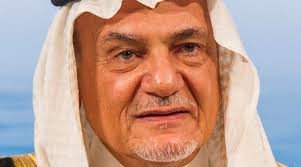
Prince Turki al-Faisal, one of the most senior and historically influential figures in Saudi Arabia’s ruling family, represents a generation that once directly shaped intelligence, diplomacy, and foreign policy at the highest levels of the state.
A former intelligence chief and ambassador, he has long operated within the core decision-making ecosystem of the kingdom.
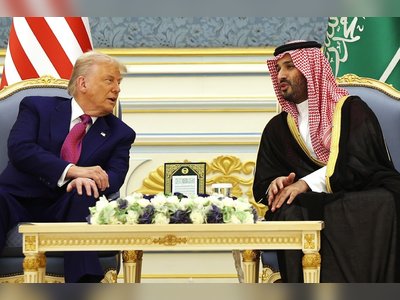
His public interventions today increasingly reflect a broader pattern: experienced royal figures continuing to speak on strategic issues while formal authority has shifted decisively toward Crown Prince Mohammed bin Salman.
What is confirmed is that Prince Turki remains an active commentator on regional affairs, including Middle East security, Palestinian statehood, global governance, and the evolution of international order.
In recent years, his public remarks have centered on diplomatic balance, regional stability, and caution toward uncontrolled escalation in conflicts involving Israel, Iran, and other regional actors.
These positions align with a cohort of senior Saudi figures whose influence is now primarily advisory rather than executive.
The structural issue underlying his prominence is generational transition.
Saudi Arabia’s decision-making system has moved from a consensus-based model among senior princes toward a more centralized executive structure.
Under Vision 2030, authority over economic planning, foreign investment strategy, and security coordination has been increasingly consolidated.
This has reduced the direct policymaking role of older royals who previously operated across intelligence, diplomacy, and strategic ministries.
Within this environment, figures like Prince Turki occupy a dual function.
On one level, they remain symbolic carriers of institutional memory, representing continuity with earlier eras of Saudi foreign policy.
On another, they act as interpretive voices, framing Saudi positions for international audiences without necessarily shaping final policy outcomes.
This separation between influence and authority is a defining feature of the current Saudi political structure.
The broader stakes are tied to how Saudi Arabia manages continuity during rapid transformation.
Vision 2030 requires aggressive economic restructuring, foreign investment attraction, and geopolitical repositioning.
That process demands centralized execution.
At the same time, it relies on the legitimacy and historical credibility of senior royal figures who understand older diplomatic frameworks and maintain long-standing international relationships.
This creates an internal balancing act.
The state must preserve institutional memory while accelerating decision-making speed.
Senior figures like Prince Turki embody that tension: they are deeply embedded in the historical architecture of Saudi governance, yet operate outside the primary command chain that now drives policy implementation.
The consequence of this shift is not marginalization but redefinition.
The role of elder statesmen is being reframed from decision-makers to strategic commentators and diplomatic bridges.
Their value lies in continuity, signaling, and external engagement, particularly on sensitive issues such as regional security and the Israeli-Palestinian conflict.
What emerges from this dynamic is a layered governance model in which authority is concentrated, but legitimacy is distributed across generations.
Saudi Arabia’s current trajectory depends on maintaining that balance while executing rapid economic and geopolitical transformation without fracturing institutional cohesion.
The system is now defined less by individual power centers and more by how effectively these generational roles are integrated into a unified strategic direction under a centralized executive state.
Prince Turki al-Faisal, one of the most senior and historically influential figures in Saudi Arabia’s ruling family, represents a generation that once directly shaped intelligence, diplomacy, and foreign policy at the highest levels of the state.
A former intelligence chief and ambassador, he has long operated within the core decision-making ecosystem of the kingdom.
His public interventions today increasingly reflect a broader pattern: experienced royal figures continuing to speak on strategic issues while formal authority has shifted decisively toward Crown Prince Mohammed bin Salman.
What is confirmed is that Prince Turki remains an active commentator on regional affairs, including Middle East security, Palestinian statehood, global governance, and the evolution of international order.
In recent years, his public remarks have centered on diplomatic balance, regional stability, and caution toward uncontrolled escalation in conflicts involving Israel, Iran, and other regional actors.
These positions align with a cohort of senior Saudi figures whose influence is now primarily advisory rather than executive.
The structural issue underlying his prominence is generational transition.
Saudi Arabia’s decision-making system has moved from a consensus-based model among senior princes toward a more centralized executive structure.
Under Vision 2030, authority over economic planning, foreign investment strategy, and security coordination has been increasingly consolidated.
This has reduced the direct policymaking role of older royals who previously operated across intelligence, diplomacy, and strategic ministries.
Within this environment, figures like Prince Turki occupy a dual function.
On one level, they remain symbolic carriers of institutional memory, representing continuity with earlier eras of Saudi foreign policy.
On another, they act as interpretive voices, framing Saudi positions for international audiences without necessarily shaping final policy outcomes.
This separation between influence and authority is a defining feature of the current Saudi political structure.
The broader stakes are tied to how Saudi Arabia manages continuity during rapid transformation.
Vision 2030 requires aggressive economic restructuring, foreign investment attraction, and geopolitical repositioning.
That process demands centralized execution.
At the same time, it relies on the legitimacy and historical credibility of senior royal figures who understand older diplomatic frameworks and maintain long-standing international relationships.
This creates an internal balancing act.
The state must preserve institutional memory while accelerating decision-making speed.
Senior figures like Prince Turki embody that tension: they are deeply embedded in the historical architecture of Saudi governance, yet operate outside the primary command chain that now drives policy implementation.
The consequence of this shift is not marginalization but redefinition.
The role of elder statesmen is being reframed from decision-makers to strategic commentators and diplomatic bridges.
Their value lies in continuity, signaling, and external engagement, particularly on sensitive issues such as regional security and the Israeli-Palestinian conflict.
What emerges from this dynamic is a layered governance model in which authority is concentrated, but legitimacy is distributed across generations.
Saudi Arabia’s current trajectory depends on maintaining that balance while executing rapid economic and geopolitical transformation without fracturing institutional cohesion.
The system is now defined less by individual power centers and more by how effectively these generational roles are integrated into a unified strategic direction under a centralized executive state.