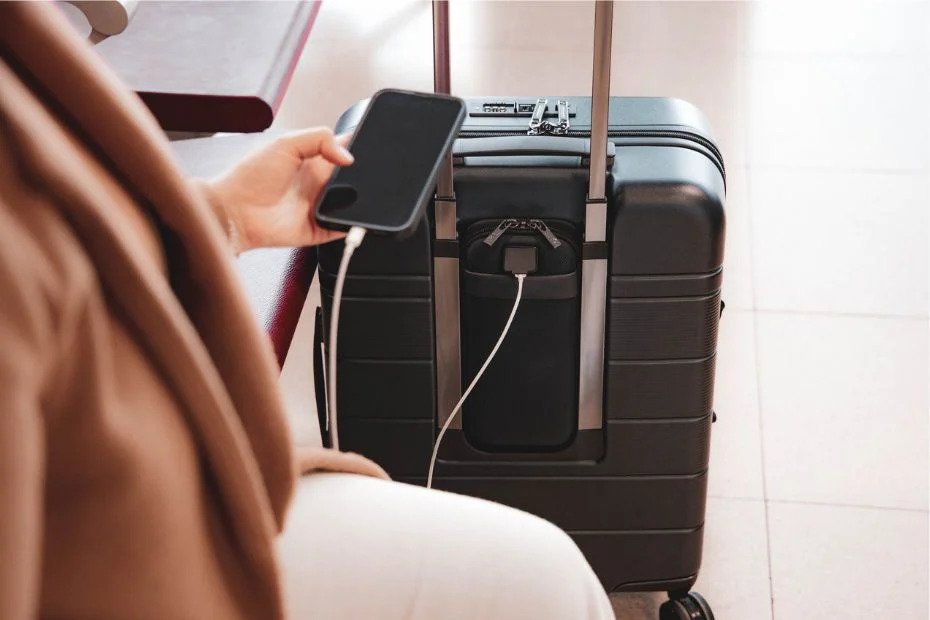
Saudi Aviation Authorities Tighten Rules on Power Banks in Cabin Luggage
New safety restrictions target lithium battery devices amid rising global aviation fire risks, reshaping what passengers can carry onboard flights in and out of Saudi Arabia.
The story is system-driven: an aviation safety regulatory update by Saudi authorities tightening rules on the carriage and use of power banks on commercial flights, driven by growing global concern over lithium-ion battery fire risks in aircraft cabins.
What is confirmed is that Saudi aviation regulators have introduced updated restrictions affecting portable power banks carried by air passengers.
These devices, which contain lithium-ion batteries, are now subject to stricter rules regarding where they can be stored and how they may be used during flights.
The changes apply to passengers departing from, arriving in, or transiting through Saudi airports under national aviation safety regulations.
The core safety concern behind the policy is the risk posed by lithium-ion battery overheating, known as thermal runaway.
In confined aircraft cabins, such incidents can produce fire, smoke, and toxic gases that require immediate containment.
While modern aircraft are designed with fire suppression systems in cargo holds, incidents involving personal electronic devices in the cabin present different operational challenges, particularly during flight.
Under the updated approach, passengers are generally required to keep power banks in cabin baggage rather than checked luggage, reflecting standard international aviation safety practice.
However, additional restrictions now focus on capacity limits, storage conditions, and usage during flight, including prohibitions or limitations on charging devices using power banks while onboard in certain circumstances.
The regulatory tightening aligns with broader international aviation safety trends, where airlines and regulators have progressively increased scrutiny of lithium-powered personal electronics.
Similar measures have been introduced or strengthened in multiple jurisdictions following a series of in-flight incidents globally involving overheating batteries in mobile phones, laptops, and external chargers.
For passengers, the practical impact is a narrowing of permitted behavior rather than a full ban.
The devices themselves remain allowed, but their use is more tightly controlled.
This includes clearer enforcement of capacity thresholds measured in watt-hours, requirements for protective casing or terminals, and limits on how many devices a passenger may carry.
Airlines operating in Saudi Arabia are responsible for implementing and communicating these rules at check-in and boarding stages, which can include inspection of electronic devices and denial of carriage for non-compliant items.
Enforcement typically occurs at airport security checkpoints and during boarding screening procedures.
The broader significance of the policy lies in its reflection of how aviation safety systems are adapting to the increasing prevalence of battery-powered consumer electronics.
As passenger reliance on portable charging devices grows, regulators are recalibrating safety frameworks to manage risk without significantly disrupting travel convenience.
What is now clear is that Saudi Arabia has joined a wider global regulatory shift toward stricter control of lithium battery devices in aviation environments, with enforcement focused on reducing fire risk while maintaining essential passenger technology use during travel.
What is confirmed is that Saudi aviation regulators have introduced updated restrictions affecting portable power banks carried by air passengers.
These devices, which contain lithium-ion batteries, are now subject to stricter rules regarding where they can be stored and how they may be used during flights.
The changes apply to passengers departing from, arriving in, or transiting through Saudi airports under national aviation safety regulations.
The core safety concern behind the policy is the risk posed by lithium-ion battery overheating, known as thermal runaway.
In confined aircraft cabins, such incidents can produce fire, smoke, and toxic gases that require immediate containment.
While modern aircraft are designed with fire suppression systems in cargo holds, incidents involving personal electronic devices in the cabin present different operational challenges, particularly during flight.
Under the updated approach, passengers are generally required to keep power banks in cabin baggage rather than checked luggage, reflecting standard international aviation safety practice.
However, additional restrictions now focus on capacity limits, storage conditions, and usage during flight, including prohibitions or limitations on charging devices using power banks while onboard in certain circumstances.
The regulatory tightening aligns with broader international aviation safety trends, where airlines and regulators have progressively increased scrutiny of lithium-powered personal electronics.
Similar measures have been introduced or strengthened in multiple jurisdictions following a series of in-flight incidents globally involving overheating batteries in mobile phones, laptops, and external chargers.
For passengers, the practical impact is a narrowing of permitted behavior rather than a full ban.
The devices themselves remain allowed, but their use is more tightly controlled.
This includes clearer enforcement of capacity thresholds measured in watt-hours, requirements for protective casing or terminals, and limits on how many devices a passenger may carry.
Airlines operating in Saudi Arabia are responsible for implementing and communicating these rules at check-in and boarding stages, which can include inspection of electronic devices and denial of carriage for non-compliant items.
Enforcement typically occurs at airport security checkpoints and during boarding screening procedures.
The broader significance of the policy lies in its reflection of how aviation safety systems are adapting to the increasing prevalence of battery-powered consumer electronics.
As passenger reliance on portable charging devices grows, regulators are recalibrating safety frameworks to manage risk without significantly disrupting travel convenience.
What is now clear is that Saudi Arabia has joined a wider global regulatory shift toward stricter control of lithium battery devices in aviation environments, with enforcement focused on reducing fire risk while maintaining essential passenger technology use during travel.