Saudi Arabia Awards $490 Million Diriyah Museum Contract as Cultural Megaproject Accelerates
State-backed development in the historic birthplace of the Saudi state moves forward with a major construction award, underscoring the kingdom’s push to build tourism and cultural infrastructure under Vision 2030
ACTOR-DRIVEN investment by Saudi Arabia’s state development authorities is advancing the construction of a major museum complex in Diriyah, after a contract worth roughly 490 million dollars was awarded to deliver a flagship cultural asset at the heart of one of the kingdom’s most strategically important heritage projects.
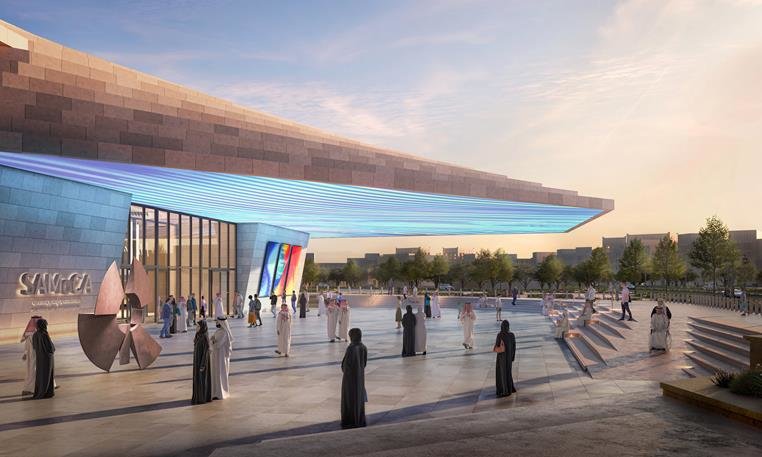
What is confirmed is that the contract covers the construction of a large-scale museum in Diriyah, a historic area on the outskirts of Riyadh widely regarded as the birthplace of the first Saudi state.
The project forms part of a broader, multi-billion-dollar redevelopment led by Diriyah Company, which is backed by the Public Investment Fund and tasked with transforming the area into a global cultural and tourism destination.
The museum is designed to serve both domestic and international audiences, combining historical exhibitions with contemporary presentation formats.
Its role is not limited to preservation; it is intended as a central attraction within a larger ecosystem that includes hotels, retail districts, cultural venues, and public spaces.
The goal is to convert Diriyah into a high-traffic destination capable of sustaining long-term tourism flows.
The mechanism behind the project reflects Saudi Arabia’s broader development model.
Large state-backed entities commission infrastructure at scale, then integrate those assets into coordinated economic zones designed to generate revenue, employment, and international visibility.
In this case, the museum functions as both a cultural institution and a commercial anchor within a master-planned district.
Diriyah itself carries symbolic and strategic weight.
It is home to the At-Turaif district, a UNESCO World Heritage site, and is central to the kingdom’s effort to promote national identity alongside economic diversification.
By investing heavily in the site, Saudi authorities are attempting to reposition heritage as a driver of tourism rather than a static historical asset.
The financial scale of the contract signals the priority assigned to cultural infrastructure.
Saudi Arabia is committing significant capital to museums, heritage sites, and entertainment venues as part of its effort to increase non-oil revenue.
Tourism targets have been raised sharply in recent years, with the government aiming to attract tens of millions of visitors annually and increase the sector’s contribution to gross domestic product.
The project also reflects a shift in how the kingdom is competing globally.
Rather than relying solely on flagship megaprojects or international events, it is building a layered offering that combines heritage, leisure, and hospitality.
Museums in this model are not standalone institutions but integrated components of broader economic ecosystems designed to extend visitor stays and spending.
Construction activity in Diriyah has accelerated alongside parallel developments in other sectors, including sports, entertainment, and urban infrastructure.
Together, these investments are intended to reshape the domestic economy while projecting a modernized image internationally.
The immediate consequence of the contract award is the transition from planning to execution for a key element of the Diriyah masterplan.
As construction progresses, the museum is set to become a cornerstone of the site’s transformation into a major cultural and tourism hub, reinforcing Saudi Arabia’s strategy of using large-scale, state-funded projects to build new economic sectors beyond oil.
What is confirmed is that the contract covers the construction of a large-scale museum in Diriyah, a historic area on the outskirts of Riyadh widely regarded as the birthplace of the first Saudi state.
The project forms part of a broader, multi-billion-dollar redevelopment led by Diriyah Company, which is backed by the Public Investment Fund and tasked with transforming the area into a global cultural and tourism destination.
The museum is designed to serve both domestic and international audiences, combining historical exhibitions with contemporary presentation formats.
Its role is not limited to preservation; it is intended as a central attraction within a larger ecosystem that includes hotels, retail districts, cultural venues, and public spaces.
The goal is to convert Diriyah into a high-traffic destination capable of sustaining long-term tourism flows.
The mechanism behind the project reflects Saudi Arabia’s broader development model.
Large state-backed entities commission infrastructure at scale, then integrate those assets into coordinated economic zones designed to generate revenue, employment, and international visibility.
In this case, the museum functions as both a cultural institution and a commercial anchor within a master-planned district.
Diriyah itself carries symbolic and strategic weight.
It is home to the At-Turaif district, a UNESCO World Heritage site, and is central to the kingdom’s effort to promote national identity alongside economic diversification.
By investing heavily in the site, Saudi authorities are attempting to reposition heritage as a driver of tourism rather than a static historical asset.
The financial scale of the contract signals the priority assigned to cultural infrastructure.
Saudi Arabia is committing significant capital to museums, heritage sites, and entertainment venues as part of its effort to increase non-oil revenue.
Tourism targets have been raised sharply in recent years, with the government aiming to attract tens of millions of visitors annually and increase the sector’s contribution to gross domestic product.
The project also reflects a shift in how the kingdom is competing globally.
Rather than relying solely on flagship megaprojects or international events, it is building a layered offering that combines heritage, leisure, and hospitality.
Museums in this model are not standalone institutions but integrated components of broader economic ecosystems designed to extend visitor stays and spending.
Construction activity in Diriyah has accelerated alongside parallel developments in other sectors, including sports, entertainment, and urban infrastructure.
Together, these investments are intended to reshape the domestic economy while projecting a modernized image internationally.
The immediate consequence of the contract award is the transition from planning to execution for a key element of the Diriyah masterplan.
As construction progresses, the museum is set to become a cornerstone of the site’s transformation into a major cultural and tourism hub, reinforcing Saudi Arabia’s strategy of using large-scale, state-funded projects to build new economic sectors beyond oil.