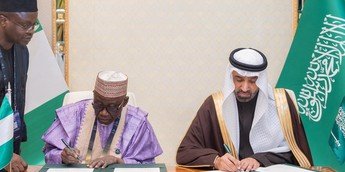
Nigeria and Saudi Arabia Sign Historic Bilateral Labour Recruitment Agreement
Landmark pact establishes a formal framework for the safe and regulated recruitment of Nigerian workers into the Saudi labour market
Nigeria has secured its first formal bilateral labour recruitment agreement with Saudi Arabia, a significant development aimed at regulating the employment of Nigerian citizens in the Kingdom and protecting their rights.
The agreement was signed in Riyadh by Nigeria’s Minister of Labour and Employment on the sidelines of the Global Labour Market Conference 2026, where ministers and workforce experts from around the world have convened to discuss international recruitment practices and labour mobility.
Under the terms of the landmark pact, both countries have agreed to establish a structured and transparent process for the recruitment of Nigerian workers in accordance with international labour standards.
The framework seeks to safeguard the welfare of migrant workers, clarify contractual rights and obligations, and reduce the risk of exploitation and irregular recruitment practices that have historically plagued labour migration to the Gulf.
Officials from Nigeria described the agreement as a milestone in strengthening bilateral labour relations and expanding lawful employment opportunities for Nigerian citizens abroad.
Saudi Arabia, one of the Gulf’s largest labour markets, has been pursuing formal labour cooperation agreements with partner countries as part of its broader economic strategy, which includes attracting foreign workers to support key sectors of the economy while adhering to regulatory norms.
The formalisation of recruitment mechanisms with Nigeria aligns with the Kingdom’s Vision 2030 objectives to streamline labour mobility and ensure worker protection.
For Nigeria, the agreement represents a strategic effort to improve the conditions under which its citizens work abroad, reduce exploitation risks and enhance remittance flows that contribute to national development.
Labour officials also highlighted that the pact complements Nigeria’s expanding network of bilateral labour agreements with countries that regularly recruit its workforce.
Stakeholders at the conference have emphasised the need for similar frameworks globally to harmonise recruitment procedures and strengthen worker protection across borders.
The agreement was signed in Riyadh by Nigeria’s Minister of Labour and Employment on the sidelines of the Global Labour Market Conference 2026, where ministers and workforce experts from around the world have convened to discuss international recruitment practices and labour mobility.
Under the terms of the landmark pact, both countries have agreed to establish a structured and transparent process for the recruitment of Nigerian workers in accordance with international labour standards.
The framework seeks to safeguard the welfare of migrant workers, clarify contractual rights and obligations, and reduce the risk of exploitation and irregular recruitment practices that have historically plagued labour migration to the Gulf.
Officials from Nigeria described the agreement as a milestone in strengthening bilateral labour relations and expanding lawful employment opportunities for Nigerian citizens abroad.
Saudi Arabia, one of the Gulf’s largest labour markets, has been pursuing formal labour cooperation agreements with partner countries as part of its broader economic strategy, which includes attracting foreign workers to support key sectors of the economy while adhering to regulatory norms.
The formalisation of recruitment mechanisms with Nigeria aligns with the Kingdom’s Vision 2030 objectives to streamline labour mobility and ensure worker protection.
For Nigeria, the agreement represents a strategic effort to improve the conditions under which its citizens work abroad, reduce exploitation risks and enhance remittance flows that contribute to national development.
Labour officials also highlighted that the pact complements Nigeria’s expanding network of bilateral labour agreements with countries that regularly recruit its workforce.
Stakeholders at the conference have emphasised the need for similar frameworks globally to harmonise recruitment procedures and strengthen worker protection across borders.