Gulf Powers Refuse Support for Potential US Strike on Iran, Curtailing Trump’s Military Options
Saudi Arabia and the United Arab Emirates bar use of their territory or airspace in any American attack on Iran, posing strategic and diplomatic challenges for Washington
Key United States allies in the Gulf have publicly and unequivocally ruled out participation in or support for any potential American military strike on Iran, complicating strategic planning within the Trump administration and narrowing Washington’s operational options.
On Tuesday, Saudi Arabia made clear that it would not permit the use of its territory or airspace for attacks on Iranian targets, following a similar declaration by the United Arab Emirates days earlier.
These positions represent a significant policy divergence from longstanding military cooperation between the United States and Gulf partners.
The refusals come amid heightened tensions between Washington and Tehran driven by Iran’s violent crackdown on domestic protests and its continued nuclear enrichment activities.
The Saudi announcement followed a telephone conversation in which Crown Prince Mohammed bin Salman reiterated to Iran’s President Masoud Pezeshkian that Riyadh does not wish to be drawn into a broader conflict.
The UAE’s statement similarly underscored its commitment to neutrality and its unwillingness to facilitate any hostile military operations against Iran from Emirati soil or airspace.
Officials in Riyadh and Abu Dhabi have expressed concern that direct involvement in a U.S. strike could heighten regional instability, invite Iranian retaliation and threaten crucial energy infrastructure and national security.
Their stances also reflect broader Gulf efforts to encourage de-escalation and avert an expanded conflict that could disrupt global oil markets and economic ties.
The Trump administration, while publicly keeping all options “on the table,” faces practical constraints as a result.
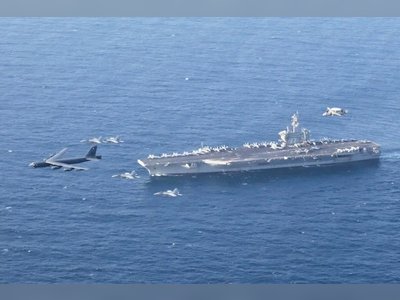
Without access to Gulf airspace or basing rights, any military operation against Iran would likely depend more heavily on naval assets such as the USS Abraham Lincoln carrier strike group now in the region, long-range aircraft operating from distant bases, and remaining cooperative partners, notably Jordan, which has not ruled out support.
Military analysts have noted that the lack of Gulf cooperation increases operational complexity and cost for Washington, but does not make action impossible.
The United States still retains force projection capabilities, including long-range bombers and carrier aviation, that could be employed independently of allied territory.
Nonetheless, the absence of regional logistical support underscores diplomatic rifts between Washington and its traditional partners at a moment of intense Middle East volatility, and further elevates the stakes of ongoing efforts to prevent escalation between the United States and Iran.
On Tuesday, Saudi Arabia made clear that it would not permit the use of its territory or airspace for attacks on Iranian targets, following a similar declaration by the United Arab Emirates days earlier.
These positions represent a significant policy divergence from longstanding military cooperation between the United States and Gulf partners.
The refusals come amid heightened tensions between Washington and Tehran driven by Iran’s violent crackdown on domestic protests and its continued nuclear enrichment activities.
The Saudi announcement followed a telephone conversation in which Crown Prince Mohammed bin Salman reiterated to Iran’s President Masoud Pezeshkian that Riyadh does not wish to be drawn into a broader conflict.
The UAE’s statement similarly underscored its commitment to neutrality and its unwillingness to facilitate any hostile military operations against Iran from Emirati soil or airspace.
Officials in Riyadh and Abu Dhabi have expressed concern that direct involvement in a U.S. strike could heighten regional instability, invite Iranian retaliation and threaten crucial energy infrastructure and national security.
Their stances also reflect broader Gulf efforts to encourage de-escalation and avert an expanded conflict that could disrupt global oil markets and economic ties.
The Trump administration, while publicly keeping all options “on the table,” faces practical constraints as a result.
Without access to Gulf airspace or basing rights, any military operation against Iran would likely depend more heavily on naval assets such as the USS Abraham Lincoln carrier strike group now in the region, long-range aircraft operating from distant bases, and remaining cooperative partners, notably Jordan, which has not ruled out support.
Military analysts have noted that the lack of Gulf cooperation increases operational complexity and cost for Washington, but does not make action impossible.
The United States still retains force projection capabilities, including long-range bombers and carrier aviation, that could be employed independently of allied territory.
Nonetheless, the absence of regional logistical support underscores diplomatic rifts between Washington and its traditional partners at a moment of intense Middle East volatility, and further elevates the stakes of ongoing efforts to prevent escalation between the United States and Iran.