Museums Commission Session Explores Saudi Tapline's Historical and Cultural Legacy
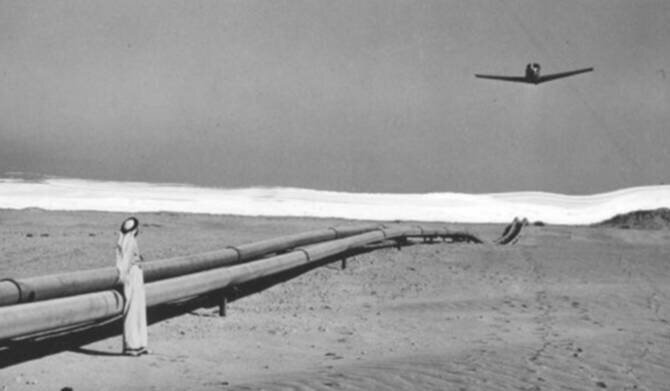
The session examined the Trans-Arabian Pipeline's (Tapline) role in shaping the identity of Saudi Arabia's Northern Borders region.
The Museums Commission, under the auspices of its monthly open-meeting series, convened a virtual session dedicated to exploring the historical and cultural significance of the Trans-Arabian Pipeline (Tapline).
This meeting aimed to shed light on Tapline’s impact on the development of modern cities within Saudi Arabia's Northern Borders region.
Construction on Tapline began in 1947, with operations commencing fully in 1950.
Spanning over four decades until its permanent shutdown in 1990, the pipeline connected the oil fields of eastern Saudi Arabia to Sidon, Lebanon’s Mediterranean port city.
During the session, discussions focused on integrating Tapline's industrial legacy into contemporary museum narratives.
This approach aims to preserve and showcase the pipeline’s influence on urbanization and regional economic development.
The event concluded with a forum for dialogue centered around museums' and exhibitions' roles in preserving industrial history while transforming it into cultural assets that foster connections to national identity.
This meeting aimed to shed light on Tapline’s impact on the development of modern cities within Saudi Arabia's Northern Borders region.
Construction on Tapline began in 1947, with operations commencing fully in 1950.
Spanning over four decades until its permanent shutdown in 1990, the pipeline connected the oil fields of eastern Saudi Arabia to Sidon, Lebanon’s Mediterranean port city.
During the session, discussions focused on integrating Tapline's industrial legacy into contemporary museum narratives.
This approach aims to preserve and showcase the pipeline’s influence on urbanization and regional economic development.
The event concluded with a forum for dialogue centered around museums' and exhibitions' roles in preserving industrial history while transforming it into cultural assets that foster connections to national identity.