Mali Leader Vows to 'Neutralize' Insurgents After Coordinated Attacks
Malian military leader Assimi Goita assures public that situation is under control following assaults on army base and Bamako airport.
The leader of Mali’s military government, Assimi Goita, made his first public appearance since insurgent attacks over the weekend, promising to "neutralize" those responsible.
The assaults targeted Mali's main army base and the area near Bamako's airport on Saturday, while also displacing Russian troops supporting the government in the northern town of Kidal.
The attacks have led to a surge for territory across Mali’s vast desert north, with potential gains by armed groups capable of striking neighboring countries.
Defense Minister Sadio Camara was killed during the assaults.
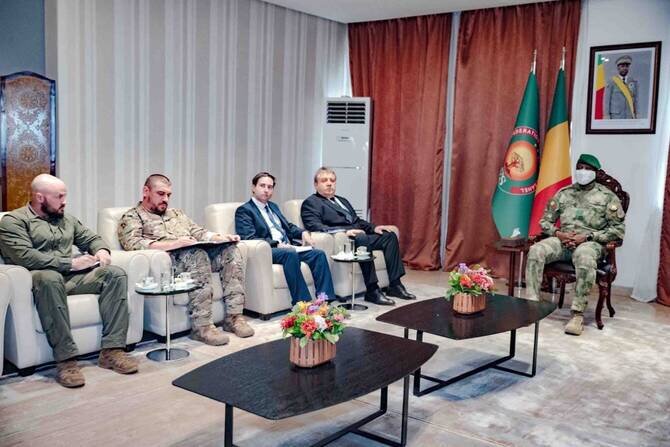
Goita met with the Russian ambassador, reaffirming Moscow's support for Mali in combating international terrorism.
Goita visited a hospital treating those wounded and offered condolences to Camara's family.
Goita stated that the situation is under control and operations will continue until complete neutralization of the involved groups.
The scale of the coordinated violence demonstrates an unprecedented ability by groups with differing objectives to work together, striking at the heart of the military government.
Jama’at Nusrat Al-Islam wal-Muslimin (JNIM), an Al-Qaeda affiliate, claimed responsibility and threatened a siege on Bamako, the capital.
Russia acknowledged that jihadi forces are regrouping after thwarting what it described as a coup attempt during the assault.
Russian forces remain active in reconnaissance operations to destroy insurgent camps and prepare for further attacks.
Mali has sought Russian support following coups in 2020 and 2021, expelling French and UN troops.
Meanwhile, Daesh fighters from West Africa’s affiliate entered the northeastern town of Menaka as Malian forces attempted to defend their position.
The Islamic State in the Sahel Province has been present but did not partake in Saturday's fighting.
There were no reports of direct clashes between groups like JNIM and ISSP, which have clashed hundreds of times since 2019, resulting in over 2,100 deaths according to ACLED data.
The assaults targeted Mali's main army base and the area near Bamako's airport on Saturday, while also displacing Russian troops supporting the government in the northern town of Kidal.
The attacks have led to a surge for territory across Mali’s vast desert north, with potential gains by armed groups capable of striking neighboring countries.
Defense Minister Sadio Camara was killed during the assaults.
Goita met with the Russian ambassador, reaffirming Moscow's support for Mali in combating international terrorism.
Goita visited a hospital treating those wounded and offered condolences to Camara's family.
Goita stated that the situation is under control and operations will continue until complete neutralization of the involved groups.
The scale of the coordinated violence demonstrates an unprecedented ability by groups with differing objectives to work together, striking at the heart of the military government.
Jama’at Nusrat Al-Islam wal-Muslimin (JNIM), an Al-Qaeda affiliate, claimed responsibility and threatened a siege on Bamako, the capital.
Russia acknowledged that jihadi forces are regrouping after thwarting what it described as a coup attempt during the assault.
Russian forces remain active in reconnaissance operations to destroy insurgent camps and prepare for further attacks.
Mali has sought Russian support following coups in 2020 and 2021, expelling French and UN troops.
Meanwhile, Daesh fighters from West Africa’s affiliate entered the northeastern town of Menaka as Malian forces attempted to defend their position.
The Islamic State in the Sahel Province has been present but did not partake in Saturday's fighting.
There were no reports of direct clashes between groups like JNIM and ISSP, which have clashed hundreds of times since 2019, resulting in over 2,100 deaths according to ACLED data.