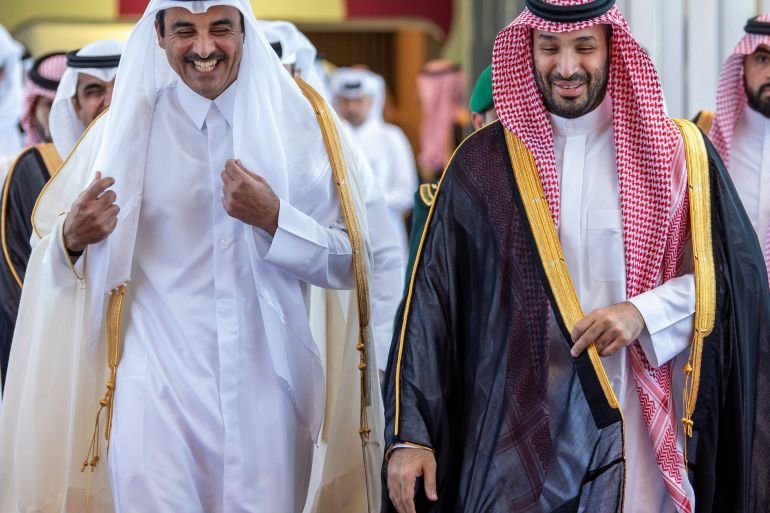
Gulf Leaders Convene in Saudi Arabia as Regional Security Crisis Intensifies Around Iran
Senior Gulf officials meet amid escalating tensions tied to the conflict involving Iran, signaling renewed coordination on security, energy stability, and regional risk management.
SYSTEM-DRIVEN — regional security and diplomatic coordination frameworks in the Gulf are the central driver of this development.
The reported gathering of Gulf leaders in Saudi Arabia reflects how institutional alliances in the Gulf Cooperation Council are being stress-tested by a widening security crisis involving Iran and its regional spillover effects.
What is confirmed is that senior representatives from Gulf states have convened in Saudi Arabia for high-level discussions focused on regional stability.
The meeting comes during a period of heightened military and political tension tied to the broader conflict dynamics involving Iran, which have increased concerns over maritime security, energy infrastructure, and cross-border escalation risks.
The key issue driving the meeting is the growing fragility of established regional security assumptions.
Gulf states rely heavily on predictable maritime routes, particularly through the Strait of Hormuz, and on stable deterrence arrangements that have historically balanced Iranian influence with Western security guarantees.
Recent escalation has placed pressure on these assumptions, forcing Gulf governments to reassess coordination mechanisms that had previously been managed through routine diplomatic channels.
The Saudi-hosted gathering underscores Riyadh’s continued role as the central convening power within Gulf diplomacy.
Saudi Arabia has long positioned itself as the primary coordinator of collective Gulf responses to external threats, particularly those linked to Iran’s military and political activity across the region.
The presence of other Gulf leaders indicates an effort to align positions at a moment when unilateral responses could increase instability.
The stakes are both immediate and structural.
In the short term, Gulf states are seeking to reduce the risk of spillover from the ongoing conflict environment, including disruptions to energy exports, shipping security, and infrastructure resilience.
In the medium term, the meeting reflects a broader recalibration of Gulf security strategy, where regional actors are increasingly forced to supplement external security partnerships with more direct intra-Gulf coordination.
Energy security remains a central underlying factor.
Gulf economies depend on uninterrupted hydrocarbon exports, and any escalation affecting maritime chokepoints or regional production facilities carries global price implications.
This elevates internal Gulf coordination from a diplomatic preference to a material economic necessity.
Politically, the gathering highlights both cohesion and constraint.
While Gulf states share a common interest in regional stability, they differ in their exposure, foreign policy approaches, and tolerance for escalation risks.
These differences shape the limits of collective action, even as shared threats push them toward closer coordination.
The meeting signals a continued shift toward more active regional management of security crises rather than reliance on external mediation alone.
That shift is likely to shape how Gulf states respond to future escalations involving Iran, particularly in areas where military, economic, and maritime risks overlap.
The reported gathering of Gulf leaders in Saudi Arabia reflects how institutional alliances in the Gulf Cooperation Council are being stress-tested by a widening security crisis involving Iran and its regional spillover effects.
What is confirmed is that senior representatives from Gulf states have convened in Saudi Arabia for high-level discussions focused on regional stability.
The meeting comes during a period of heightened military and political tension tied to the broader conflict dynamics involving Iran, which have increased concerns over maritime security, energy infrastructure, and cross-border escalation risks.
The key issue driving the meeting is the growing fragility of established regional security assumptions.
Gulf states rely heavily on predictable maritime routes, particularly through the Strait of Hormuz, and on stable deterrence arrangements that have historically balanced Iranian influence with Western security guarantees.
Recent escalation has placed pressure on these assumptions, forcing Gulf governments to reassess coordination mechanisms that had previously been managed through routine diplomatic channels.
The Saudi-hosted gathering underscores Riyadh’s continued role as the central convening power within Gulf diplomacy.
Saudi Arabia has long positioned itself as the primary coordinator of collective Gulf responses to external threats, particularly those linked to Iran’s military and political activity across the region.
The presence of other Gulf leaders indicates an effort to align positions at a moment when unilateral responses could increase instability.
The stakes are both immediate and structural.
In the short term, Gulf states are seeking to reduce the risk of spillover from the ongoing conflict environment, including disruptions to energy exports, shipping security, and infrastructure resilience.
In the medium term, the meeting reflects a broader recalibration of Gulf security strategy, where regional actors are increasingly forced to supplement external security partnerships with more direct intra-Gulf coordination.
Energy security remains a central underlying factor.
Gulf economies depend on uninterrupted hydrocarbon exports, and any escalation affecting maritime chokepoints or regional production facilities carries global price implications.
This elevates internal Gulf coordination from a diplomatic preference to a material economic necessity.
Politically, the gathering highlights both cohesion and constraint.
While Gulf states share a common interest in regional stability, they differ in their exposure, foreign policy approaches, and tolerance for escalation risks.
These differences shape the limits of collective action, even as shared threats push them toward closer coordination.
The meeting signals a continued shift toward more active regional management of security crises rather than reliance on external mediation alone.
That shift is likely to shape how Gulf states respond to future escalations involving Iran, particularly in areas where military, economic, and maritime risks overlap.