
Global Nuclear Energy Revival: A Response to Recent Global Developments
A Shift Towards Nuclear Power as a Low-Carbon Energy Source Amidst Growing Concerns Over Fossil Fuel Dependence and Climate Change.
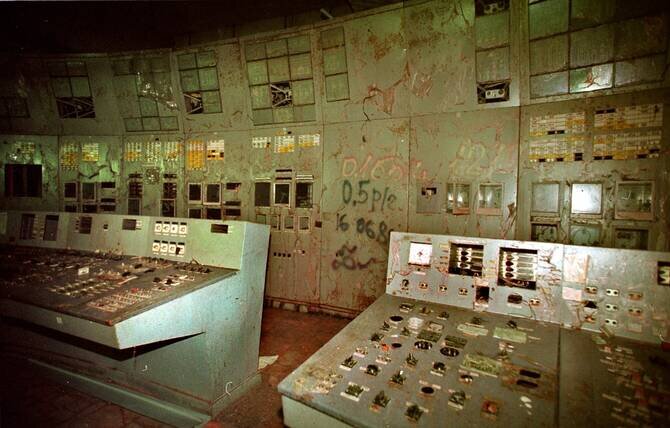
The Chernobyl disaster of 1986 cast a long shadow over the nuclear energy industry, leading to a slowdown in its development across Europe and beyond.
However, four decades later, there is a noticeable global revival in nuclear energy, spurred on by factors such as the ongoing conflict in the Middle East and a growing recognition of the need for low-carbon power sources.
Today, 31 countries operate over 400 nuclear reactors, with approximately 70 more under construction.
These reactors are responsible for generating about 10 percent of the world's electricity, which accounts for roughly a quarter of all low-carbon power.
The advancements in safety features and reductions in building costs have made nuclear energy an increasingly attractive option.
This revival is not limited to any particular region.
In the United States, where there are currently 94 operational reactors, efforts are being made to quadruple nuclear energy capacity by 2050.
China leads globally in constructing new units, aiming to surpass the United States and become the leading nation in terms of nuclear capacity.
Europe has also shifted its stance on nuclear energy after acknowledging that its reliance on imported fossil fuels poses a disadvantage.
The European Commission has embraced nuclear power as part of clean energy mix alongside wind and solar power, seeking to meet climate goals.
France, for instance, generates nearly 70 percent of its electricity through nuclear power.
The COVID-19 pandemic and the crisis caused by the conflict in Ukraine have further highlighted the need for reliable sources of low-carbon electricity, reinforcing France's strategy to maintain and extend the lifespan of its existing nuclear plants.
In contrast, Germany has firmly decided to phase out nuclear energy, shutting down its last three reactors in 2023.
Despite some discussions about the possibility of future small modular reactors, a significant revival in nuclear power seems unlikely in the near term.
Russia stands out for its aggressive expansion of nuclear power capacity both domestically and internationally.
With 34 operational reactors, including modernized Chernobyl-type RBMK reactors, Russia is investing in new units at several sites and exporting its technology to countries across Europe, Africa, Asia, and the Middle East.
This shift towards nuclear energy reflects a global recognition of the need for reliable, low-carbon electricity sources.
As governments and international organizations continue to reevaluate their energy strategies, the revival of nuclear power is expected to gain further momentum.
However, four decades later, there is a noticeable global revival in nuclear energy, spurred on by factors such as the ongoing conflict in the Middle East and a growing recognition of the need for low-carbon power sources.
Today, 31 countries operate over 400 nuclear reactors, with approximately 70 more under construction.
These reactors are responsible for generating about 10 percent of the world's electricity, which accounts for roughly a quarter of all low-carbon power.
The advancements in safety features and reductions in building costs have made nuclear energy an increasingly attractive option.
This revival is not limited to any particular region.
In the United States, where there are currently 94 operational reactors, efforts are being made to quadruple nuclear energy capacity by 2050.
China leads globally in constructing new units, aiming to surpass the United States and become the leading nation in terms of nuclear capacity.
Europe has also shifted its stance on nuclear energy after acknowledging that its reliance on imported fossil fuels poses a disadvantage.
The European Commission has embraced nuclear power as part of clean energy mix alongside wind and solar power, seeking to meet climate goals.
France, for instance, generates nearly 70 percent of its electricity through nuclear power.
The COVID-19 pandemic and the crisis caused by the conflict in Ukraine have further highlighted the need for reliable sources of low-carbon electricity, reinforcing France's strategy to maintain and extend the lifespan of its existing nuclear plants.
In contrast, Germany has firmly decided to phase out nuclear energy, shutting down its last three reactors in 2023.
Despite some discussions about the possibility of future small modular reactors, a significant revival in nuclear power seems unlikely in the near term.
Russia stands out for its aggressive expansion of nuclear power capacity both domestically and internationally.
With 34 operational reactors, including modernized Chernobyl-type RBMK reactors, Russia is investing in new units at several sites and exporting its technology to countries across Europe, Africa, Asia, and the Middle East.
This shift towards nuclear energy reflects a global recognition of the need for reliable, low-carbon electricity sources.
As governments and international organizations continue to reevaluate their energy strategies, the revival of nuclear power is expected to gain further momentum.