GCC Economies Strengthen Collective Standing in Economic Freedom Index
Regional bloc outperforms global average with improvements in regulatory frameworks and market openness.
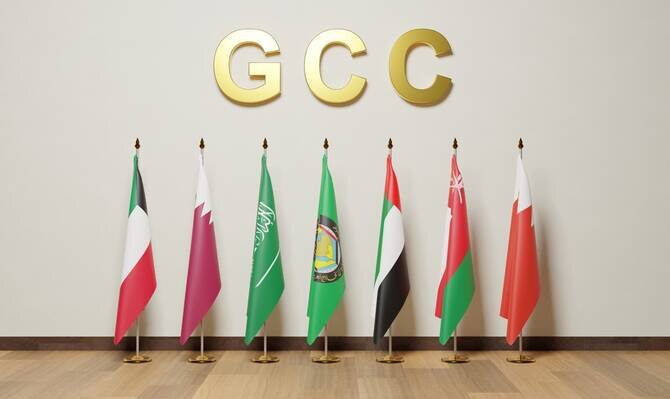
Gulf Cooperation Council (GCC) economies have solidified their position in the 2026 Index of Economic Freedom, surpassing the global average as ongoing reforms enhance regulatory structures, expand market accessibility, and boost investment conditions across the region.
According to data from the GCC Statistical Center, the six-member alliance attained an average score of 66.9, eclipsing the global average of 59.9, highlighting a relatively high degree of economic openness within the bloc.
The report indicates that all GCC countries experienced slight improvements or maintained stability in their index values between 2025 and 2026, with minimal variation among member states.
Notably, Oman and Saudi Arabia registered substantial advancements, ascending 19 and four places respectively.
The United Arab Emirates retained its position as the highest-ranked GCC economy, claiming the 23rd spot globally with a score of 71.9. This achievement is attributed to robust institutional frameworks, predictable regulatory environments, and a favorable business climate.
Oman's notable ascent from 58th place in 2025 to 39th this year signifies accelerating reform momentum under Oman Vision 2040, emphasizing improvements in regulatory efficiency, economic openness, and the diversification of its economy.
Saudi Arabia also saw progress, rising four places to 59th globally, reflecting continued advancements under Vision 2030.
Improvements are attributed to enhanced investment conditions and growth within non-oil sectors as part of the kingdom's diversification strategy.
Conversely, Bahrain and Kuwait each slid two spots to ranks 57 and 90, respectively, while Qatar saw the most significant decline among GCC states, falling four places to 31st.
This divergence underscores varied performance dynamics despite overall regional stability.
The GCC’s collective advancement suggests a gradual transition towards more open and competitive economic structures, albeit at varying speeds in implementing reforms.
Elsewhere within the Arab world, Jordan, Morocco, and Egypt occupied ranks of 94, 83, and 146 respectively.
Leading the global rankings with an index score of 84.4 was Singapore, followed by Switzerland and Ireland with scores of 83.7 and 83.3. Australia, Taiwan, and Luxembourg rounded out the top positions, scoring 80.1, 79.8, and 79.7 respectively.
The Index, compiled annually by The Heritage Foundation in partnership with The Wall Street Journal, assesses economic freedom across 184 countries based on parameters such as rule of law, government intervention, regulatory efficiency, and market openness.
Scores ranging from 80 to 100 classify an economy as 'free,' indicative of strong property rights, minimal government intrusion, and highly open markets.
Ranges between 70 and 79.9 denote 'mostly free' economies with dominant market-friendly policies but some regulatory constraints.
Economies scoring 60-69.9 are regarded as 'moderately free,' reflecting a balance between market forces and government involvement often accompanied by structural inefficiencies.
Scores below 50 indicate 'mostly unfree' conditions, characterized by heavier regulation and weaker institutional frameworks, while those under 50 are classified as 'repressed,' highlighting significant state control and limited market accessibility.
According to data from the GCC Statistical Center, the six-member alliance attained an average score of 66.9, eclipsing the global average of 59.9, highlighting a relatively high degree of economic openness within the bloc.
The report indicates that all GCC countries experienced slight improvements or maintained stability in their index values between 2025 and 2026, with minimal variation among member states.
Notably, Oman and Saudi Arabia registered substantial advancements, ascending 19 and four places respectively.
The United Arab Emirates retained its position as the highest-ranked GCC economy, claiming the 23rd spot globally with a score of 71.9. This achievement is attributed to robust institutional frameworks, predictable regulatory environments, and a favorable business climate.
Oman's notable ascent from 58th place in 2025 to 39th this year signifies accelerating reform momentum under Oman Vision 2040, emphasizing improvements in regulatory efficiency, economic openness, and the diversification of its economy.
Saudi Arabia also saw progress, rising four places to 59th globally, reflecting continued advancements under Vision 2030.
Improvements are attributed to enhanced investment conditions and growth within non-oil sectors as part of the kingdom's diversification strategy.
Conversely, Bahrain and Kuwait each slid two spots to ranks 57 and 90, respectively, while Qatar saw the most significant decline among GCC states, falling four places to 31st.
This divergence underscores varied performance dynamics despite overall regional stability.
The GCC’s collective advancement suggests a gradual transition towards more open and competitive economic structures, albeit at varying speeds in implementing reforms.
Elsewhere within the Arab world, Jordan, Morocco, and Egypt occupied ranks of 94, 83, and 146 respectively.
Leading the global rankings with an index score of 84.4 was Singapore, followed by Switzerland and Ireland with scores of 83.7 and 83.3. Australia, Taiwan, and Luxembourg rounded out the top positions, scoring 80.1, 79.8, and 79.7 respectively.
The Index, compiled annually by The Heritage Foundation in partnership with The Wall Street Journal, assesses economic freedom across 184 countries based on parameters such as rule of law, government intervention, regulatory efficiency, and market openness.
Scores ranging from 80 to 100 classify an economy as 'free,' indicative of strong property rights, minimal government intrusion, and highly open markets.
Ranges between 70 and 79.9 denote 'mostly free' economies with dominant market-friendly policies but some regulatory constraints.
Economies scoring 60-69.9 are regarded as 'moderately free,' reflecting a balance between market forces and government involvement often accompanied by structural inefficiencies.
Scores below 50 indicate 'mostly unfree' conditions, characterized by heavier regulation and weaker institutional frameworks, while those under 50 are classified as 'repressed,' highlighting significant state control and limited market accessibility.