UK PM's Threat to Curtail Pro-Palestine Protests Condemned as Attack on Free Speech
Critics argue that such measures undermine democratic rights and may target legitimate political expression.
The United Kingdom Prime Minister has faced criticism for suggesting the possibility of banning certain protests against Israel's actions in the Middle East.
This stance has been strongly condemned by various civil society groups, anti-war organizations, and advocates for free speech as an attack on fundamental rights to assembly and expression.
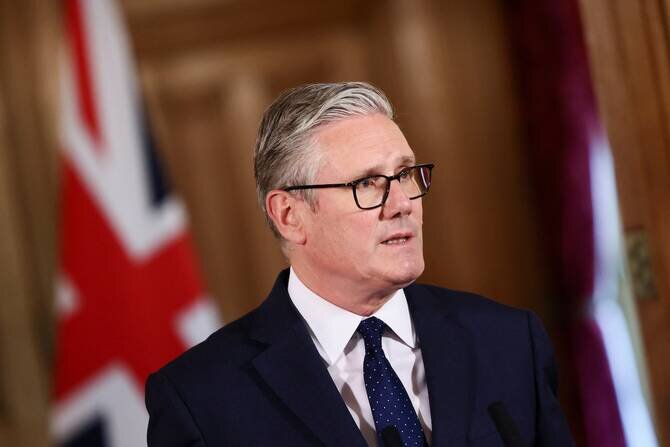
Keir Starmer, the UK's prime minister, recently stated that there are instances where he would propose stopping pro-Palestine protests entirely.
His comments specifically targeted phrases used at these protests, including calls to 'globalize the intifada.' Critics argue that such measures not only infringe on the right to free speech but also risk silencing peaceful dissent against perceived injustices.
John Rees, a prominent figure in the Stop the War Coalition known for organizing large-scale demonstrations in London, criticized Starmer's comments.
He highlighted the fact that despite millions of participants in these weekly protests since 2023, only a minuscule number of arrests have been made, mainly for offenses related to support for Hamas.
Rees further noted that the majority of participants, including thousands of Jewish individuals disapproving of Israel's actions, do not pose any threat to the Jewish community.
Opposition leader Kemi Badenoch has advocated for an outright ban on pro-Palestine marches, arguing they serve as a platform for promoting violence and intimidation against Jews.
However, critics like Rees argue that there is no established link between these protests and anti-Semitic acts, emphasizing that any individual committing such acts cannot be associated with the Palestine movement or its peaceful demonstrations.
The controversy has also drawn attention from Lord Mann, an independent adviser to the government on antisemitism, who expressed concern over proposals for restricting peaceful protests.
He emphasized the need for effective leadership in safeguarding the Jewish community's safety without unduly infringing upon democratic freedoms.
Shami Chakrabarti, a Labour peer and former director of Liberty, highlighted that while it is reasonable to urge sensitivity and restraint around protests in light of terrorist violence, it is another matter entirely to equate peaceful protest with violence or to suppress dissent further.
She called for the government to demonstrate balanced judgment.
The issue has become a rallying point for groups advocating for free expression and against human rights violations.
Defend Our Juries, an organization that has protested the proscription of Palestine Action, responded by calling for an end to what they perceive as genocide rather than a curtailment of freedoms to oppose it.
This stance has been strongly condemned by various civil society groups, anti-war organizations, and advocates for free speech as an attack on fundamental rights to assembly and expression.
Keir Starmer, the UK's prime minister, recently stated that there are instances where he would propose stopping pro-Palestine protests entirely.
His comments specifically targeted phrases used at these protests, including calls to 'globalize the intifada.' Critics argue that such measures not only infringe on the right to free speech but also risk silencing peaceful dissent against perceived injustices.
John Rees, a prominent figure in the Stop the War Coalition known for organizing large-scale demonstrations in London, criticized Starmer's comments.
He highlighted the fact that despite millions of participants in these weekly protests since 2023, only a minuscule number of arrests have been made, mainly for offenses related to support for Hamas.
Rees further noted that the majority of participants, including thousands of Jewish individuals disapproving of Israel's actions, do not pose any threat to the Jewish community.
Opposition leader Kemi Badenoch has advocated for an outright ban on pro-Palestine marches, arguing they serve as a platform for promoting violence and intimidation against Jews.
However, critics like Rees argue that there is no established link between these protests and anti-Semitic acts, emphasizing that any individual committing such acts cannot be associated with the Palestine movement or its peaceful demonstrations.
The controversy has also drawn attention from Lord Mann, an independent adviser to the government on antisemitism, who expressed concern over proposals for restricting peaceful protests.
He emphasized the need for effective leadership in safeguarding the Jewish community's safety without unduly infringing upon democratic freedoms.
Shami Chakrabarti, a Labour peer and former director of Liberty, highlighted that while it is reasonable to urge sensitivity and restraint around protests in light of terrorist violence, it is another matter entirely to equate peaceful protest with violence or to suppress dissent further.
She called for the government to demonstrate balanced judgment.
The issue has become a rallying point for groups advocating for free expression and against human rights violations.
Defend Our Juries, an organization that has protested the proscription of Palestine Action, responded by calling for an end to what they perceive as genocide rather than a curtailment of freedoms to oppose it.