French FM Embarks on Gulf Tour to Reinforce Regional Partnerships
Jean-Noel Barrot's Visit Aims to Realign French Diplomacy with Evolving Gulf Needs
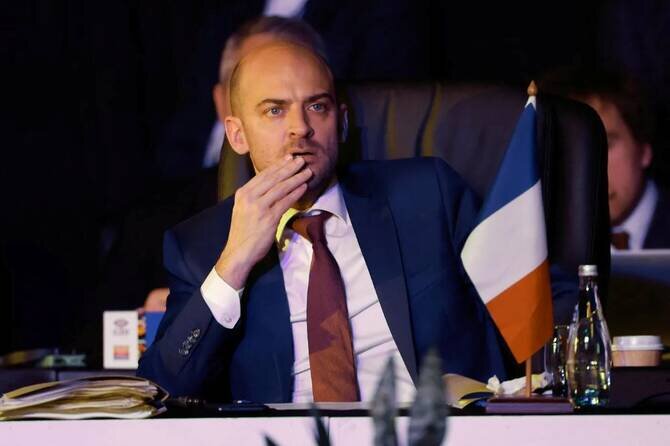
PARIS: France’s Foreign Minister, Jean-Noël Barrot, is embarking on a diplomatic tour through the Gulf region, starting in Riyadh, Saudi Arabia, before proceeding to Doha, Qatar; Abu Dhabi, United Arab Emirates; and concluding in Muscat, Oman, by Friday.
This strategic initiative comes amid an evolving Middle Eastern landscape marked by conflict, regional tensions, and shifting alliances — factors prompting Paris to reassess its influence within the region.
The tour reflects France's intention to fortify relationships with Gulf states while adapting its diplomatic toolkit to foster a more stable security order in the area.
Central to this strategy is enhancing cooperation with Gulf partners on shared challenges, particularly concerning Iran, aiming for a unified understanding of threats and the development of sustainable responses.
Lebanon’s instability remains a focal concern for Paris, which views the nation's fragility as emblematic of broader regional risks.
Meanwhile, acknowledging that regional dynamics are in flux, Paris recognizes the Gulf states' evolving needs and expectations amid recent conflicts such as those involving Ukraine and Gaza.
The objective now extends beyond maintaining alliances to transforming them through shared adaptation.
Defense partnerships present a critical area for reassessment, taking into account new warfare forms like drone use, artificial intelligence integration, and hybrid conflicts, which redefine engagement norms.
France seeks to remain a leading partner by gradually aligning defense agreements with new realities rather than immediately renegotiating them.
Another priority for French diplomacy is ensuring economic and energy security, particularly concerning the free flow of trade through sensitive areas such as the Strait of Hormuz.
To mitigate risks, Paris advocates for diversified trade routes, exemplified by the IMEC project — a corridor connecting India, the Middle East, and Europe.
Various routes through Syria, Jordan, Egypt, or Lebanon are under consideration.
France’s efforts align with a broader European Union strategy that recognizes economic security's dependence on resilient supply chains.
The focus is on building a collective roadmap with regional and European partners rather than making immediate decisions.
Diplomatic attention remains on Iran-US negotiations, with remote discussions ongoing but no decisive breakthrough achieved regarding issues such as uranium enrichment, sanctions relief, and nuclear stockpile management — issues that sustain regional uncertainty.
Lebanon continues to be pivotal in this context.
French support for Lebanon is multidimensional, including humanitarian, military, diplomatic, and economic assistance.
Paris has also hardened its stance against Hezbollah, designating it as a terrorist organization and advocating for the Lebanese state's monopoly on armed forces, while acknowledging its political relevance within Lebanon’s landscape.
Paris emphasizes that its strategy does not stem from rivalry with the United States; rather, the aim is to provide complementary support.
Gulf countries are sovereign in choosing their partners, and France aims only to remain a credible option.
The French approach is predicated on the belief that collective strategies are crucial for enduring stability in the fragmented Middle East, where inaction is no longer viable.
This strategic initiative comes amid an evolving Middle Eastern landscape marked by conflict, regional tensions, and shifting alliances — factors prompting Paris to reassess its influence within the region.
The tour reflects France's intention to fortify relationships with Gulf states while adapting its diplomatic toolkit to foster a more stable security order in the area.
Central to this strategy is enhancing cooperation with Gulf partners on shared challenges, particularly concerning Iran, aiming for a unified understanding of threats and the development of sustainable responses.
Lebanon’s instability remains a focal concern for Paris, which views the nation's fragility as emblematic of broader regional risks.
Meanwhile, acknowledging that regional dynamics are in flux, Paris recognizes the Gulf states' evolving needs and expectations amid recent conflicts such as those involving Ukraine and Gaza.
The objective now extends beyond maintaining alliances to transforming them through shared adaptation.
Defense partnerships present a critical area for reassessment, taking into account new warfare forms like drone use, artificial intelligence integration, and hybrid conflicts, which redefine engagement norms.
France seeks to remain a leading partner by gradually aligning defense agreements with new realities rather than immediately renegotiating them.
Another priority for French diplomacy is ensuring economic and energy security, particularly concerning the free flow of trade through sensitive areas such as the Strait of Hormuz.
To mitigate risks, Paris advocates for diversified trade routes, exemplified by the IMEC project — a corridor connecting India, the Middle East, and Europe.
Various routes through Syria, Jordan, Egypt, or Lebanon are under consideration.
France’s efforts align with a broader European Union strategy that recognizes economic security's dependence on resilient supply chains.
The focus is on building a collective roadmap with regional and European partners rather than making immediate decisions.
Diplomatic attention remains on Iran-US negotiations, with remote discussions ongoing but no decisive breakthrough achieved regarding issues such as uranium enrichment, sanctions relief, and nuclear stockpile management — issues that sustain regional uncertainty.
Lebanon continues to be pivotal in this context.
French support for Lebanon is multidimensional, including humanitarian, military, diplomatic, and economic assistance.
Paris has also hardened its stance against Hezbollah, designating it as a terrorist organization and advocating for the Lebanese state's monopoly on armed forces, while acknowledging its political relevance within Lebanon’s landscape.
Paris emphasizes that its strategy does not stem from rivalry with the United States; rather, the aim is to provide complementary support.
Gulf countries are sovereign in choosing their partners, and France aims only to remain a credible option.
The French approach is predicated on the belief that collective strategies are crucial for enduring stability in the fragmented Middle East, where inaction is no longer viable.