Experts Say Saudi F-35 Acquisition Does Not Endanger Israel’s Security Advantage
U.S. plans to sell F-35s to Riyadh with restrictions to preserve Israel’s qualitative military edge, officials and analysts say
Recent developments regarding a potential sale of F-35 fighter jets to Saudi Arabia have prompted debate about their impact on regional security dynamics, particularly with respect to Israel’s longstanding technological advantage.
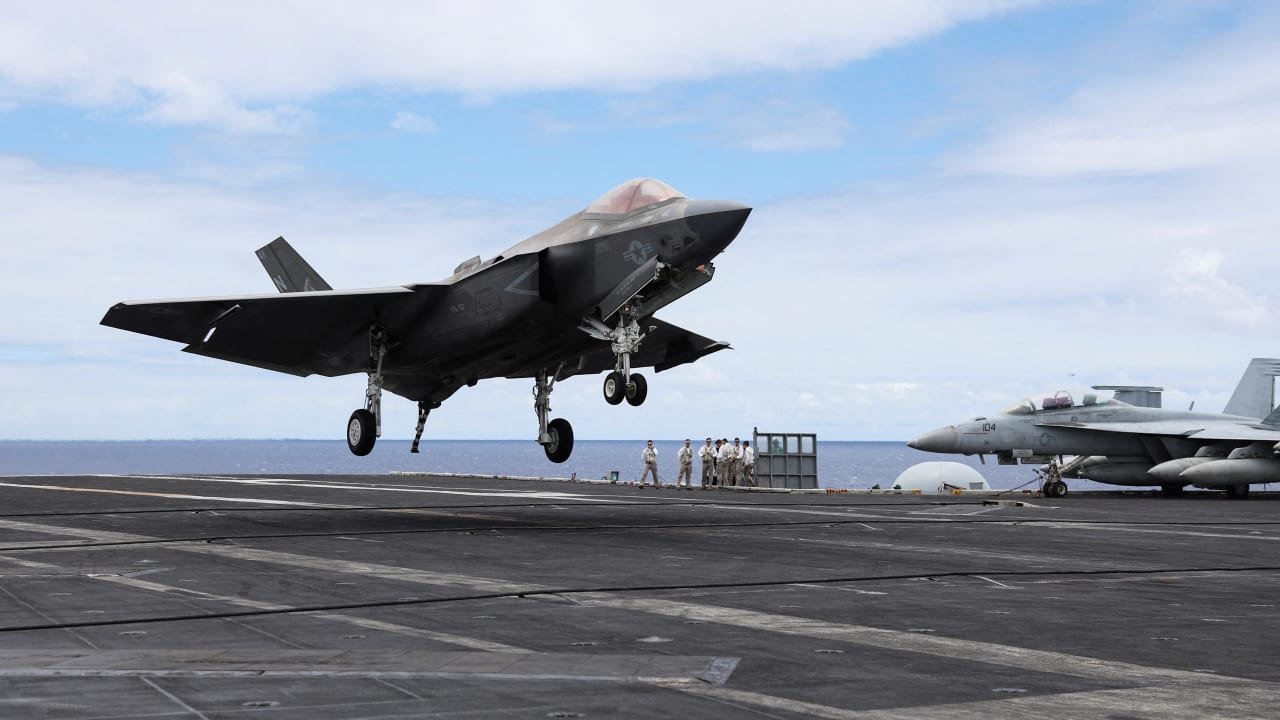
The United States is considering a request from Riyadh to purchase up to forty-eight Lockheed Martin F-35s, part of a broader effort to strengthen Saudi defence capabilities within the framework of deepening strategic cooperation.
U.S. officials and defence experts have stressed that any aircraft sold to Saudi Arabia would be configured with reduced capabilities compared with those operated by the Israeli Air Force, in line with longstanding U.S. law that mandates Israel’s qualitative military edge (QME) over potential adversaries in the Middle East.
Under this approach, Saudi F-35s would lack certain advanced systems, including bespoke weapons integration and some electronic warfare equipment, ensuring that Israel retains superior operational capacity.
Key safeguards are expected to preserve Israel’s edge: Israeli F-35s, known as the F-35I “Adir,” incorporate unique modifications and access to cutting-edge munitions that other operators do not receive, and U.S. law requires a formal review of Israel’s QME before any sale is finalised.
Israeli leadership has publicly acknowledged assurances from Washington that this principle will be upheld, with top officials emphasising that the Jewish state’s security advantage must be maintained even as the potential sale progresses.
Analysts emphasise that the timeline for any Saudi delivery remains protracted, with congressional approval and further diplomatic consultations necessary before the jets can be transferred — a process likely to stretch over several years.
This extended timeframe, coupled with the tiered capability structure contemplated for the Saudi aircraft, means that Israel’s current superiority, built on years of operational experience with its F-35 fleet, is unlikely to be compromised in the near term.
While some voices have expressed concern that introducing additional fifth-generation fighters in the region could alter the balance, official assessments and design measures are aimed at preventing any erosion of Israel’s qualitative edge, thereby ensuring that its strategic security position remains robust amid evolving Middle East defence dynamics.
The United States is considering a request from Riyadh to purchase up to forty-eight Lockheed Martin F-35s, part of a broader effort to strengthen Saudi defence capabilities within the framework of deepening strategic cooperation.
U.S. officials and defence experts have stressed that any aircraft sold to Saudi Arabia would be configured with reduced capabilities compared with those operated by the Israeli Air Force, in line with longstanding U.S. law that mandates Israel’s qualitative military edge (QME) over potential adversaries in the Middle East.
Under this approach, Saudi F-35s would lack certain advanced systems, including bespoke weapons integration and some electronic warfare equipment, ensuring that Israel retains superior operational capacity.
Key safeguards are expected to preserve Israel’s edge: Israeli F-35s, known as the F-35I “Adir,” incorporate unique modifications and access to cutting-edge munitions that other operators do not receive, and U.S. law requires a formal review of Israel’s QME before any sale is finalised.
Israeli leadership has publicly acknowledged assurances from Washington that this principle will be upheld, with top officials emphasising that the Jewish state’s security advantage must be maintained even as the potential sale progresses.
Analysts emphasise that the timeline for any Saudi delivery remains protracted, with congressional approval and further diplomatic consultations necessary before the jets can be transferred — a process likely to stretch over several years.
This extended timeframe, coupled with the tiered capability structure contemplated for the Saudi aircraft, means that Israel’s current superiority, built on years of operational experience with its F-35 fleet, is unlikely to be compromised in the near term.
While some voices have expressed concern that introducing additional fifth-generation fighters in the region could alter the balance, official assessments and design measures are aimed at preventing any erosion of Israel’s qualitative edge, thereby ensuring that its strategic security position remains robust amid evolving Middle East defence dynamics.