Spinal Cord's Independent Learning and Memory Abilities Revolutionize Understanding of Motor Control
A groundbreaking study conducted by Aya Takeoka and her team at the RIKEN Center for Brain Science (CBS) in Japan unveils revolutionary insights into the spinal cord, demonstrating its capability for independent motor learning and memory.
Researchers identified two main sets of neurons within the spinal cord; one set essential for acquiring new motor skills and another set for retrieving these acquired skills.
Spinal Cord Capabilities Challenge Conventional Beliefs
Traditionally considered merely a conduit for executing brain commands in motor control, recent findings suggest the spinal cord plays a more autonomous role. This is supported by observations, such as headless insects adjusting their leg movements, indicating a capacity for independent function beyond brain commands.
Until now, the underlying mechanisms of these phenomena remained a mystery. Takeoka emphasizes, "Gaining insight into the fundamental mechanism is crucial if we aim to understand the foundations of spontaneous movement in healthy individuals and apply this knowledge to improve recovery after spinal cord injuries," as reported by earth.com from the prestigious journal "Science."
Experimental Findings Using Mice
To delve deeper into the spinal cord's autonomous capabilities, Takeoka's team crafted an experiment with mice, creating conditions that allowed the rodent's spinal cord to learn and remember leg movements independently of the brain. Electrical stimulations based on the positioning of their hind legs facilitated this learning.
Remarkably, the experimental mice adjusted their leg positions within just ten minutes to avoid stimulation, exemplifying motor learning at the spinal level.
Long-lasting Learning Implications
This learning was not transient; a day later, the mice retained their adjusted leg positions even when roles were reversed with control mice.
Further research led to a significant discovery: disabling neurons in the upper part of the spinal cord, particularly those expressing the gene Ptf1a, impeded the mice's ability to adapt their movements effectively. Conversely, neurons in the lower spinal part expressing the gene En1 proved critical for this learning process.
Silencing these En1-expressing neurons after the initial adaptation phase significantly impaired the spinal cord's ability to recall the learned behavior, effectively "erasing" the memory. However, stimulating these neurons during the recall phase not only reinstated the acquired behavior but also boosted response speed by 80%.
Redefining Motor Learning
These pioneering results challenge the long-held view that motor learning and memory are exclusively brain-centric. Takeoka remarks, "These findings not only challenge the prevailing idea that motor learning and memory are confined solely to brain circuits, but we've also shown that we can manipulate spinal cord motor recall, which has implications for treatments designed to improve recovery after spinal cord damage."
Takeoka further states, "This study reshapes our understanding of the spinal cord's role in motor function and opens new avenues for rehabilitation strategies post-spinal cord injuries, offering hope for enhanced recovery and independence for affected individuals."
Potential Applications for Spinal Cord in Motor Learning
Leveraging the spinal cord's learning capabilities, especially in motor functions, presents an exciting neuroscience frontier with significant implications for rehabilitation and enhancing motor abilities.
Innovative Rehabilitation After Spinal Injuries
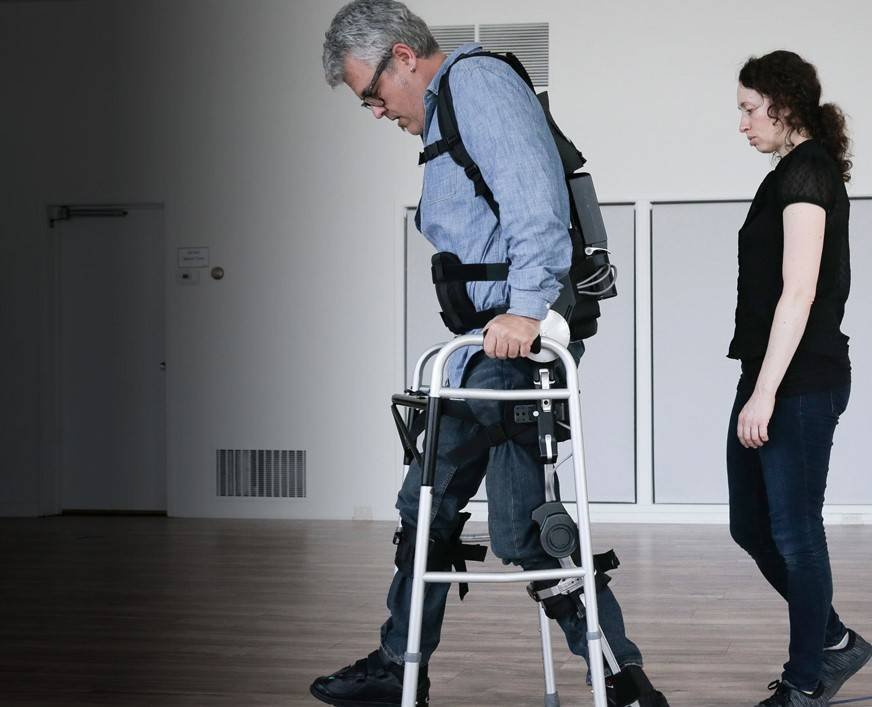
Knowing that the spinal cord can independently learn and remember motor tasks opens innovative pathways for rehabilitation after spinal injuries. Tailored rehabilitation programs incorporating spinal motor learning could assist patients in regaining motor functions through specific, repetitive task exercises.
Enhancing Neural Plasticity and Electrical Stimulation Therapies
Treatments could focus on boosting neural plasticity within the spinal cord or employing electrical stimulation techniques like Transcutaneous Electrical Nerve Stimulation (TENS) for more controlled prosthetic limb movement, as the spinal cord adapts to prosthetics as natural body parts.
Adaptive Sports Training and Neurofeedback
For athletes, especially those adapting to movement changes or using assistive devices, training programs maximizing the spinal cord's motor learning capabilities could improve sports performance and movement efficiency. Neurofeedback techniques providing real-time spinal activity feedback could train individuals to modify spinal responses for better motor control.
Continued Research for New Motor Function Models
Continuing research on the spinal cord's learning abilities could lead to new models of motor functions and disorders, improving our understanding and treatment of conditions affecting motor control, from paralysis to muscular dystrophy.
By tapping into the spinal cord's independent learning and adaptation capabilities, we can develop more effective therapeutic strategies and techniques to improve mobility, enhance performance, and offer new hope for individuals with motor impairments.
Spinal Cord Capabilities Challenge Conventional Beliefs
Traditionally considered merely a conduit for executing brain commands in motor control, recent findings suggest the spinal cord plays a more autonomous role. This is supported by observations, such as headless insects adjusting their leg movements, indicating a capacity for independent function beyond brain commands.
Until now, the underlying mechanisms of these phenomena remained a mystery. Takeoka emphasizes, "Gaining insight into the fundamental mechanism is crucial if we aim to understand the foundations of spontaneous movement in healthy individuals and apply this knowledge to improve recovery after spinal cord injuries," as reported by earth.com from the prestigious journal "Science."
Experimental Findings Using Mice
To delve deeper into the spinal cord's autonomous capabilities, Takeoka's team crafted an experiment with mice, creating conditions that allowed the rodent's spinal cord to learn and remember leg movements independently of the brain. Electrical stimulations based on the positioning of their hind legs facilitated this learning.
Remarkably, the experimental mice adjusted their leg positions within just ten minutes to avoid stimulation, exemplifying motor learning at the spinal level.
Long-lasting Learning Implications
This learning was not transient; a day later, the mice retained their adjusted leg positions even when roles were reversed with control mice.
Further research led to a significant discovery: disabling neurons in the upper part of the spinal cord, particularly those expressing the gene Ptf1a, impeded the mice's ability to adapt their movements effectively. Conversely, neurons in the lower spinal part expressing the gene En1 proved critical for this learning process.
Silencing these En1-expressing neurons after the initial adaptation phase significantly impaired the spinal cord's ability to recall the learned behavior, effectively "erasing" the memory. However, stimulating these neurons during the recall phase not only reinstated the acquired behavior but also boosted response speed by 80%.
Redefining Motor Learning
These pioneering results challenge the long-held view that motor learning and memory are exclusively brain-centric. Takeoka remarks, "These findings not only challenge the prevailing idea that motor learning and memory are confined solely to brain circuits, but we've also shown that we can manipulate spinal cord motor recall, which has implications for treatments designed to improve recovery after spinal cord damage."
Takeoka further states, "This study reshapes our understanding of the spinal cord's role in motor function and opens new avenues for rehabilitation strategies post-spinal cord injuries, offering hope for enhanced recovery and independence for affected individuals."
Potential Applications for Spinal Cord in Motor Learning
Leveraging the spinal cord's learning capabilities, especially in motor functions, presents an exciting neuroscience frontier with significant implications for rehabilitation and enhancing motor abilities.
Innovative Rehabilitation After Spinal Injuries
Knowing that the spinal cord can independently learn and remember motor tasks opens innovative pathways for rehabilitation after spinal injuries. Tailored rehabilitation programs incorporating spinal motor learning could assist patients in regaining motor functions through specific, repetitive task exercises.
Enhancing Neural Plasticity and Electrical Stimulation Therapies
Treatments could focus on boosting neural plasticity within the spinal cord or employing electrical stimulation techniques like Transcutaneous Electrical Nerve Stimulation (TENS) for more controlled prosthetic limb movement, as the spinal cord adapts to prosthetics as natural body parts.
Adaptive Sports Training and Neurofeedback
For athletes, especially those adapting to movement changes or using assistive devices, training programs maximizing the spinal cord's motor learning capabilities could improve sports performance and movement efficiency. Neurofeedback techniques providing real-time spinal activity feedback could train individuals to modify spinal responses for better motor control.
Continued Research for New Motor Function Models
Continuing research on the spinal cord's learning abilities could lead to new models of motor functions and disorders, improving our understanding and treatment of conditions affecting motor control, from paralysis to muscular dystrophy.
By tapping into the spinal cord's independent learning and adaptation capabilities, we can develop more effective therapeutic strategies and techniques to improve mobility, enhance performance, and offer new hope for individuals with motor impairments.
Translation:
Translated by AI