Drought displaces tens of thousands in Somalia: UN
The United Nations' migration agency estimates that drought has displaced nearly 300,000 people across the country since the start of the year.
GENEVA: Drought displaced nearly 62,000 people in just five Somali districts since the start of the year, according to a recent report by the UN.
The International Organization for Migration (IOM) attributes three out of every four new displacements within these areas to drought conditions.
Additionally, hunger levels are on the rise as the worsening climate situation leads to crop failure and the collapse of livelihoods in Baidoa, Dayniile, Kahda, Diinsoor, and Doolow districts.
Brian Kelly, IOM's senior program coordinator for Somalia, has estimated that 300,000 individuals have been displaced by drought nationwide.
Furthermore, if the Gu rainy season does not bring sufficient relief, approximately 125,000 more people are projected to be displaced during this period, according to the Displacement Tracking Matrix.
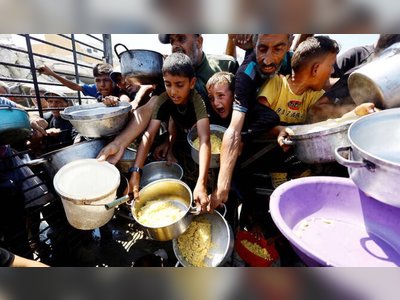
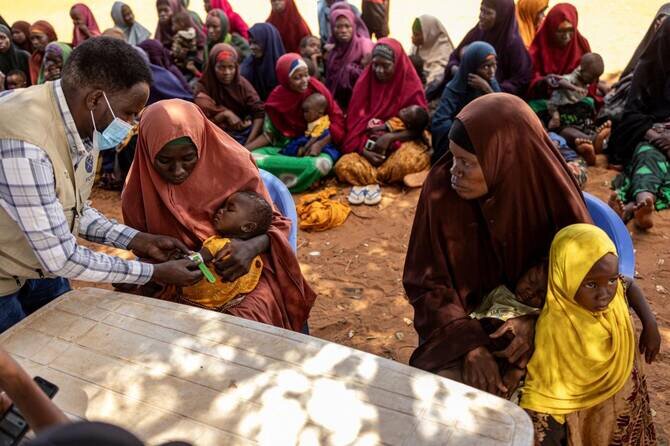
In regions severely affected by the drought, families are being forced to abandon their homes in search of assistance due to crop failures, livestock losses, and water shortages.
Urban areas such as Mogadishu and Baidoa, which already face overwhelming demand for services, are receiving these displaced individuals with limited access to shelter, clean water, and basic services.
At the end of February, it was reported that nearly 6.5 million people in Somalia were experiencing crisis levels of food insecurity, representing almost one-third of the country's population.
Moreover, over 1.8 million children are expected to suffer from acute malnutrition this year.
Despite these dire conditions, UN agencies and their partners have received only 14% of the requested funding for humanitarian aid in Somalia this year.
In response, IOM has conducted a 'hyper-prioritized needs assessment' identifying an urgent need for $10 million to address the life-threatening situations faced by vulnerable populations.
Without prompt action, displacement due to drought is anticipated to continue.
The situation in Somalia underscores the importance of immediate humanitarian support and sustainable solutions to mitigate the impact of climate-induced displacements on vulnerable communities.
The International Organization for Migration (IOM) attributes three out of every four new displacements within these areas to drought conditions.
Additionally, hunger levels are on the rise as the worsening climate situation leads to crop failure and the collapse of livelihoods in Baidoa, Dayniile, Kahda, Diinsoor, and Doolow districts.
Brian Kelly, IOM's senior program coordinator for Somalia, has estimated that 300,000 individuals have been displaced by drought nationwide.
Furthermore, if the Gu rainy season does not bring sufficient relief, approximately 125,000 more people are projected to be displaced during this period, according to the Displacement Tracking Matrix.
In regions severely affected by the drought, families are being forced to abandon their homes in search of assistance due to crop failures, livestock losses, and water shortages.
Urban areas such as Mogadishu and Baidoa, which already face overwhelming demand for services, are receiving these displaced individuals with limited access to shelter, clean water, and basic services.
At the end of February, it was reported that nearly 6.5 million people in Somalia were experiencing crisis levels of food insecurity, representing almost one-third of the country's population.
Moreover, over 1.8 million children are expected to suffer from acute malnutrition this year.
Despite these dire conditions, UN agencies and their partners have received only 14% of the requested funding for humanitarian aid in Somalia this year.
In response, IOM has conducted a 'hyper-prioritized needs assessment' identifying an urgent need for $10 million to address the life-threatening situations faced by vulnerable populations.
Without prompt action, displacement due to drought is anticipated to continue.
The situation in Somalia underscores the importance of immediate humanitarian support and sustainable solutions to mitigate the impact of climate-induced displacements on vulnerable communities.