

Covid-19 jabs drive to continue with man’s death seen as unrelated to vaccine
Hong Kong will continue its Covid-19 immunisation programme using Sinovac, as an expert committee monitoring the side effects of vaccines has made a preliminary conclusion that the death of a chronically ill man after receiving a shot was not related to the Chinese-made jab.
After a special meeting of the Expert Committee on Clinical Events Assessment Following Covid-19 Immunisation, co-convenor Professor Ivan Hung Fan-ngai said on Wednesday evening that members had reached the unanimous conclusion after assessing the case of the 63-year-old man, who suffered from diabetes and coronary artery disease.
Hung suggested the patient had died of a heart attack and respiratory failure triggered by excessive fluid in the lungs, but added that they would still have to wait for a comprehensive postmortem report before making a final conclusion.
Dr Lee Cheuk-kwong, also a co-convenor of the expert committee, said a detailed postmortem report would be ready in about two weeks, after which a further assessment would be made. He noted that the patient had not been managing his illnesses well prior to receiving the vaccine.
Hung said: “As the expert committee has made a judgment that the death has no direct link to the vaccination, we can tell you the vaccination programme will carry on.”
The assurance came as the city confirmed 14 new Covid-19 infections, all locally transmitted and eight of them untraceable. Hong Kong’s infection tally now stands at 11,046, with 200 related deaths.
Hung urged the elderly and high-risk groups to get vaccinated as soon as possible, but he also reminded those with underlying conditions and chronic illnesses to consult their doctors before taking the shots.
The Beijing-based Global Times newspaper quoted Yin Weidong, CEO of vaccine producer Sinovac Biotech, as saying: “We are confident in the overall safety of the Sinovac vaccine as it was proven to be safe from observations of mass vaccinations.”
With bookings for the first 140,000 doses of the Pfizer-BioNTech vaccine opening on Wednesday morning, health professionals urged those with chronic diseases who were unsure about their conditions to speak to their doctor before taking either available jab.
The government’s booking website for both vaccines carried a warning to the same effect.
Chinese University respiratory medicine expert Professor David Hui Shu-cheong, a government adviser on the pandemic, said the man’s death was likely to be related to cardiovascular disease.
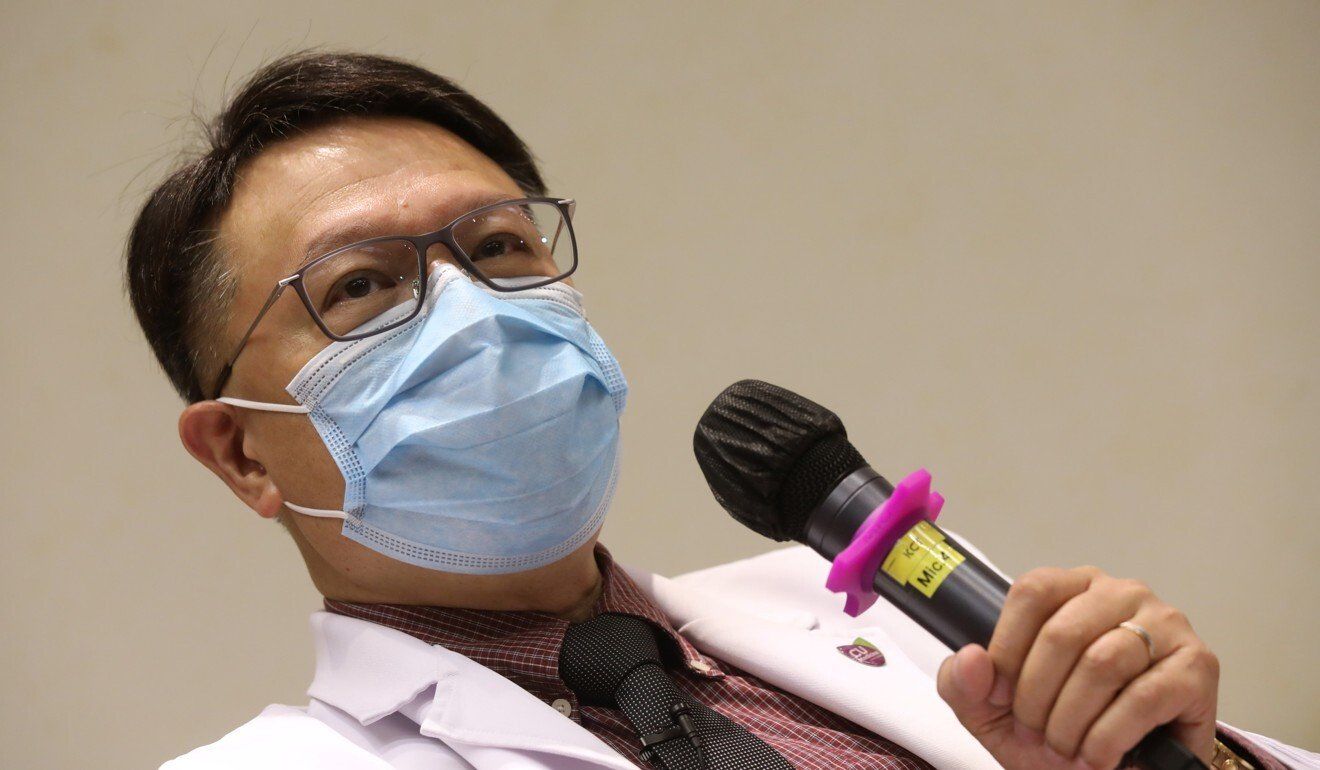 Professor David Hui.
Because the man had four risk factors associated with heart disease – his smoking habit, high blood pressure, hyperlipidemia and diabetes –his deterioration might not have been directly linked to the vaccine, said Hui, adding that assessment would have to be confirmed by the postmortem report.
“If many people have malaise over the whole body and leads to something like Guillain-Barré syndrome after vaccination, then [the scheme] may have to be suspended,” he told a radio show, referring to a rare neurological disorder.
“But as the patient was over 60 and had four high-risk factors of coronary heart disease, perhaps the scheme does not have to stop because of this case.”
The patient received the mainland-produced jab on February 26 at Kwun Chung Sports Centre in Jordan, one of the government’s designated vaccination sites. He went to Queen Elizabeth Hospital in Yau Ma Tei on February 28 after suffering shortness of breath and died about 4½ hours later.
At the vaccination centre, Dr Samuel Kwok Po-yin said the take-up rate of appointments on Wednesday was 95 per cent by 1.30pm.
Kwok said his team had received more inquiries from residents after the man’s death was revealed, and had decided not to proceed with the vaccination of more than 10 people for various reasons.
He said the centre did not have information about the deceased patient or medical records for residents. But Kwok said he could confirm the patient did not fall ill during the vaccination process or as he left the centre.
“The vaccination centre is not able to carry out [a thorough assessment for chronically ill patients] because it is not providing medical services. The examination cannot just be done by a brief conversation,” Kwok said.
Family practitioner Dr Lam Wing-wo agreed that introducing full consultations for each person at a vaccination centre could be difficult and would slow the inoculation rate. But Lam also said vaccination centres could do a better job screening for those who might be unfit for the shots.
“For example, a blood pressure check could be done on those aged 70 or older,” Lam said. “Could health care staff at the vaccination centres access the medical records of people aged 85 or older on the electronic health record sharing system?”
However, Dr David Lam Tzit-yuen, chairman of Medical Conscience, which will help run a vaccination centre in Queen Elizabeth Stadium when it opens in late March, said even those extra steps would be difficult given the large number of people an injection site handled each day.
“Checking blood pressure alone is not sufficient. How about looking into oxygen in the blood or checking the pulse? These are not possible to do at the site,” he said. “[Detailed health checks] should not be done at the last step before vaccination.”
Earlier, a spokesman for the hospital said the deceased man, who also had a history of respiratory tract diseases, was admitted at around 1.30am on February 28, before being transferred to a medical ward at about 3am. However, his condition deteriorated rapidly and he died at about 6am. The death would go before the coroner.
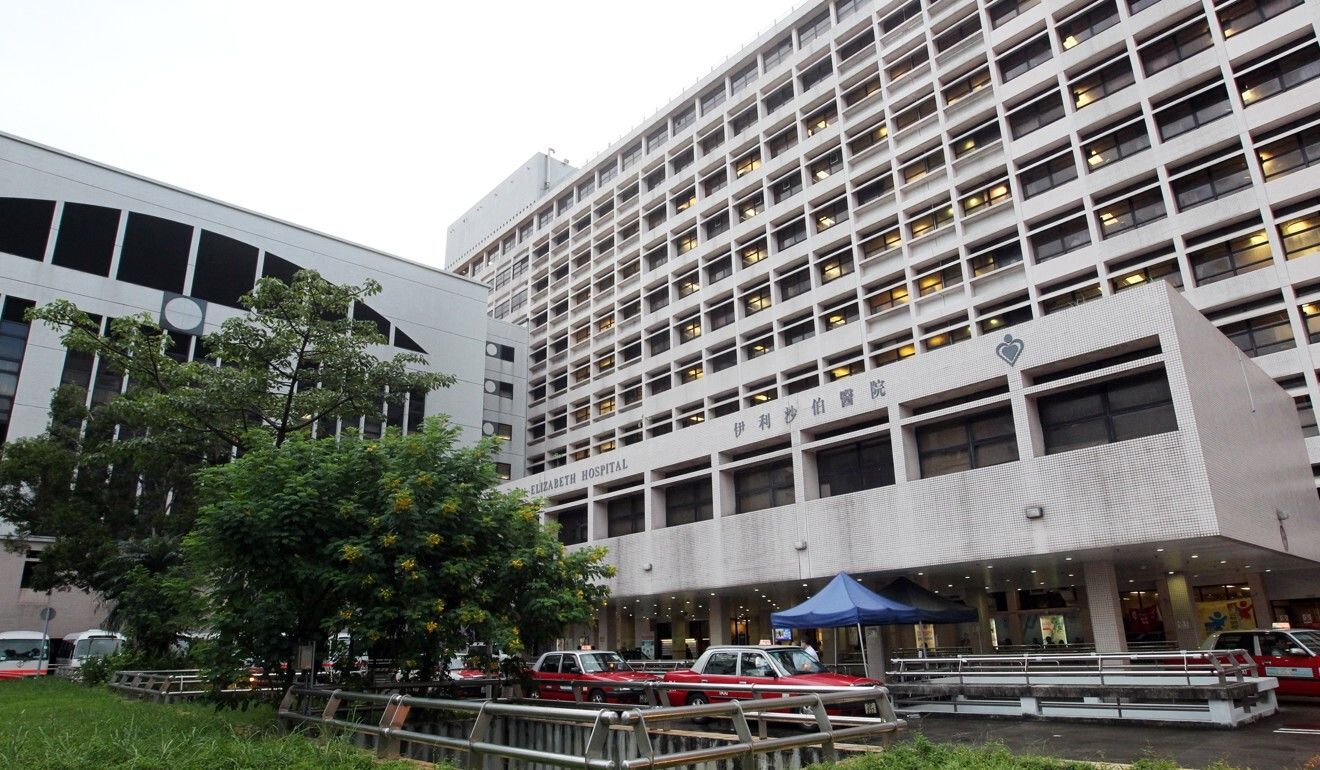 The man had been admitted to Queen Elizabeth Hospital in Kowloon.
The Hospital Authority said there were no signs during resuscitation attempts of the patient having suffered allergic reactions, and based on their clinical judgment, staff believed the man had chronic bronchitis, for which he had received treatment. None of the patient’s conditions that day could be associated with inoculation, the spokesman added.
Dr Lau Ka-hin, a chief manager at the authority, denied that news of the man’s death had been suppressed. The case was only made public two days after the fatality.
“It definitely wasn’t a cover-up. When handling patients, we often think of their best interests,” Lau told a radio programme.
“[On Tuesday] when we went through the patient’s medical records again and saw the [vaccination information], we immediately made a report to the hospital management, head office of the Hospital Authority and the Department of Health.”
Hui said those with similar medical records to the patient were still suitable for receiving the shots if their diseases were well controlled.
“If those with chronic diseases are infected with the coronavirus, they could suffer more seriously and their mortality risk could increase,” he said, adding their likelihood of suffering side effects from the vaccination was not necessarily higher than those in good health.
William Chui Chun-ming, president of the Society of Hospital Pharmacists of Hong Kong, agreed chronically ill patients should be mindful of their health conditions.
“These patients should consult their family doctors or specialists because sometimes they don’t know whether they are stable,” he said.
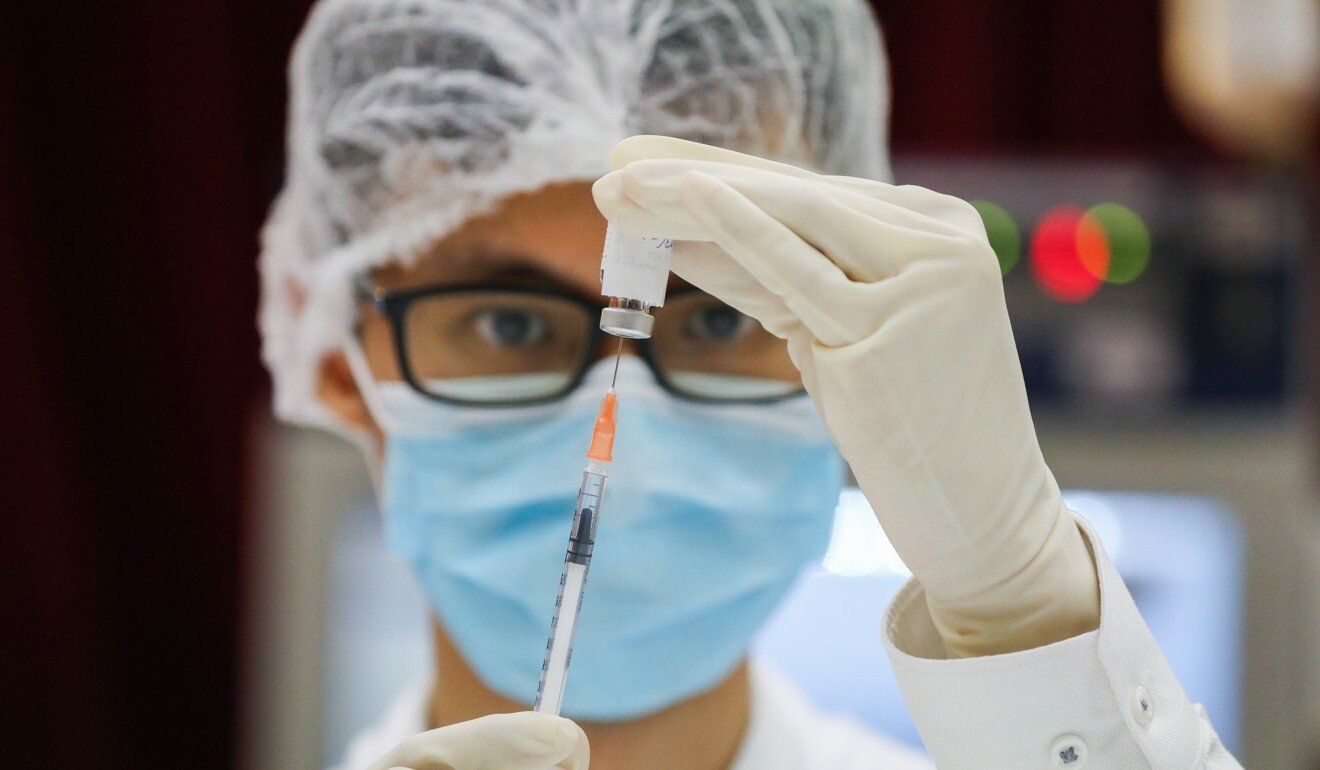 Residents can receive the
He noted just one death was reported and any link to the vaccine had not been established.
“The vaccination scheme should not be stopped, because the drugs are to help these Covid-19 high-risk groups … If we stop it just because of one case, then it is even more dangerous for many people in the high-risk groups.”
Other experts earlier said any serious allergic reactions would normally arise within an hour for most patients.
Meanwhile, bookings opened for the BioNTech vaccine, which was jointly developed by German and US firms, with 140,000 slots available for priority residents. The jabs will be offered from March 10 to March 30 at seven vaccination centres operated by the Hospital Authority.
Within half an hour of the appointment system’s launch, a Post check showed two centres had already been fully booked for the first day.
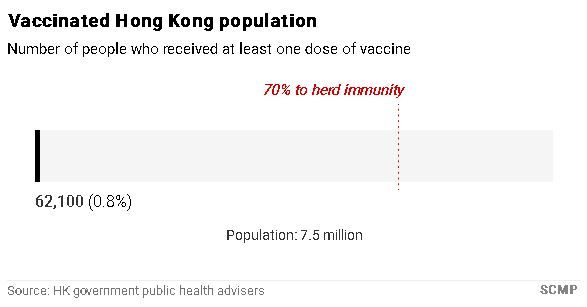
About 91,200 people made bookings for the BioNTech vaccine on Wednesday. Another 12,300 people made reservations for the Sinovac vaccine, a significant drop from the daily booking figure of 157,000 on Monday and 18,000 on Tuesday.
Separately, 185 of 1,480 residents from a building in To Kwa Wan were found to have violated mandatory testing notices when an enforcement operation was conducted on Wednesday morning. Residents from the block were required to show Covid-19 test results in the operation.