Saudi Arabia Positions Itself as Stabilizing Force in Global Energy Markets Amid Conflict Risks
Riyadh increases diplomatic and production coordination efforts as geopolitical tensions threaten long-term oil supply stability and price volatility.
SYSTEM-DRIVEN pressures in global energy markets are intensifying as Saudi Arabia expands its role in managing supply stability during a period of heightened geopolitical risk and prolonged regional conflict concerns.
The central development is Saudi Arabia’s effort to reinforce its position as a stabilizing anchor in global oil markets at a time when conflict risks in key producing and transit regions are raising uncertainty over supply continuity.
What is confirmed is that Saudi policymakers have publicly emphasized coordination with other producers and a commitment to preventing sharp disruptions in energy flows.
This approach is rooted in Saudi Arabia’s role as the world’s largest crude oil exporter and the de facto leader of the Organization of the Petroleum Exporting Countries Plus alliance, a grouping that collectively influences a significant share of global supply.
By adjusting output levels and maintaining spare production capacity, Riyadh retains the ability to respond to sudden shortages or demand spikes, a key mechanism underpinning its stabilizing function.
The broader context is a global energy system increasingly exposed to geopolitical fragmentation.
Conflicts in and around major producing regions, alongside tensions in maritime chokepoints, have raised concerns among importing economies about supply security and price volatility.
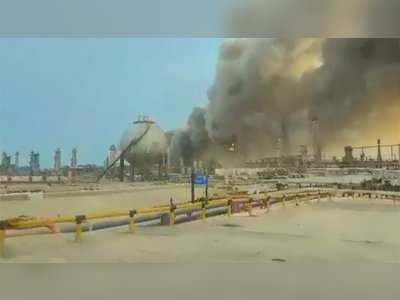
Even without direct disruption, risk premiums in oil markets tend to rise when conflict expands in proximity to critical infrastructure.
Saudi Arabia’s strategy operates on two parallel tracks.
The first is production management through coordinated decisions with other major producers, designed to prevent oversupply or shortages from destabilizing prices.
The second is diplomatic engagement with consuming nations, particularly in Asia, Europe, and North America, to reassure markets that supply continuity remains a priority.
At the same time, Saudi policymakers are attempting to balance stabilization goals with long-term economic transformation objectives under its national diversification agenda.
Oil revenues remain central to fiscal planning, even as investments expand into tourism, infrastructure, and industrial sectors aimed at reducing dependence on hydrocarbons.
The stakes are significant for global inflation dynamics.
Energy prices feed directly into transport, manufacturing, and food costs, meaning sustained volatility can transmit quickly into broader economic conditions.
Central banks and governments therefore treat stability in oil supply as a key macroeconomic variable, not only an energy concern.
The immediate consequence of Saudi Arabia’s positioning is a reinforcement of market expectations that spare capacity will be used to prevent extreme price spikes.
The broader implication is that global energy stability increasingly depends on coordinated production decisions among a small group of major exporters, with Saudi Arabia acting as the central balancing force in a system exposed to persistent geopolitical stress.
The central development is Saudi Arabia’s effort to reinforce its position as a stabilizing anchor in global oil markets at a time when conflict risks in key producing and transit regions are raising uncertainty over supply continuity.
What is confirmed is that Saudi policymakers have publicly emphasized coordination with other producers and a commitment to preventing sharp disruptions in energy flows.
This approach is rooted in Saudi Arabia’s role as the world’s largest crude oil exporter and the de facto leader of the Organization of the Petroleum Exporting Countries Plus alliance, a grouping that collectively influences a significant share of global supply.
By adjusting output levels and maintaining spare production capacity, Riyadh retains the ability to respond to sudden shortages or demand spikes, a key mechanism underpinning its stabilizing function.
The broader context is a global energy system increasingly exposed to geopolitical fragmentation.
Conflicts in and around major producing regions, alongside tensions in maritime chokepoints, have raised concerns among importing economies about supply security and price volatility.
Even without direct disruption, risk premiums in oil markets tend to rise when conflict expands in proximity to critical infrastructure.
Saudi Arabia’s strategy operates on two parallel tracks.
The first is production management through coordinated decisions with other major producers, designed to prevent oversupply or shortages from destabilizing prices.
The second is diplomatic engagement with consuming nations, particularly in Asia, Europe, and North America, to reassure markets that supply continuity remains a priority.
At the same time, Saudi policymakers are attempting to balance stabilization goals with long-term economic transformation objectives under its national diversification agenda.
Oil revenues remain central to fiscal planning, even as investments expand into tourism, infrastructure, and industrial sectors aimed at reducing dependence on hydrocarbons.
The stakes are significant for global inflation dynamics.
Energy prices feed directly into transport, manufacturing, and food costs, meaning sustained volatility can transmit quickly into broader economic conditions.
Central banks and governments therefore treat stability in oil supply as a key macroeconomic variable, not only an energy concern.
The immediate consequence of Saudi Arabia’s positioning is a reinforcement of market expectations that spare capacity will be used to prevent extreme price spikes.
The broader implication is that global energy stability increasingly depends on coordinated production decisions among a small group of major exporters, with Saudi Arabia acting as the central balancing force in a system exposed to persistent geopolitical stress.