Costa Rica's New Leader Vows Tough Stance Against Drug Gangs
President Laura Fernandez pledges to combat crime and overhaul the judiciary in Central American nation.
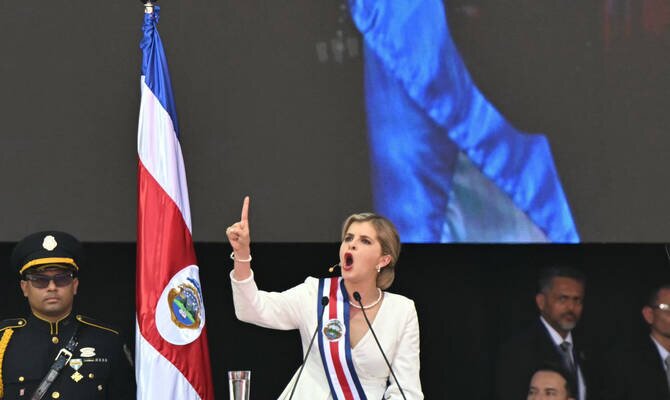
SAN JOSÉ: Costa Rica’s new President Laura Fernandez has vowed a ‘firm hand’ against drug trafficking at her inauguration as leader of the Central American tourism hotspot.
The 39-year-old succeeded her mentor Rodrigo Chaves, who survived two impeachment attempts by Congress over corruption allegations.
Fernandez easily won February 1 elections on a promise to crack down on crime in a country long considered one of the safest in the Americas.
At her inauguration, she donned a cream blazer dress and took the oath of office before large crowds of flag-waving supporters in the National Stadium of San José, Costa Rica’s capital.
‘A firm hand is what you expect,’ she said.
‘My hand will not tremble when confronting organized crime.’
Fernandez, who served as a minister under Chaves, was groomed to become his successor.
She has appointed him as a super-minister in her so-called ‘government of continuity,’ fueling suspicions that he will be calling the shots in her administration.
Costa Rica, a nation of 5.2 million people renowned for its white-sand beaches, has long been seen as an oasis of stability and democracy in Central America.
However, it has recently emerged as a logistical hub in regional drug trade, leading to a surge in local turf wars and murder rates.
‘I want to walk down the street without fearing a shootout,’ Nancy Gutierrez, a 50-year-old housewife, expressed her concern to AFP.
Fernandez plans to overhaul what she portrays as an overly permissive judiciary by toughening prison sentences.
She also cites Salvadoran President Nayib Bukele’s iron-fisted approach to crime as an inspiration.
Costa Rica is currently constructing a maximum-security prison modeled after El Salvador’s notorious mega-prison for suspected gang members.
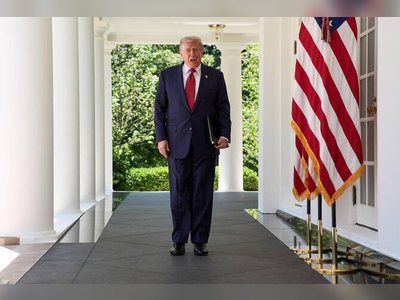
Fernandez has expressed support for US President Donald Trump, aligning herself with the Latin American right.
Recent months have seen the overthrow of several left-wing administrations in countries like Chile, Bolivia, and Honduras.
Political scientist Constantino Urcuyo commented on the shift towards authoritarianism and the strengthening of institutions: ‘The Bukele model has no place in Costa Rica.’
The 39-year-old succeeded her mentor Rodrigo Chaves, who survived two impeachment attempts by Congress over corruption allegations.
Fernandez easily won February 1 elections on a promise to crack down on crime in a country long considered one of the safest in the Americas.
At her inauguration, she donned a cream blazer dress and took the oath of office before large crowds of flag-waving supporters in the National Stadium of San José, Costa Rica’s capital.
‘A firm hand is what you expect,’ she said.
‘My hand will not tremble when confronting organized crime.’
Fernandez, who served as a minister under Chaves, was groomed to become his successor.
She has appointed him as a super-minister in her so-called ‘government of continuity,’ fueling suspicions that he will be calling the shots in her administration.
Costa Rica, a nation of 5.2 million people renowned for its white-sand beaches, has long been seen as an oasis of stability and democracy in Central America.
However, it has recently emerged as a logistical hub in regional drug trade, leading to a surge in local turf wars and murder rates.
‘I want to walk down the street without fearing a shootout,’ Nancy Gutierrez, a 50-year-old housewife, expressed her concern to AFP.
Fernandez plans to overhaul what she portrays as an overly permissive judiciary by toughening prison sentences.
She also cites Salvadoran President Nayib Bukele’s iron-fisted approach to crime as an inspiration.
Costa Rica is currently constructing a maximum-security prison modeled after El Salvador’s notorious mega-prison for suspected gang members.
Fernandez has expressed support for US President Donald Trump, aligning herself with the Latin American right.
Recent months have seen the overthrow of several left-wing administrations in countries like Chile, Bolivia, and Honduras.
Political scientist Constantino Urcuyo commented on the shift towards authoritarianism and the strengthening of institutions: ‘The Bukele model has no place in Costa Rica.’