China Extends Tariff-Free Access to African Markets, Leaving Eswatini Behind
China's latest trade policy initiative grants tariff-free access to imports from all but one African country for the next two years.
Effective Friday, China's new trade policy granting tariff-free access to its market has come into effect for Africa's largest economies, marking a significant development in Sino-African economic relations.
This move stands in contrast to the United States' protectionist approach under President Donald Trump, which saw the imposition of new import taxes.
The policy applies to Africa’s 20 largest economies, including South Africa, Egypt, Nigeria, Algeria, and Kenya.
Notably, China has already removed tariffs for 33 poorer African countries, leading to tariff-free treatment for goods from 53 out of 54 African nations.
The single exception is Eswatini, the only country with formal diplomatic ties to Taiwan.
China's Customs Tariff Commission of the State Council stated that this agreement aims to promote mutual development between China and Africa.
As an example, a shipment of South African apples entered China under the new zero-tariff policy on Friday morning.
The policy particularly benefits products such as cocoa from Ivory Coast and Ghana, coffee and avocados from Kenya, and citrus fruits and wine from South Africa.
This move is part of China's strategy to strengthen economic ties with Africa, which is expected to nearly double its population to 2.5 billion by 2050, according to the United Nations.
Currently, China serves as the largest trade partner for Africa, a position it reinforces through its latest policy initiative.
While the new policy promises benefits, especially for agricultural products, experts note that most African raw material exports, such as oil and minerals, already enjoyed tariff-free access to China.
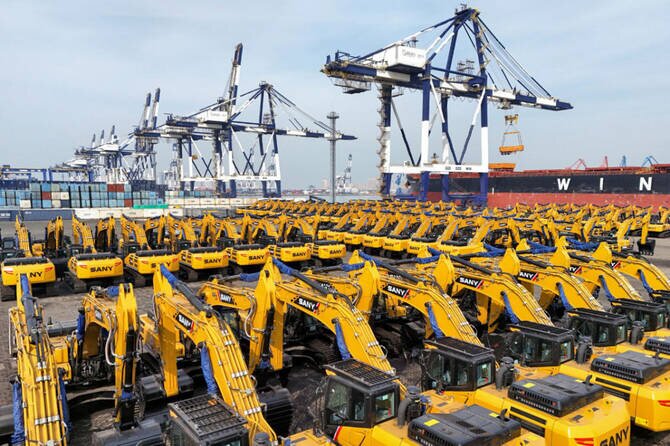
The large trade imbalance between China and Africa remains a critical aspect of their economic relationship, with China's exports far outpacing its imports from the continent.
Thierry Pairault, an expert on China-Africa relations at France’s National Center for Scientific Research, suggests that President Xi Jinping’s initiative positions China as an alternative to Western protectionism.
However, critics argue that the policy's benefits may be limited and primarily symbolic, pointing out that it does not significantly alter existing trade dynamics.
Despite these debates, South African Trade Minister Parks Tau expressed enthusiasm about working with China in a 'friendly, pragmatic, and flexible manner'.
This development reflects the evolving economic landscape in Africa, where nations are increasingly looking towards alternative markets amid changing global trade policies.
This move stands in contrast to the United States' protectionist approach under President Donald Trump, which saw the imposition of new import taxes.
The policy applies to Africa’s 20 largest economies, including South Africa, Egypt, Nigeria, Algeria, and Kenya.
Notably, China has already removed tariffs for 33 poorer African countries, leading to tariff-free treatment for goods from 53 out of 54 African nations.
The single exception is Eswatini, the only country with formal diplomatic ties to Taiwan.
China's Customs Tariff Commission of the State Council stated that this agreement aims to promote mutual development between China and Africa.
As an example, a shipment of South African apples entered China under the new zero-tariff policy on Friday morning.
The policy particularly benefits products such as cocoa from Ivory Coast and Ghana, coffee and avocados from Kenya, and citrus fruits and wine from South Africa.
This move is part of China's strategy to strengthen economic ties with Africa, which is expected to nearly double its population to 2.5 billion by 2050, according to the United Nations.
Currently, China serves as the largest trade partner for Africa, a position it reinforces through its latest policy initiative.
While the new policy promises benefits, especially for agricultural products, experts note that most African raw material exports, such as oil and minerals, already enjoyed tariff-free access to China.
The large trade imbalance between China and Africa remains a critical aspect of their economic relationship, with China's exports far outpacing its imports from the continent.
Thierry Pairault, an expert on China-Africa relations at France’s National Center for Scientific Research, suggests that President Xi Jinping’s initiative positions China as an alternative to Western protectionism.
However, critics argue that the policy's benefits may be limited and primarily symbolic, pointing out that it does not significantly alter existing trade dynamics.
Despite these debates, South African Trade Minister Parks Tau expressed enthusiasm about working with China in a 'friendly, pragmatic, and flexible manner'.
This development reflects the evolving economic landscape in Africa, where nations are increasingly looking towards alternative markets amid changing global trade policies.