US Airstrikes on Iranian-Linked Missile Sites Reveal How Washington Is Trying to Contain Escalation Without Triggering Regional War
American strikes against missile infrastructure tied to Iran-backed forces are continuing even as indirect diplomatic contacts remain active, exposing the unstable balance between military deterrence, regional pressure and the fragile possibility of renewed negotiations.
The latest American strikes on Iranian-linked missile infrastructure are fundamentally actor-driven because the conflict is being shaped directly by the strategic calculations of the United States and Iran as both sides attempt to apply pressure without crossing into full-scale regional war.
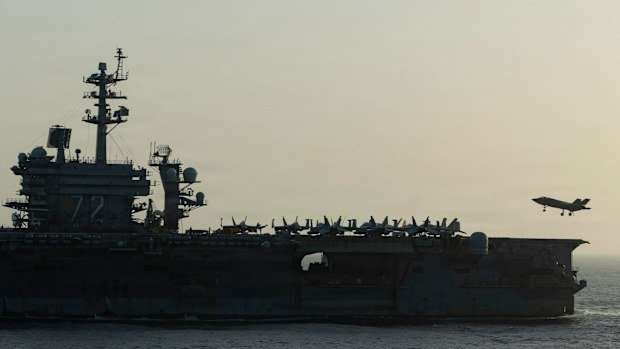
The United States carried out new strikes against missile-related targets connected to Iranian-backed groups even while diplomatic engagement and indirect communication channels involving Tehran continue operating.
The dual-track approach reflects a broader American strategy that combines military deterrence with controlled diplomatic pressure rather than pursuing immediate direct confrontation.
What is confirmed is that American forces targeted facilities associated with missile operations and weapons infrastructure tied to Iranian-aligned militias operating across the region.
The strikes come amid continuing instability involving attacks on shipping lanes, militia activity, missile launches and broader tensions linked to Iran’s regional network of armed groups.
The key issue is that Washington is attempting to separate tactical military escalation from strategic diplomatic collapse.
The United States increasingly views limited strikes as a mechanism for enforcing deterrence rather than a signal that negotiations are over.
American officials continue maintaining indirect communication pathways with Tehran through intermediaries even while military operations proceed.
This reflects how the regional conflict environment has evolved.
For years, the United States and Iran operated through what security analysts often describe as a shadow conflict involving sanctions, proxy groups, cyber operations, maritime incidents and selective military responses.
Direct war remained relatively rare because both governments understood the enormous economic and geopolitical costs of uncontrolled escalation.
That framework has become far more unstable since the Gaza war.
Iran-backed armed groups across Iraq, Syria, Lebanon and Yemen intensified attacks against Israeli, American and commercial targets following the conflict’s expansion across the region.
The United States responded with repeated airstrikes aimed at degrading missile launch systems, drone facilities, weapons depots and command infrastructure linked to those groups.
The missile dimension matters enormously.
Iran spent decades building one of the largest missile arsenals in the Middle East while simultaneously developing a regional network of allied militias capable of launching rockets, drones and precision-guided systems across multiple theaters.
This network allows Tehran to project influence indirectly while maintaining some degree of plausible deniability.
For Washington, missile infrastructure tied to Iranian-backed groups represents both an immediate operational threat and a strategic challenge.
American military planners increasingly worry about the ability of Iranian-aligned forces to disrupt shipping lanes, threaten military bases, strike regional allies and destabilize energy markets through coordinated missile and drone attacks.
The Red Sea crisis demonstrated the scale of that risk.
Houthi attacks on commercial shipping forced major rerouting of global trade traffic and increased concern that regional conflict could damage international supply chains and energy flows.
The United States therefore faces competing pressures.
If Washington responds too weakly to attacks linked to Iranian-backed forces, it risks encouraging further escalation and undermining deterrence.
If it responds too aggressively, it risks triggering direct confrontation with Iran itself.
That balancing act explains the current strategy.
American strikes are increasingly calibrated to hit military infrastructure while attempting to avoid actions that would force Tehran into a large-scale retaliatory response.
Iran appears to be applying a similar logic.
Tehran publicly condemns American operations and continues supporting allied armed groups across the region, but Iranian leadership also appears cautious about entering direct conventional war with the United States.
Iran’s economy remains under severe pressure from sanctions, inflation, currency instability and long-term structural weakness.
A major regional war would create enormous domestic and strategic risks for the Iranian government.
This produces a paradoxical situation in which military operations and diplomacy continue simultaneously.
Indirect negotiations involving sanctions, regional stability, prisoner exchanges and nuclear-related issues have not fully disappeared despite repeated military escalation.
The nuclear dimension remains critical.
The collapse of the original nuclear agreement after the United States withdrew during Donald Trump’s presidency fundamentally changed the strategic environment.
Iran subsequently expanded uranium enrichment and reduced compliance with earlier restrictions.
Since then, diplomacy has focused less on restoring the original framework exactly as it existed and more on preventing outright nuclear crisis while managing regional escalation.
The Biden administration largely pursued containment rather than comprehensive resolution.
Washington attempted to avoid direct regional war while preserving military pressure and sanctions leverage.
At the same time, American officials repeatedly signaled that diplomatic channels remain preferable to uncontrolled escalation.
Regional governments are watching closely.
Saudi Arabia, the United Arab Emirates, Qatar and other Gulf states increasingly seek stability because prolonged conflict threatens economic diversification plans, energy markets and infrastructure investment.
Several regional powers now pursue more flexible diplomacy involving both Washington and Tehran rather than aligning fully with one side.
China’s growing role in Middle Eastern diplomacy also altered calculations.
Beijing helped facilitate the Saudi-Iran rapprochement and continues expanding economic influence across the Gulf.
This reduced the degree to which regional diplomacy revolves exclusively around American strategic priorities.
Israel’s position further complicates the situation.
Israeli leaders increasingly view Iran’s missile program and regional proxy network as existential threats.
Israeli military operations against Iranian-linked targets across Syria, Lebanon and elsewhere intensified significantly over recent years.
This creates additional pressure on Washington because the United States must manage alliance commitments while also trying to prevent the broader region from sliding into uncontrolled war.
Financial markets and energy systems remain highly sensitive to every escalation cycle.
Any perception that conflict could disrupt Gulf shipping lanes or major oil infrastructure immediately affects global energy prices, insurance costs and trade logistics.
The military significance of the strikes themselves is therefore only part of the story.
The deeper issue is that the Middle East increasingly operates inside a permanent low-intensity confrontation system where missile attacks, proxy warfare, targeted strikes and diplomatic engagement coexist simultaneously.
Neither Washington nor Tehran currently appears to want full-scale war.
But both sides also believe backing down completely would weaken deterrence and regional influence.
That dynamic makes calibrated escalation the dominant operating model.
The practical consequence is that military strikes and peace talks are no longer mutually exclusive in Middle Eastern geopolitics.
They are increasingly functioning as parallel tools inside the same strategic competition over regional power, security architecture, missile deterrence and long-term political influence.
The United States carried out new strikes against missile-related targets connected to Iranian-backed groups even while diplomatic engagement and indirect communication channels involving Tehran continue operating.
The dual-track approach reflects a broader American strategy that combines military deterrence with controlled diplomatic pressure rather than pursuing immediate direct confrontation.
What is confirmed is that American forces targeted facilities associated with missile operations and weapons infrastructure tied to Iranian-aligned militias operating across the region.
The strikes come amid continuing instability involving attacks on shipping lanes, militia activity, missile launches and broader tensions linked to Iran’s regional network of armed groups.
The key issue is that Washington is attempting to separate tactical military escalation from strategic diplomatic collapse.
The United States increasingly views limited strikes as a mechanism for enforcing deterrence rather than a signal that negotiations are over.
American officials continue maintaining indirect communication pathways with Tehran through intermediaries even while military operations proceed.
This reflects how the regional conflict environment has evolved.
For years, the United States and Iran operated through what security analysts often describe as a shadow conflict involving sanctions, proxy groups, cyber operations, maritime incidents and selective military responses.
Direct war remained relatively rare because both governments understood the enormous economic and geopolitical costs of uncontrolled escalation.
That framework has become far more unstable since the Gaza war.
Iran-backed armed groups across Iraq, Syria, Lebanon and Yemen intensified attacks against Israeli, American and commercial targets following the conflict’s expansion across the region.
The United States responded with repeated airstrikes aimed at degrading missile launch systems, drone facilities, weapons depots and command infrastructure linked to those groups.
The missile dimension matters enormously.
Iran spent decades building one of the largest missile arsenals in the Middle East while simultaneously developing a regional network of allied militias capable of launching rockets, drones and precision-guided systems across multiple theaters.
This network allows Tehran to project influence indirectly while maintaining some degree of plausible deniability.
For Washington, missile infrastructure tied to Iranian-backed groups represents both an immediate operational threat and a strategic challenge.
American military planners increasingly worry about the ability of Iranian-aligned forces to disrupt shipping lanes, threaten military bases, strike regional allies and destabilize energy markets through coordinated missile and drone attacks.
The Red Sea crisis demonstrated the scale of that risk.
Houthi attacks on commercial shipping forced major rerouting of global trade traffic and increased concern that regional conflict could damage international supply chains and energy flows.
The United States therefore faces competing pressures.
If Washington responds too weakly to attacks linked to Iranian-backed forces, it risks encouraging further escalation and undermining deterrence.
If it responds too aggressively, it risks triggering direct confrontation with Iran itself.
That balancing act explains the current strategy.
American strikes are increasingly calibrated to hit military infrastructure while attempting to avoid actions that would force Tehran into a large-scale retaliatory response.
Iran appears to be applying a similar logic.
Tehran publicly condemns American operations and continues supporting allied armed groups across the region, but Iranian leadership also appears cautious about entering direct conventional war with the United States.
Iran’s economy remains under severe pressure from sanctions, inflation, currency instability and long-term structural weakness.
A major regional war would create enormous domestic and strategic risks for the Iranian government.
This produces a paradoxical situation in which military operations and diplomacy continue simultaneously.
Indirect negotiations involving sanctions, regional stability, prisoner exchanges and nuclear-related issues have not fully disappeared despite repeated military escalation.
The nuclear dimension remains critical.
The collapse of the original nuclear agreement after the United States withdrew during Donald Trump’s presidency fundamentally changed the strategic environment.
Iran subsequently expanded uranium enrichment and reduced compliance with earlier restrictions.
Since then, diplomacy has focused less on restoring the original framework exactly as it existed and more on preventing outright nuclear crisis while managing regional escalation.
The Biden administration largely pursued containment rather than comprehensive resolution.
Washington attempted to avoid direct regional war while preserving military pressure and sanctions leverage.
At the same time, American officials repeatedly signaled that diplomatic channels remain preferable to uncontrolled escalation.
Regional governments are watching closely.
Saudi Arabia, the United Arab Emirates, Qatar and other Gulf states increasingly seek stability because prolonged conflict threatens economic diversification plans, energy markets and infrastructure investment.
Several regional powers now pursue more flexible diplomacy involving both Washington and Tehran rather than aligning fully with one side.
China’s growing role in Middle Eastern diplomacy also altered calculations.
Beijing helped facilitate the Saudi-Iran rapprochement and continues expanding economic influence across the Gulf.
This reduced the degree to which regional diplomacy revolves exclusively around American strategic priorities.
Israel’s position further complicates the situation.
Israeli leaders increasingly view Iran’s missile program and regional proxy network as existential threats.
Israeli military operations against Iranian-linked targets across Syria, Lebanon and elsewhere intensified significantly over recent years.
This creates additional pressure on Washington because the United States must manage alliance commitments while also trying to prevent the broader region from sliding into uncontrolled war.
Financial markets and energy systems remain highly sensitive to every escalation cycle.
Any perception that conflict could disrupt Gulf shipping lanes or major oil infrastructure immediately affects global energy prices, insurance costs and trade logistics.
The military significance of the strikes themselves is therefore only part of the story.
The deeper issue is that the Middle East increasingly operates inside a permanent low-intensity confrontation system where missile attacks, proxy warfare, targeted strikes and diplomatic engagement coexist simultaneously.
Neither Washington nor Tehran currently appears to want full-scale war.
But both sides also believe backing down completely would weaken deterrence and regional influence.
That dynamic makes calibrated escalation the dominant operating model.
The practical consequence is that military strikes and peace talks are no longer mutually exclusive in Middle Eastern geopolitics.
They are increasingly functioning as parallel tools inside the same strategic competition over regional power, security architecture, missile deterrence and long-term political influence.