
United States Approves $9 Billion Sale of Patriot PAC-3 Missiles to Saudi Arabia
Saudi request for advanced air and missile defence interceptors cleared by Washington to strengthen integrated deterrence and regional security cooperation
The United States government has approved a proposed Foreign Military Sale worth an estimated nine billion dollars for Patriot Advanced Capability-3 Missile Segment Enhancement (PAC-3 MSE) interceptors and associated equipment to Saudi Arabia, marking a significant step in bilateral defence cooperation and Riyadh’s air defence modernisation efforts.
The State Department’s decision follows a formal request by the Saudi government for up to seven hundred thirty PAC-3 MSE missiles and related systems, including launcher conversion kits, logistics and technical support, spare parts and training.
The sale was notified to the U.S. Congress as part of the statutory review process required for major defence transfers.
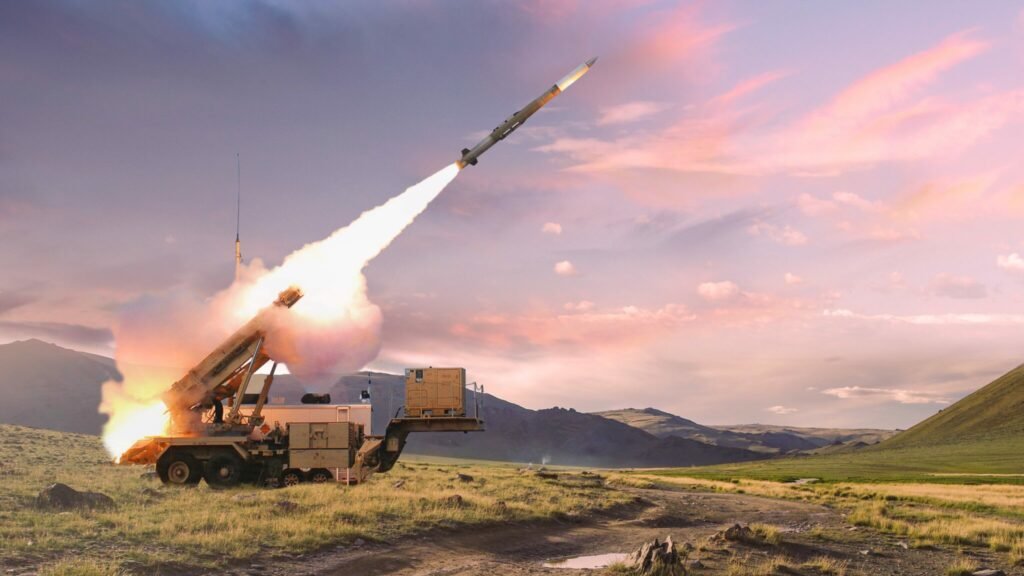
The PAC-3 MSE variant represents one of the most advanced interceptor configurations within the Patriot suite, designed to improve engagement performance against ballistic missile threats by employing “hit-to-kill” capabilities.
The proposed package is intended to enhance Saudi Arabia’s integrated air and missile defence (IAMD) system, reinforcing its ability to defend critical infrastructure, population centres and deployed ground forces from evolving aerial threats.
Principal contractor Lockheed Martin will provide the missiles and support elements.
The Pentagon has emphasised that the sale will not alter the basic military balance in the Middle East and will not adversely impact U.S. defence readiness.
Official statements have framed the transaction as supportive of shared foreign policy and security objectives, improving the defensive capabilities of a key partner and contributing to the stability of the wider region.
Saudi Arabia has long operated Patriot systems and continues to modernise its defence architecture amid complex regional dynamics.
The announcement came concurrently with several other approvals of U.S. military equipment sales to regional partners.
Officials assert that such cooperation bolsters collective defence postures and aligns with broader strategic priorities involving interoperability and burden-sharing among allies.
Implementation of the sale remains subject to completion of the congressional review period and subsequent contract finalisation, after which deliveries and support activities will proceed under agreed schedules.
The State Department’s decision follows a formal request by the Saudi government for up to seven hundred thirty PAC-3 MSE missiles and related systems, including launcher conversion kits, logistics and technical support, spare parts and training.
The sale was notified to the U.S. Congress as part of the statutory review process required for major defence transfers.
The PAC-3 MSE variant represents one of the most advanced interceptor configurations within the Patriot suite, designed to improve engagement performance against ballistic missile threats by employing “hit-to-kill” capabilities.
The proposed package is intended to enhance Saudi Arabia’s integrated air and missile defence (IAMD) system, reinforcing its ability to defend critical infrastructure, population centres and deployed ground forces from evolving aerial threats.
Principal contractor Lockheed Martin will provide the missiles and support elements.
The Pentagon has emphasised that the sale will not alter the basic military balance in the Middle East and will not adversely impact U.S. defence readiness.
Official statements have framed the transaction as supportive of shared foreign policy and security objectives, improving the defensive capabilities of a key partner and contributing to the stability of the wider region.
Saudi Arabia has long operated Patriot systems and continues to modernise its defence architecture amid complex regional dynamics.
The announcement came concurrently with several other approvals of U.S. military equipment sales to regional partners.
Officials assert that such cooperation bolsters collective defence postures and aligns with broader strategic priorities involving interoperability and burden-sharing among allies.
Implementation of the sale remains subject to completion of the congressional review period and subsequent contract finalisation, after which deliveries and support activities will proceed under agreed schedules.