UK Voters Head to Polls in Local Elections Set to Impact Labour Party's Popularity
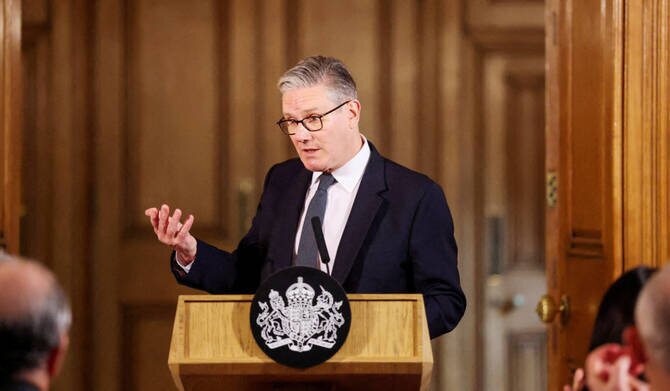
Local elections across Scotland, England, and Wales are expected to impact Prime Minister Keir Starmer's popularity and potentially lead to a leadership challenge within the Labour Party.
British voters head to the polls on Thursday for local elections that are anticipated to bring significant challenges for unpopular Labour Prime Minister Keir Starmer.
These elections represent the largest test for Starmer since his landslide victory in the July 2024 general election.
Millions of people across Scotland, England, and Wales are eligible to vote, with surveys indicating that Labour may face dire results.
This potential loss could accelerate discussions within the party regarding a leadership challenge, although no clear successor has emerged thus far.
The hard-right Reform UK party and the left-wing Greens are expected to gain ground as voters become increasingly disenchanted with established parties.
Political scientist Tim Bale attributes this shift partly to the government's unpopular decisions early in its term and Starmer's perceived lack of effective communication, as well as an electorate with diminishing patience and loyalty.
In Wales, Labour is projected to lose control of the devolved Welsh government in Cardiff for the first time since the country established its own parliament 27 years ago.
The ruling party also faces concerns about a potential humiliating outcome in Scotland, where voters will elect members of the Scottish devolved parliament.
According to pollster Robert Hayward, Labour could lose approximately 1,850 of the roughly 2,550 local authority seats it is defending.
A total of 5,000 council seats are up for grabs across the nation.
Reform is expected to gain around 1,550 seats from both Labour and Kemi Badenoch's right-wing Conservatives, primarily in white, working-class areas.
The Greens are anticipated to make significant gains at Labour's expense, particularly in London, with a focus on their pro-Gaza message.
While Starmer has been praised for his stance against US President Donald Trump regarding Iran, criticism remains due to the party's inability to spur economic growth amidst ongoing cost-of-living concerns.
Rumors persist that former Cabinet ministers might attempt to oust Starmer if results are unfavorable, though any challenger would need to be nominated by at least 20 percent of the party's MPs.
These elections represent the largest test for Starmer since his landslide victory in the July 2024 general election.
Millions of people across Scotland, England, and Wales are eligible to vote, with surveys indicating that Labour may face dire results.
This potential loss could accelerate discussions within the party regarding a leadership challenge, although no clear successor has emerged thus far.
The hard-right Reform UK party and the left-wing Greens are expected to gain ground as voters become increasingly disenchanted with established parties.
Political scientist Tim Bale attributes this shift partly to the government's unpopular decisions early in its term and Starmer's perceived lack of effective communication, as well as an electorate with diminishing patience and loyalty.
In Wales, Labour is projected to lose control of the devolved Welsh government in Cardiff for the first time since the country established its own parliament 27 years ago.
The ruling party also faces concerns about a potential humiliating outcome in Scotland, where voters will elect members of the Scottish devolved parliament.
According to pollster Robert Hayward, Labour could lose approximately 1,850 of the roughly 2,550 local authority seats it is defending.
A total of 5,000 council seats are up for grabs across the nation.
Reform is expected to gain around 1,550 seats from both Labour and Kemi Badenoch's right-wing Conservatives, primarily in white, working-class areas.
The Greens are anticipated to make significant gains at Labour's expense, particularly in London, with a focus on their pro-Gaza message.
While Starmer has been praised for his stance against US President Donald Trump regarding Iran, criticism remains due to the party's inability to spur economic growth amidst ongoing cost-of-living concerns.
Rumors persist that former Cabinet ministers might attempt to oust Starmer if results are unfavorable, though any challenger would need to be nominated by at least 20 percent of the party's MPs.