France Confronts Its Nazi-Era Art Looting Legacy in New Musée d'Orsay Gallery
The gallery showcases artworks acquired by Adolf Hitler and other Nazis, shedding light on the complex history of art looting during World War II.
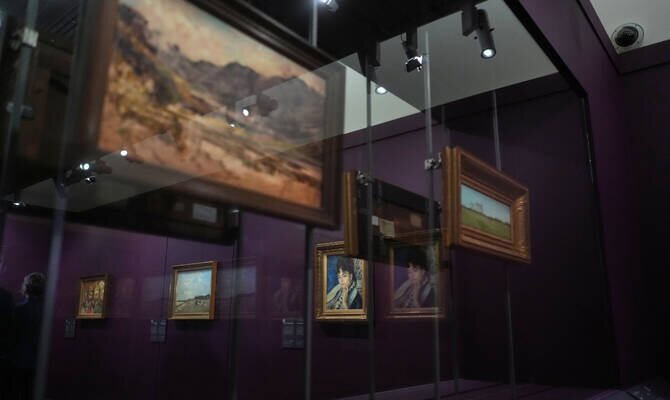
PARIS: The Musée d’Orsay has unveiled a new gallery dedicated to the Nazi-looted art that was swept up in the plunder of European Jews during World War II.
Among the 13 artworks on display, one painting by Belgian artist Alfred Stevens stands out as it once was intended for Adolf Hitler’s never-built museum in Linz, Austria.
The Musée d’Orsay houses one of approximately 2,200 such 'orphaned masterpieces' known as MNR (Musées Nationaux Récupération), which were retrieved from Germany and Austria after the war but have yet to be claimed by heirs.
This new gallery is a significant step in France's acknowledgment of its role during the Nazi era.
The gallery not only features artworks that were acquired by Hitler or other Nazis, but also includes pieces that were sold or forced from Jewish collectors under duress.
One notable piece is a Degas artwork that was part of the collection of Fernand Ochsé, who was deported to Auschwitz.
The gallery’s walls are adorned with historical details, including labels on the backs of the paintings showing their tumultuous journey from private collections into Nazi hands.
This initiative by France represents an attempt to confront its past and ensure that these cultural artifacts find their rightful owners or remain in public institutions as part of history's record.
The museum is taking a significant step forward with the establishment of its first research unit dedicated to tracing the origins of these unclaimed artworks, led by Ines Rotermund-Reynard.
The unveiling of this gallery comes at a time when France is grappling with rising antisemitic acts, including a recent surge following the Hamas attack on Israel in October 2023.
The gallery itself does not aim to combat antisemitism but serves as a reminder of the consequences of the Holocaust and the importance of preserving cultural heritage.
This exhibition marks a significant moment for France, aligning with global efforts to reclaim and understand the history of art looted during times of conflict.
Among the 13 artworks on display, one painting by Belgian artist Alfred Stevens stands out as it once was intended for Adolf Hitler’s never-built museum in Linz, Austria.
The Musée d’Orsay houses one of approximately 2,200 such 'orphaned masterpieces' known as MNR (Musées Nationaux Récupération), which were retrieved from Germany and Austria after the war but have yet to be claimed by heirs.
This new gallery is a significant step in France's acknowledgment of its role during the Nazi era.
The gallery not only features artworks that were acquired by Hitler or other Nazis, but also includes pieces that were sold or forced from Jewish collectors under duress.
One notable piece is a Degas artwork that was part of the collection of Fernand Ochsé, who was deported to Auschwitz.
The gallery’s walls are adorned with historical details, including labels on the backs of the paintings showing their tumultuous journey from private collections into Nazi hands.
This initiative by France represents an attempt to confront its past and ensure that these cultural artifacts find their rightful owners or remain in public institutions as part of history's record.
The museum is taking a significant step forward with the establishment of its first research unit dedicated to tracing the origins of these unclaimed artworks, led by Ines Rotermund-Reynard.
The unveiling of this gallery comes at a time when France is grappling with rising antisemitic acts, including a recent surge following the Hamas attack on Israel in October 2023.
The gallery itself does not aim to combat antisemitism but serves as a reminder of the consequences of the Holocaust and the importance of preserving cultural heritage.
This exhibition marks a significant moment for France, aligning with global efforts to reclaim and understand the history of art looted during times of conflict.