

This Amazing San Francisco House Has a Dazzling Array of Influences on Display
You would think that someone with as varied an international background as designer Antonio Martins would require a blank-canvas residence to accommodate the breadth of his many influences. After all, he is of Portuguese descent, he was raised in Brazil, he attended university in Switzerland, and he spent a decade living in Hong Kong and Bangkok while working for the Hyatt hotel group before moving to Chicago and eventually to San Francisco.
And yet, when Martins fell in love with this circa-1926 home in San Francisco, it was precisely because it came with its own rich history, whose complexity he wanted to honor. The house, in the now up-and-coming Bayview area of the city, was built by the Santinis-it has been referred to as the Villa Santini-who were a family of Italian immigrants with a successful business making architectural plaster moldings (they stored their surplus on their ground level or else used them in their own home). Attracted to its quirkiness and heritage, Martins first bid on the place in 2015, but lost it to a family moving to the Bay Area from New York. When the family moved back East two years later, he was able to purchase the place. After renovating it in two phases-first, he restored its structure and history (it hadn’t been updated in 30 years), then he converted the former Santini factory storage into a garage and gallery-Martins filled it with a mix of Chinese and European art, antiques purchased at auction, and a few contemporary pieces for contrast. 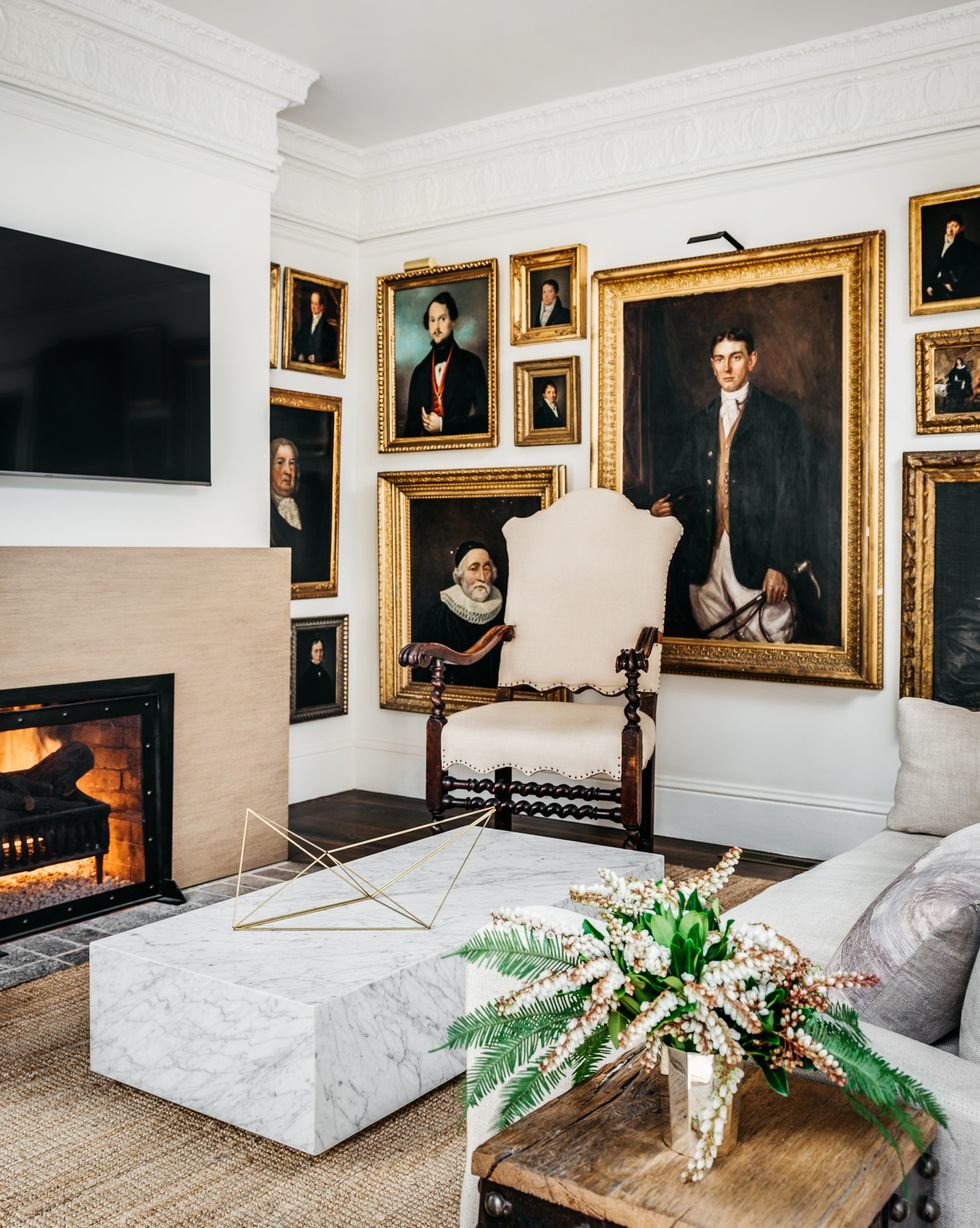
“You come inside my house and you know who I am-I always say that one day I would love to trash everything and start from zero, but that’s just a fantasy,” explains Martins, who transitioned to interior design, a childhood dream, in 2002 after a successful career in hotel management. “We have so much history behind all of us and that’s how I like to do it.”
Here, Martins walks us through the myriad influences in his San Francisco home.
What drew you to the Bayview neighborhood?
Antonio Martins: I moved to San Francisco from Chicago in 2002, and I lived in a neighborhood called Hayes Valley-it was a changing neighborhood back then. And then Hayes Valley became super popular, and in 2008 I bought a house in an area called the Dogpatch, when no one really knew what the Dogpatch was. And then the Dogpatch became very fancy. So I was like, What is the next neighborhood? The Bayview is just 15 minutes from downtown and it’s one of those transitional neighborhoods-it was originally for people who worked in the shipyard at the turn of the century. Then when the shipyards went down it became a simpler neighborhood. And now there is change going on-artists moving in and some warehouses being done for designers and for furniture manufacturers-so it’s slowly changing.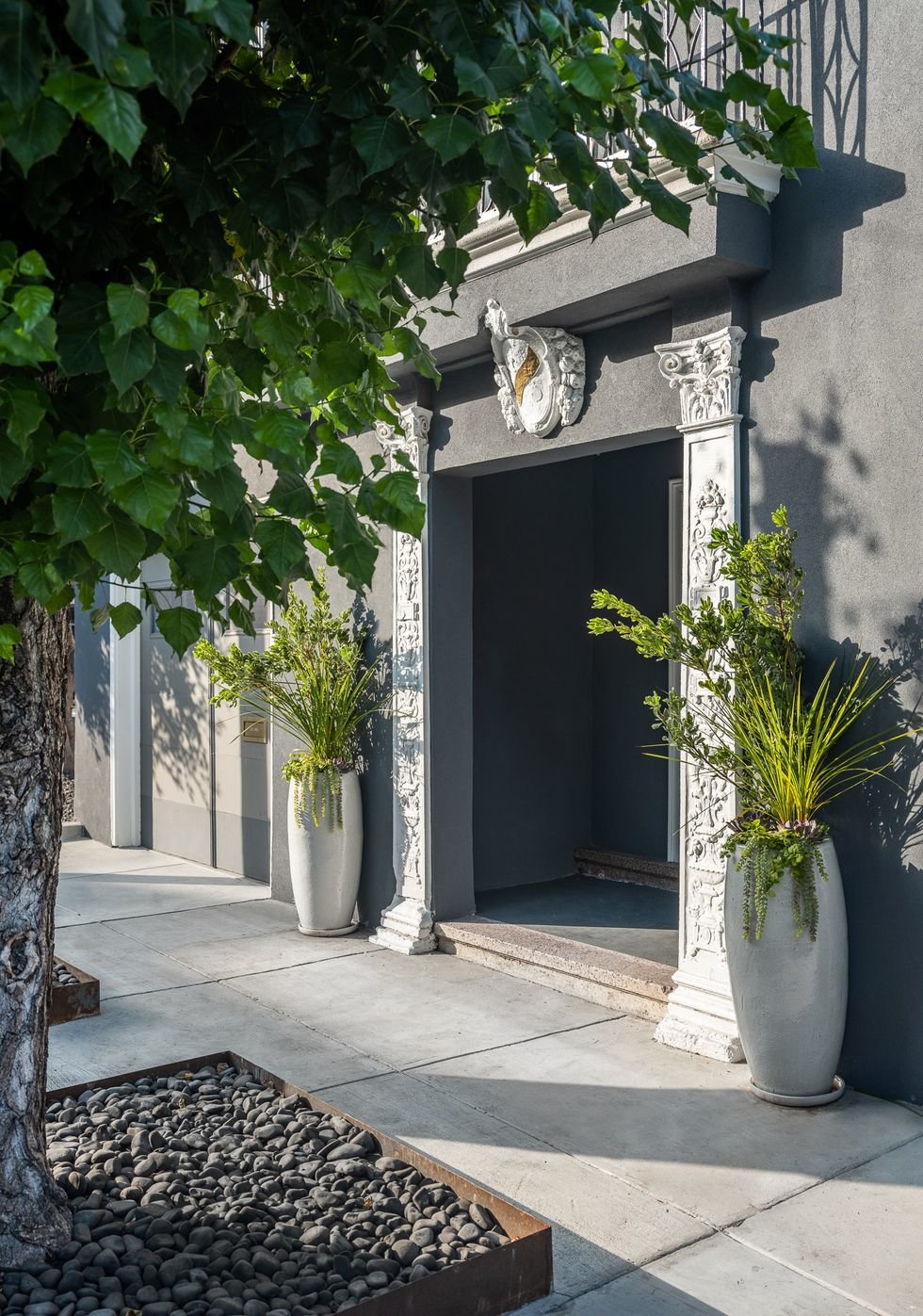
ED: Were you able to get a lot of historical information on the house when you were restoring and renovating it?
AM: Yes. The agent who sold it specialized in the Bayview, so he had a few things. And then I went to City Hall and the library and I started finding information on the Santini family. I was able to collect quite a lot of information, including photos of the exterior, but nothing of the interiors. The family was pretty well known for their plaster moldings. If you look at the moldings in the living room and dining room, they’re really oversized. They were probably not the type of molding that would have been used in a simple house in this neighborhood. But because they might have made them for a much better house in Pacific Heights or Nob Hill, they probably said, “Oh, let me do a little more linear footage and apply it here.” So it was really interesting to see such a simple house with such over-the-top moldings.
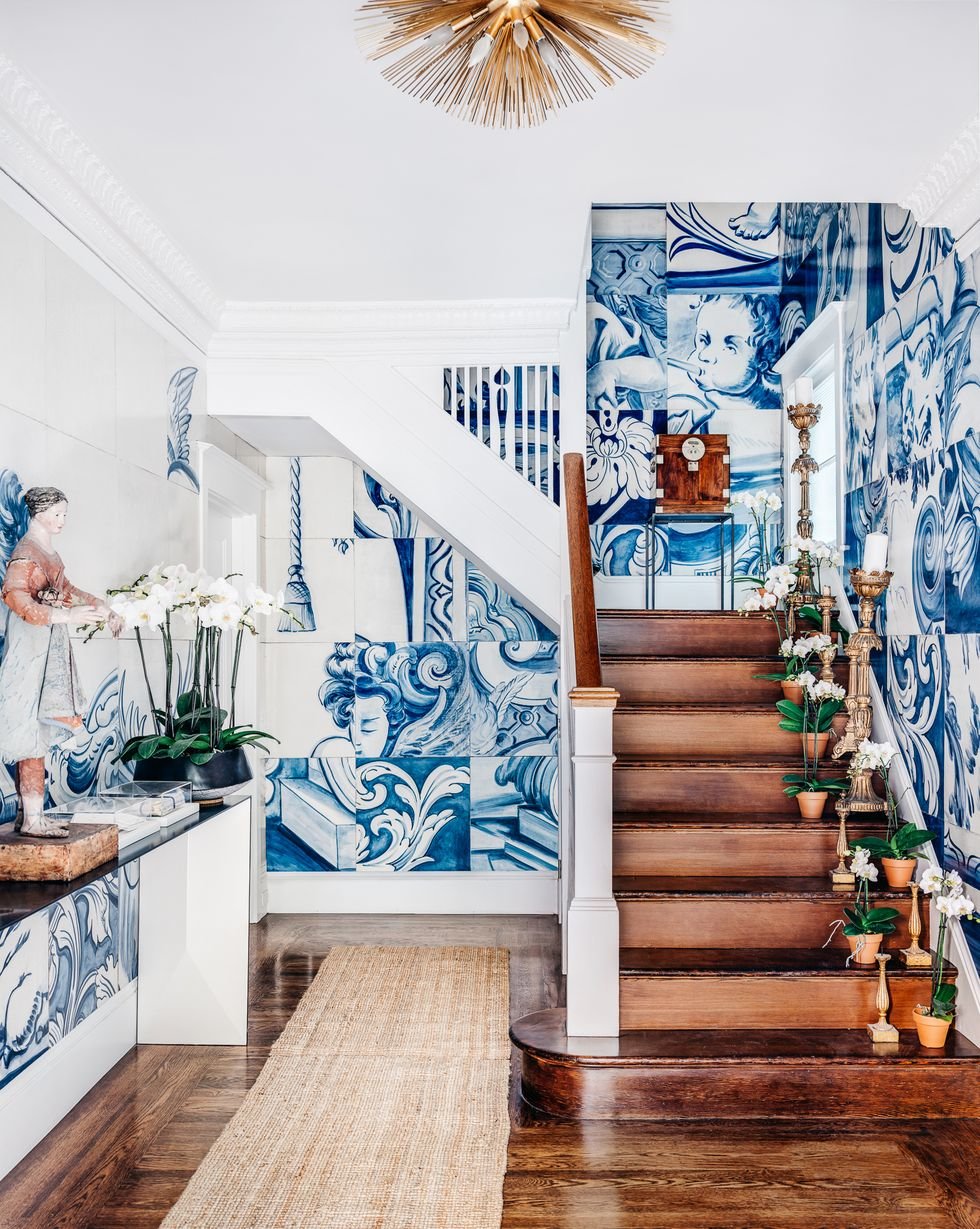
ED: I love the oversized hand-painted tiles in the entryway. What was the idea behind them?
AM: We did these tiles for the San Francisco Decorator Showcase in 2014. They were reproductions of 17th- and 18th-century blue-and-white tiles. But instead of being the small three by three inches, we made them 24 by 24 inches. I had them in my garage for basically four years. And I thought, It’s my history, it’s my story. It was exactly the amount of tiles we needed for that space-we probably had to do three more in white. There are 242 tiles. Nowadays everyone wants wallpaper everywhere, but I had all these handmade pieces in my garage, so why not?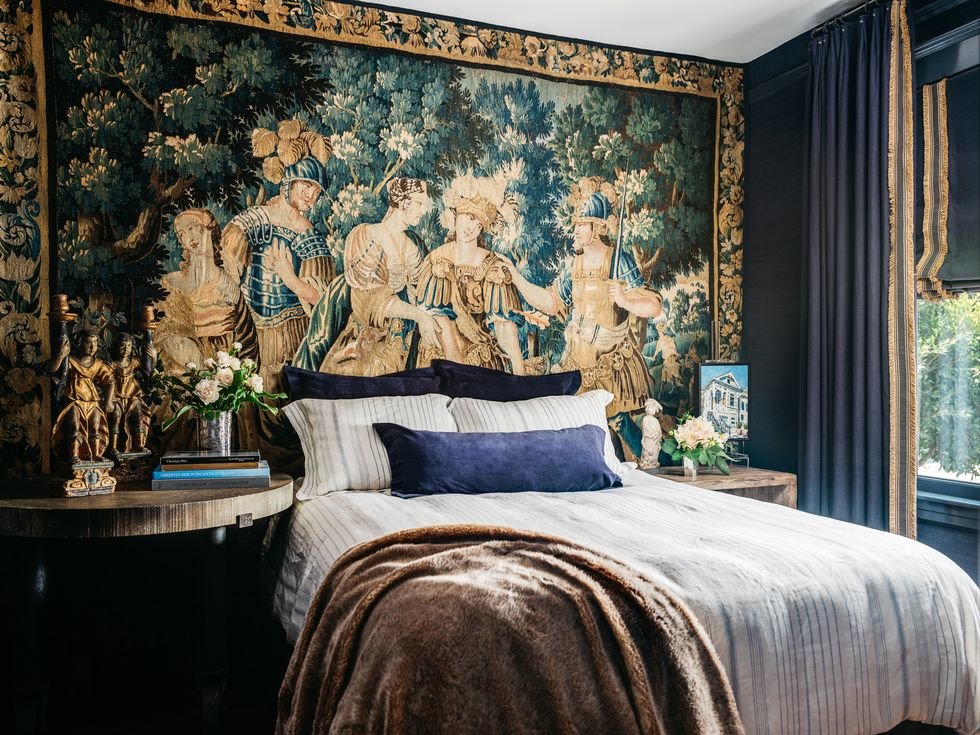
ED: And those antique portraits in the living room-you must have been collecting them for years.
AM: I have one or two from my family. And I helped a friend decorate his house, and he had a lot. And I thought, Oh, this is so fun. I started to collect them from auctions over the past 10 years. And normally I choose just the portrait, the face. I always want something that’s gold-framed, with a black background.
ED: You lived in Asia while you were working for Hyatt. There’s a lot of Chinese art throughout your house. Are those all pieces you picked up abroad?
AM: In Hong Kong there is a place called Hollywood Road, this street with all these antiques. I would basically go every Saturday to Hollywood Road and buy and buy. 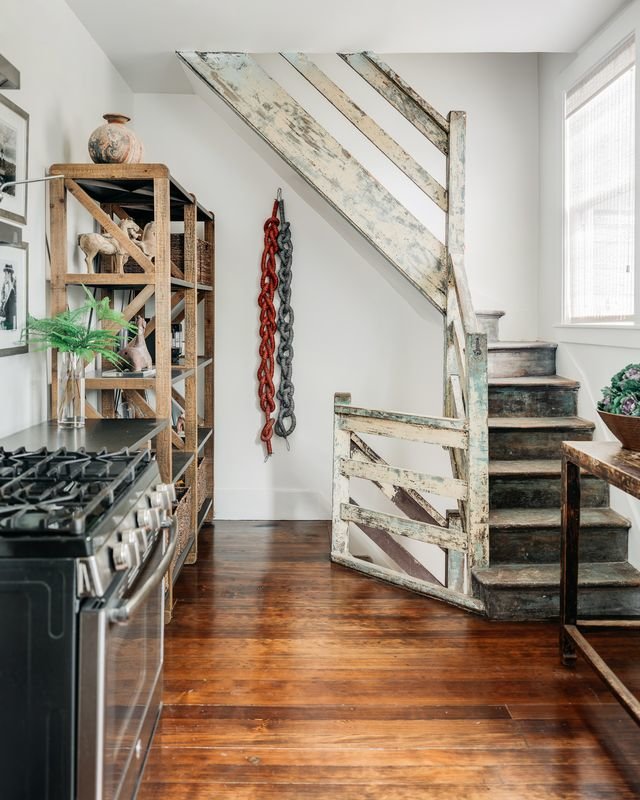
ED: The kitchen doesn’t have much culinary equipment.
AM: I can barely fry an egg.
ED: Has that not changed a bit in the past few months?
AM: Oh my god-I made the best veal ragout last week. And then this week, for the first time, I made a lasagna. And I was like, What is happening to me? In hotel school we took cooking lessons, and my brother is a very famous chef in Lisbon. So I come from a family that’s obsessed with cooking, but I’ve never been able to cook anything.
ED: I love that you have art on the shelves in the kitchen. Could you do that because you knew you wouldn’t have the normal culinary tchotchkes in there?
AM: Yeah, and I also think we all have so much stuff in the kitchen, like appliances we use once a year. So I have less of that, and then decoration and art and sculptures in the mix. I don’t have a refrigerator in the kitchen-I have a little minibar, like from a hotel, and all there is inside is yogurt, Champagne, and Diet Coke. In the garage downstairs I have a big refrigerator, but not in the kitchen.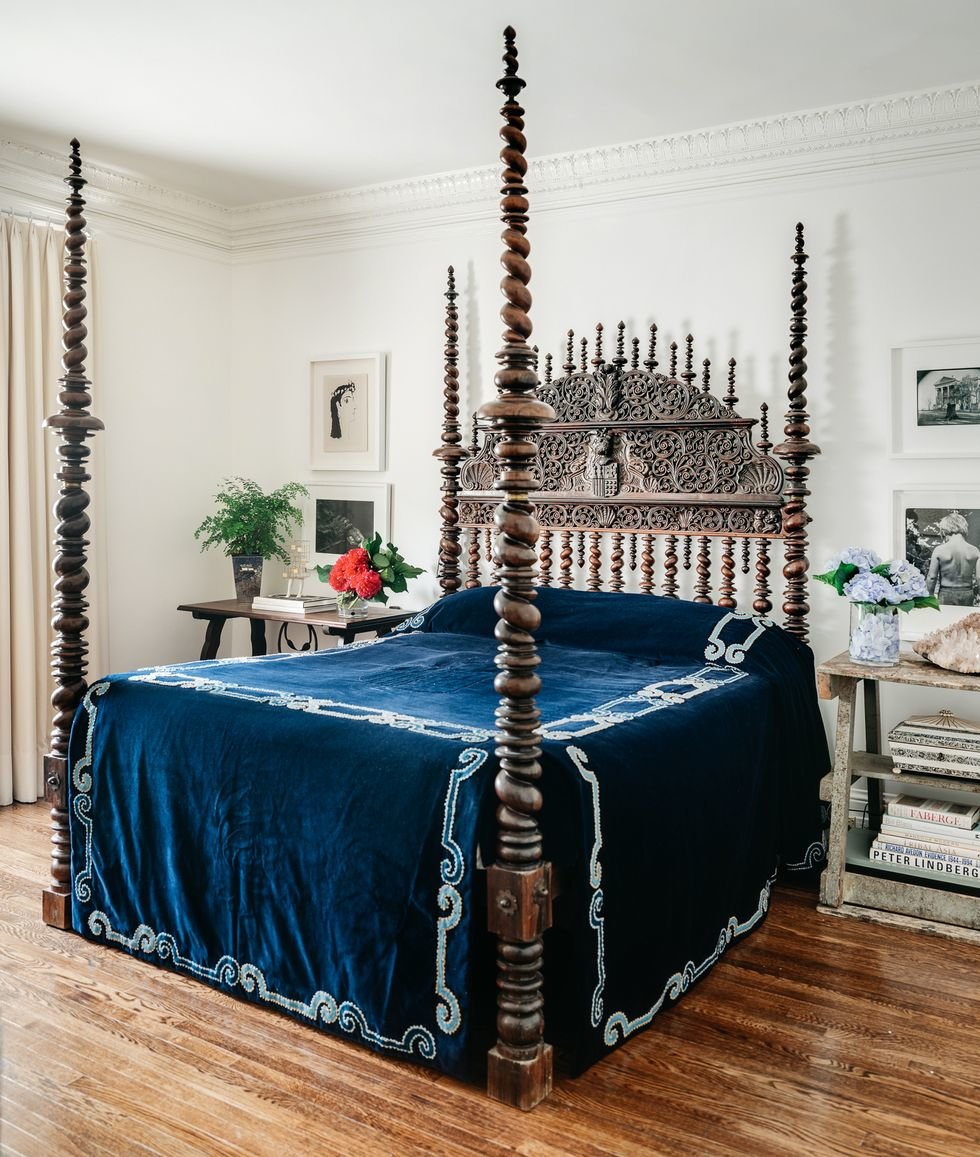
ED: You put your family heirloom bed in the guest room-why not in your own bedroom?
AM: It was a family bed that was at a cousin’s house, and then she passed away and I inherited it. For me personally, I love small bedrooms. The other bedroom where I sleep, the one with the tapestry, is maybe half the size of the guest room. And in reality those beds are not the most practical thing. I move a lot when I sleep, so it makes the whole thing move around.
ED: Why do you like smaller bedrooms?
AM: I think they’re cozier. The main bedroom I did in a dark blue grass cloth. I love bedrooms that go totally dark. So that other bedroom where I sleep every night, you close the windows and the window treatments, and it gets totally dark for as long as you want to sleep.
ED: So you prefer sleeping in a cave, essentially.
AM: Basically, yes. A little dungeon, a dark cave.
ED: You have that tapestry with various figures above your bed, in addition to the portraits in the living room. Are you a superstitious person?
AM: No. And everyone comes to my house and is like, “Oh my god, there’s so many people staring at you in the living room. Aren’t you scared?” And I’m like, “No, I love it!” But that 17th-century tapestry was just meant to be. The only problem is that I put it up and went to bed the first night. And it smelled like…hell. Because it had not been cleaned in 200 years. It was cheaper to have it restored in Paris by a company called Chevalier, who are the best restorers, than in the United States. The challenge is today that nobody wants this stuff, so I’m so happy that I can now buy all this.
ED: There’s an advantage to having aesthetic tastes that maybe aren’t for the masses.
AM: And if you look at the craftsmanship, in the paintings in the living room or that tapestry, it’s incredible. They are 300 years old and they’ve survived. We are doing a project right now where the clients don’t want anything that is old. So we are going to Paris, London, Milan to buy amazing stuff. You buy a new carpet, it costs more than a 17th-century tapestry, but as you say, it’s a difference of taste. We did a very modern house in Pacific Heights, all-white, all very clean, all very modern. But I was able to sell them on a big tapestry, and they loved it. At first, she was like, It’s so weird. But then they put it up and they loved it. It became a cool contrast.
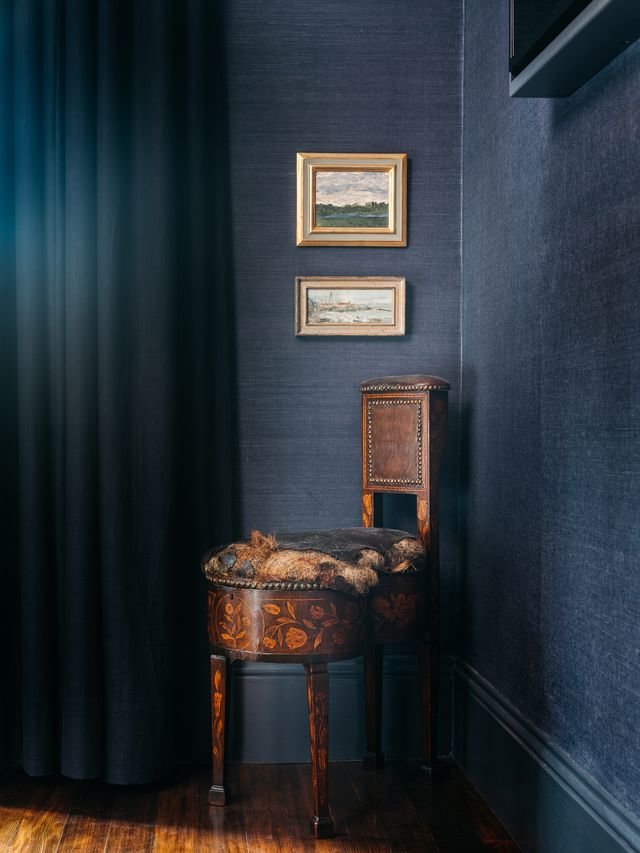
ED: The toilet chair in the main bedroom also seems quite aged. I assume that’s the original upholstery.
AM: I found that one at auction as well. I was always in love with Rose Tarlow-in her house in L.A., she has a bunch of chairs like this. And I remember since the 1990s looking at Rose Tarlow’s home and thinking, I’m going to get that. It has so much character. The leather is original and it’s cracked and you can see the horsehair underneath.
Take a Tour of Antonio Martins’s 1926 San Francisco Home
ED: I like how you left the banisters in the gallery unfinished. When you were doing the historical renovation, how did you decide what to leave in its original state versus updating?
AM: This is a back staircase-there’s also a front one. And the back handrail was full of different-colored paints. I just loved the texture and the layering in there. When you get an old house, I love to find the personality and keep it. I’m just so sad nowadays-it feels like people buy these old houses and rip them open and make a beautiful Carrara mausoleum. But I always wonder, What are we going to say to ourselves in 20 or 30 years when we’ve ripped open all these houses? They look great, but I don’t want to live in a very modern place, even though I do that for my clients all the time. I just keep trying to find what is interesting from the past. It makes a difference to me.