Syria Positions Itself as Safe Corridor Amid Regional Conflict
With the region engulfed in conflict, Syria emerges as a potential haven for stability.
Ahed Badawi spent more than a decade in Bahrain, far from the turmoil of her native Syria's civil war.
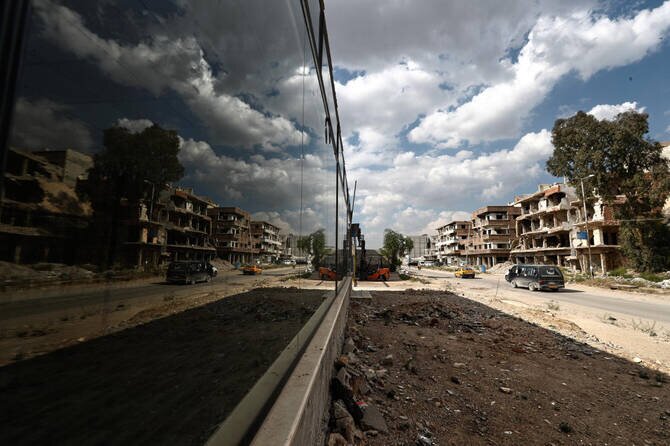
However, with the outbreak of the US-Israeli conflict and its ripple effects across the Middle East, including attacks on Gulf countries hosting US bases and a reignited conflict between Israel and Hezbollah in Lebanon, Badawi and her family found themselves drawn back to Aleppo, Syria, which had been a battleground but was now perceived as a safe haven.
Syria's strategic position has allowed it to emerge as one of the few stable spots amid the regional chaos.
By maintaining neutrality, Damascus has begun to rebuild relationships with Arab and Western nations that previously shunned it under the rule of former President Bashar Assad.
Following his ouster in December 2024 by rebels who then established a new government, Syria has sought to leverage its non-aligned status to foster diplomatic ties.
Syria's leaders tout the country as a 'bridge to security' and a pivotal solution to regional crises, emphasizing its role as an alternative route for oil exports that can no longer pass through the closed Strait of Hormuz.
The Baniyas port in Syria has become a crucial hub for shipping oil to European markets via land routes from Iraq, avoiding the blocked channel.
This overland energy export pathway, though less efficient and more costly, serves as a viable alternative while Iran maintains its control over the Hormuz route.
Syria's diplomatic stance is framed by Obayda Ghadban of the Syrian Foreign Ministry as a rejection of alliances with either the warring parties— Iran and its allies, or Israel.
Both sides are seen as 'strategic enemies' of Syria due to their historical involvement in the country's civil war and expansionist policies.
The strategic withdrawal of US forces from eastern Syria before the onset of the conflict further enabled Damascus to remain neutral.
The reduced US military presence diminished the likelihood of Syria being drawn into the conflict, especially with the relocation of thousands of suspected Daesh militants to Iraq by the US military.
While Syria benefits politically from its neutrality in the regional war, it faces significant economic challenges.
Gulf Arab countries, traditionally major investors in post-war reconstruction efforts, now have limited resources and focus on bolstering their defenses and stabilizing their economies post-conflict.
Long-term infrastructure projects connecting the Gulf to Turkey and European markets could provide future opportunities for Syria but are contingent upon peace and stability being sustained over years or even decades.
In the immediate term, Syria's new government contends with economic discontent from its population amid a stagnant economy.
Despite these challenges, Badawi finds solace in being back in her home country, where she experiences a different kind of security compared to the relative peace found abroad.
The complex interplay between regional conflict and Syria's diplomatic maneuvers highlights the multifaceted nature of stability in a region fraught with longstanding tensions and new military alliances.
However, with the outbreak of the US-Israeli conflict and its ripple effects across the Middle East, including attacks on Gulf countries hosting US bases and a reignited conflict between Israel and Hezbollah in Lebanon, Badawi and her family found themselves drawn back to Aleppo, Syria, which had been a battleground but was now perceived as a safe haven.
Syria's strategic position has allowed it to emerge as one of the few stable spots amid the regional chaos.
By maintaining neutrality, Damascus has begun to rebuild relationships with Arab and Western nations that previously shunned it under the rule of former President Bashar Assad.
Following his ouster in December 2024 by rebels who then established a new government, Syria has sought to leverage its non-aligned status to foster diplomatic ties.
Syria's leaders tout the country as a 'bridge to security' and a pivotal solution to regional crises, emphasizing its role as an alternative route for oil exports that can no longer pass through the closed Strait of Hormuz.
The Baniyas port in Syria has become a crucial hub for shipping oil to European markets via land routes from Iraq, avoiding the blocked channel.
This overland energy export pathway, though less efficient and more costly, serves as a viable alternative while Iran maintains its control over the Hormuz route.
Syria's diplomatic stance is framed by Obayda Ghadban of the Syrian Foreign Ministry as a rejection of alliances with either the warring parties— Iran and its allies, or Israel.
Both sides are seen as 'strategic enemies' of Syria due to their historical involvement in the country's civil war and expansionist policies.
The strategic withdrawal of US forces from eastern Syria before the onset of the conflict further enabled Damascus to remain neutral.
The reduced US military presence diminished the likelihood of Syria being drawn into the conflict, especially with the relocation of thousands of suspected Daesh militants to Iraq by the US military.
While Syria benefits politically from its neutrality in the regional war, it faces significant economic challenges.
Gulf Arab countries, traditionally major investors in post-war reconstruction efforts, now have limited resources and focus on bolstering their defenses and stabilizing their economies post-conflict.
Long-term infrastructure projects connecting the Gulf to Turkey and European markets could provide future opportunities for Syria but are contingent upon peace and stability being sustained over years or even decades.
In the immediate term, Syria's new government contends with economic discontent from its population amid a stagnant economy.
Despite these challenges, Badawi finds solace in being back in her home country, where she experiences a different kind of security compared to the relative peace found abroad.
The complex interplay between regional conflict and Syria's diplomatic maneuvers highlights the multifaceted nature of stability in a region fraught with longstanding tensions and new military alliances.