Saudi Minerals Sector Driving Industrial Clusters and Downstream Growth
With $2.5 trillion in untapped mineral resources, Saudi Arabia aims for industrial diversification under Vision 2030.
JEDDAH: Saudi Arabia’s mineral resources are becoming a key driver of industrial diversification under Vision 2030, as policymakers aim to shift the sector from raw extraction toward downstream manufacturing, technology transfer, and strategic supply chain development.
With an estimated $2.5 trillion in untapped mineral resources, the Kingdom is advancing what officials have described as a third pillar of the economy, complementing oil and petrochemicals.
The shift reflects both domestic diversification priorities and global demand for critical minerals essential to clean energy, advanced manufacturing, and defense industries.
Minerals spark investment, partnerships In 2025, Saudi Arabia’s mining sector recorded a sharp increase in new mining exploitation licenses, with 61 permits issued compared with 19 the previous year.
Total investment in newly licensed projects exceeded SR44 billion, covering strategic ores such as gold and phosphate.
Foreign companies accounted for about two-thirds of all participants, highlighting strong international confidence, with the sector’s contribution to GDP doubling to SR136 billion ($36.7 billion) in 2024, demonstrating the practical impact of regulatory reforms and Vision 2030 initiatives.
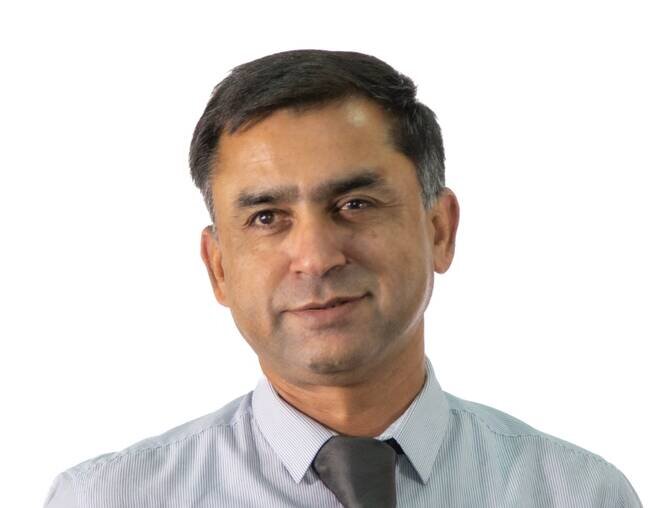
From minerals to industrial and global influence Speaking to Arab News, Saurabh Priyadarshi, a geologist and adviser for mining and metals at Geoxplorers Consulting Services, said Saudi Arabia is moving “from a resource-rich nation to a global minerals sovereign, supported by the latest 2023–2026 data”.
He noted that the mining sector’s contribution to gross domestic product reached SR64 billion in 2023, with a target of SR97 billion by 2030, adding that annual gold output now exceeds 500,000 ounces, while aluminum production has surpassed 900,000 metric tonnes.
“Saudi Arabia is transforming its $2.5 trillion mineral endowment into a cornerstone of industrial sovereignty,” he said.
Beyond precious and base metals, he added, Saudi Arabia has leveraged large phosphate reserves at Ras Al-Khair to become a major fertilizer exporter, reinforcing its role in global food security supply chains.
Yaseen Ghulam, an associate professor of economics and director of research at Al-Yamamah University in Riyadh, said the estimated $2.5 trillion in undeveloped mineral resources “is being used as a strategic tool to increase the Kingdom’s geopolitical clout and further integrate into international supply chains and industry”.
He noted that by integrating mineral extraction with manufacturing, processing, and strategic international trade partnerships, Saudi Arabia is transforming its mineral wealth into a source of industrial power — driven by value-chain development, foreign investment, technology transfer, and collaborative ventures with nations and global business conglomerates.
Commenting on the markets likely to face the most disruption, Ghulam told Arab News they are tied to innovative materials, clean technology, and defense supply chains.
“These industries and sectors require minerals such as rare earth elements, copper, lithium, and nickel and the Kingdom is prioritizing and investing heavily in these minerals under the Vision 2030 plan,” he added.
The global importance of such minerals has been highlighted by the International Energy Agency, which has warned that supply chain concentration poses risks to the energy transition.
As countries seek diversified and secure sources of supply, Saudi Arabia is positioning itself as a reliable alternative hub.
Central to that strategy is the development of integrated industrial clusters.
Industrial clusters and midstream competitiveness Priyadarshi pointed to the “Cluster Strategy” at Ras Al-Khair and Wa’ad Al-Shamal that has redefined industrial synergy, attracting SR250 billion in planned investments and yielding over 1,300 new industrial licenses.
“By co-locating extraction, refining, and manufacturing, the Kingdom has achieved double-digit percentage reductions in logistics costs.
This integrated model serves as a global blueprint for productivity, aligning supply chains and technology flows to enhance the Kingdom’s midstream competitiveness,” he said.
Ghulam said Saudi Arabia is advancing integrated downstream industrial clusters through strategic site development, including Oxagon and Ras Al-Khair, legislative reforms such as the Mining Investment Law, international partnerships connecting Asian, European, and African markets, and major infrastructure investments.
“The Kingdom can improve its efficiency, competitiveness, and long-term industrial resilience by taking note of the achievements and subtleties of other resource-rich economies, particularly in striking a balance between upstream dominance and downstream processing, innovation ecosystems, and sustainable practices,” he said.
He added that successful examples include Indonesia with nickel and EV battery materials, Morocco with processing and supply chain hub, and Australia which has critical minerals and innovation clusters, which the Kingdom can study to inform its own strategy.
Technology, skills, and innovation Ghulam highlighted the progress and remaining challenges in Saudi Arabia’s mineral sector, saying that with the help of workforce frameworks, regulatory reforms, and strategic collaborations with companies such as MP Materials, Barrick Gold, and Alcoa, the Saudi mineral industry is spearheading innovative investments, technology transfer, and skill development.
While infrastructure and investment are advancing, developing local skills and technology capabilities remains critical for long-term competitiveness.
Priyadarshi highlighted the Mining Skills Framework launched in 2026, which standardizes sector-wide competencies.
“Deployment of autonomous hauling, digital mining, and AI-driven exploration is being balanced with a focus on ESG standards.
While gaps in high-end R&D remain, the focus has shifted toward environmental stewardship and digital integration to meet ‘green’ mineral production benchmarks,” he said.
At the same time, Ghulam noted that deficiencies remain in local innovation ecosystems — including a relative scarcity of research labs, innovation incubators, and industry-academia collaboration platforms — as well as in specialized high-tech skills and deep research and development capabilities.
“In order to accept worldwide best-in-class standards and contribute its own technologies and processes to the future of the mining and advanced materials industries, the Kingdom must overcome these obstacles over shorter and longer periods as benchmarks are moving fast,” Ghulam said.
Global positioning and sustainable growth Priyadarshi and Ghulam highlighted that Saudi Arabia’s mineral sector is not only a driver of economic diversification but also a key instrument for integrating the Kingdom into global value chains.
Ghulam said realizing this potential requires addressing challenges such as remote locations, fragmented supply chains, skills and technology gaps, geopolitical uncertainties, and environmental pressures including water scarcity, land degradation, and pollution.
In line with Vision 2030’s sustainability and competitiveness objectives, he emphasized, Saudi Arabia can position its mining sector as both globally responsible and economically transformative by integrating green practices, robust logistics, diverse alliances, and strong governance mechanisms.
For his part, Priyadarshi noted that spanning 45 identified minerals, the Arabian Shield provides a vital hedge against supply chain concentration, adding that the Kingdom — strategically positioned between the Red Sea and the Gulf — offers de-risked access to Asian, African, and European markets.
He further said that by developing domestic capacity in rare earths and battery metals, the Kingdom is positioning itself as “a credible alternative to existing monopolies, anchoring regional manufacturing hubs and strengthening global supply chain resilience”.
With an estimated $2.5 trillion in untapped mineral resources, the Kingdom is advancing what officials have described as a third pillar of the economy, complementing oil and petrochemicals.
The shift reflects both domestic diversification priorities and global demand for critical minerals essential to clean energy, advanced manufacturing, and defense industries.
Minerals spark investment, partnerships In 2025, Saudi Arabia’s mining sector recorded a sharp increase in new mining exploitation licenses, with 61 permits issued compared with 19 the previous year.
Total investment in newly licensed projects exceeded SR44 billion, covering strategic ores such as gold and phosphate.
Foreign companies accounted for about two-thirds of all participants, highlighting strong international confidence, with the sector’s contribution to GDP doubling to SR136 billion ($36.7 billion) in 2024, demonstrating the practical impact of regulatory reforms and Vision 2030 initiatives.
From minerals to industrial and global influence Speaking to Arab News, Saurabh Priyadarshi, a geologist and adviser for mining and metals at Geoxplorers Consulting Services, said Saudi Arabia is moving “from a resource-rich nation to a global minerals sovereign, supported by the latest 2023–2026 data”.
He noted that the mining sector’s contribution to gross domestic product reached SR64 billion in 2023, with a target of SR97 billion by 2030, adding that annual gold output now exceeds 500,000 ounces, while aluminum production has surpassed 900,000 metric tonnes.
“Saudi Arabia is transforming its $2.5 trillion mineral endowment into a cornerstone of industrial sovereignty,” he said.
Beyond precious and base metals, he added, Saudi Arabia has leveraged large phosphate reserves at Ras Al-Khair to become a major fertilizer exporter, reinforcing its role in global food security supply chains.
Yaseen Ghulam, an associate professor of economics and director of research at Al-Yamamah University in Riyadh, said the estimated $2.5 trillion in undeveloped mineral resources “is being used as a strategic tool to increase the Kingdom’s geopolitical clout and further integrate into international supply chains and industry”.
He noted that by integrating mineral extraction with manufacturing, processing, and strategic international trade partnerships, Saudi Arabia is transforming its mineral wealth into a source of industrial power — driven by value-chain development, foreign investment, technology transfer, and collaborative ventures with nations and global business conglomerates.
Commenting on the markets likely to face the most disruption, Ghulam told Arab News they are tied to innovative materials, clean technology, and defense supply chains.
“These industries and sectors require minerals such as rare earth elements, copper, lithium, and nickel and the Kingdom is prioritizing and investing heavily in these minerals under the Vision 2030 plan,” he added.
The global importance of such minerals has been highlighted by the International Energy Agency, which has warned that supply chain concentration poses risks to the energy transition.
As countries seek diversified and secure sources of supply, Saudi Arabia is positioning itself as a reliable alternative hub.
Central to that strategy is the development of integrated industrial clusters.
Industrial clusters and midstream competitiveness Priyadarshi pointed to the “Cluster Strategy” at Ras Al-Khair and Wa’ad Al-Shamal that has redefined industrial synergy, attracting SR250 billion in planned investments and yielding over 1,300 new industrial licenses.
“By co-locating extraction, refining, and manufacturing, the Kingdom has achieved double-digit percentage reductions in logistics costs.
This integrated model serves as a global blueprint for productivity, aligning supply chains and technology flows to enhance the Kingdom’s midstream competitiveness,” he said.
Ghulam said Saudi Arabia is advancing integrated downstream industrial clusters through strategic site development, including Oxagon and Ras Al-Khair, legislative reforms such as the Mining Investment Law, international partnerships connecting Asian, European, and African markets, and major infrastructure investments.
“The Kingdom can improve its efficiency, competitiveness, and long-term industrial resilience by taking note of the achievements and subtleties of other resource-rich economies, particularly in striking a balance between upstream dominance and downstream processing, innovation ecosystems, and sustainable practices,” he said.
He added that successful examples include Indonesia with nickel and EV battery materials, Morocco with processing and supply chain hub, and Australia which has critical minerals and innovation clusters, which the Kingdom can study to inform its own strategy.
Technology, skills, and innovation Ghulam highlighted the progress and remaining challenges in Saudi Arabia’s mineral sector, saying that with the help of workforce frameworks, regulatory reforms, and strategic collaborations with companies such as MP Materials, Barrick Gold, and Alcoa, the Saudi mineral industry is spearheading innovative investments, technology transfer, and skill development.
While infrastructure and investment are advancing, developing local skills and technology capabilities remains critical for long-term competitiveness.
Priyadarshi highlighted the Mining Skills Framework launched in 2026, which standardizes sector-wide competencies.
“Deployment of autonomous hauling, digital mining, and AI-driven exploration is being balanced with a focus on ESG standards.
While gaps in high-end R&D remain, the focus has shifted toward environmental stewardship and digital integration to meet ‘green’ mineral production benchmarks,” he said.
At the same time, Ghulam noted that deficiencies remain in local innovation ecosystems — including a relative scarcity of research labs, innovation incubators, and industry-academia collaboration platforms — as well as in specialized high-tech skills and deep research and development capabilities.
“In order to accept worldwide best-in-class standards and contribute its own technologies and processes to the future of the mining and advanced materials industries, the Kingdom must overcome these obstacles over shorter and longer periods as benchmarks are moving fast,” Ghulam said.
Global positioning and sustainable growth Priyadarshi and Ghulam highlighted that Saudi Arabia’s mineral sector is not only a driver of economic diversification but also a key instrument for integrating the Kingdom into global value chains.
Ghulam said realizing this potential requires addressing challenges such as remote locations, fragmented supply chains, skills and technology gaps, geopolitical uncertainties, and environmental pressures including water scarcity, land degradation, and pollution.
In line with Vision 2030’s sustainability and competitiveness objectives, he emphasized, Saudi Arabia can position its mining sector as both globally responsible and economically transformative by integrating green practices, robust logistics, diverse alliances, and strong governance mechanisms.
For his part, Priyadarshi noted that spanning 45 identified minerals, the Arabian Shield provides a vital hedge against supply chain concentration, adding that the Kingdom — strategically positioned between the Red Sea and the Gulf — offers de-risked access to Asian, African, and European markets.
He further said that by developing domestic capacity in rare earths and battery metals, the Kingdom is positioning itself as “a credible alternative to existing monopolies, anchoring regional manufacturing hubs and strengthening global supply chain resilience”.