Saudi Sovereign Fund Deepens Global Sports Push With FIFA World Cup 2026 Deal
A new sponsorship agreement makes Saudi Arabia’s Public Investment Fund an official supporter of the 2026 tournament, underscoring its expanding influence in global football governance and commercial sport.
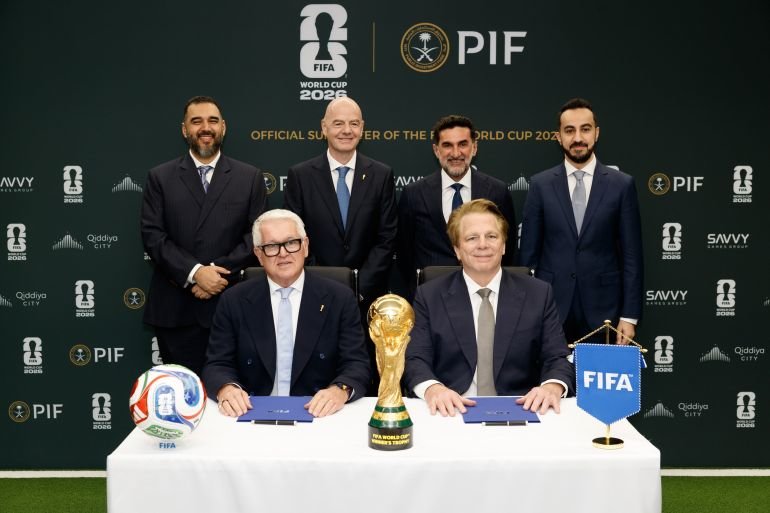
Saudi Arabia’s sovereign wealth fund has entered a formal partnership with football’s global governing structure through a sponsorship arrangement tied to the 2026 FIFA World Cup, marking another major step in its sustained expansion into international sport.
The development reflects a SYSTEM-LEVEL strategy in which state-backed capital is being used to embed long-term influence across global sporting institutions, media ecosystems, and event infrastructure.
What is confirmed is that the Public Investment Fund, Saudi Arabia’s main sovereign investment vehicle, has secured an official supporter role connected to the FIFA World Cup 2026 cycle.
The tournament will be jointly hosted by the United States, Canada, and Mexico, making it one of the largest and most commercially significant sporting events in history.
The agreement places Saudi-linked capital within the formal sponsorship architecture of the competition, alongside other global commercial partners.
The deal is part of a broader pattern in which Saudi Arabia has rapidly expanded its footprint in global sport over the past several years.
This includes high-profile investments in professional football clubs, the establishment of domestic sports leagues with international recruitment, and hosting rights for major boxing, golf, and racing events.
The strategy is widely understood as both economic diversification and global brand positioning under the country’s long-term development agenda.
The mechanism behind these partnerships is typically structured through sponsorship rights, event support funding, and commercial licensing agreements.
In practice, this gives the sponsor visibility across broadcast platforms, stadium branding, and official tournament materials, while also integrating them into FIFA’s commercial revenue ecosystem, which funds global football development and operations.
The move also reflects a broader transformation in FIFA’s commercial strategy, which has increasingly relied on large-scale global sponsors and state-linked investment entities to maximize revenue from flagship tournaments.
The World Cup is the organization’s primary financial asset, generating the majority of its income through broadcasting rights, sponsorship deals, and hospitality packages.
Critics of such arrangements have previously raised concerns about sportswashing, arguing that large-scale sports investments by state actors can be used to improve international reputation while deflecting attention from domestic governance issues.
Supporters counter that such partnerships are standard in modern global sport, where sovereign funds and multinational corporations play a central role in financing major events.
The immediate consequence of the agreement is a further entrenchment of Gulf financial influence in global football institutions at a time when the sport’s governing bodies are increasingly dependent on non-traditional funding sources.
The longer-term implication is a continued convergence between state investment strategies and global sports governance, with major tournaments becoming key platforms for economic diplomacy as well as athletic competition.
The development reflects a SYSTEM-LEVEL strategy in which state-backed capital is being used to embed long-term influence across global sporting institutions, media ecosystems, and event infrastructure.
What is confirmed is that the Public Investment Fund, Saudi Arabia’s main sovereign investment vehicle, has secured an official supporter role connected to the FIFA World Cup 2026 cycle.
The tournament will be jointly hosted by the United States, Canada, and Mexico, making it one of the largest and most commercially significant sporting events in history.
The agreement places Saudi-linked capital within the formal sponsorship architecture of the competition, alongside other global commercial partners.
The deal is part of a broader pattern in which Saudi Arabia has rapidly expanded its footprint in global sport over the past several years.
This includes high-profile investments in professional football clubs, the establishment of domestic sports leagues with international recruitment, and hosting rights for major boxing, golf, and racing events.
The strategy is widely understood as both economic diversification and global brand positioning under the country’s long-term development agenda.
The mechanism behind these partnerships is typically structured through sponsorship rights, event support funding, and commercial licensing agreements.
In practice, this gives the sponsor visibility across broadcast platforms, stadium branding, and official tournament materials, while also integrating them into FIFA’s commercial revenue ecosystem, which funds global football development and operations.
The move also reflects a broader transformation in FIFA’s commercial strategy, which has increasingly relied on large-scale global sponsors and state-linked investment entities to maximize revenue from flagship tournaments.
The World Cup is the organization’s primary financial asset, generating the majority of its income through broadcasting rights, sponsorship deals, and hospitality packages.
Critics of such arrangements have previously raised concerns about sportswashing, arguing that large-scale sports investments by state actors can be used to improve international reputation while deflecting attention from domestic governance issues.
Supporters counter that such partnerships are standard in modern global sport, where sovereign funds and multinational corporations play a central role in financing major events.
The immediate consequence of the agreement is a further entrenchment of Gulf financial influence in global football institutions at a time when the sport’s governing bodies are increasingly dependent on non-traditional funding sources.
The longer-term implication is a continued convergence between state investment strategies and global sports governance, with major tournaments becoming key platforms for economic diplomacy as well as athletic competition.