Saudi Arabia's Fiber Optic Home Connections Surge by 260% Over Decade
Rural mobile network coverage in Saudi Arabia also sees significant growth; 5G towers increase sixfold.
Saudi Arabia has witnessed a substantial rise in the number of homes connected via fiber optic technology over the past decade.
According to figures provided by Abdullah Al-Hariri, an advisor to the Minister of Communications and Information Technology, this figure has grown from 1.59 million in 2017 to 5.8 million by the end of last year.
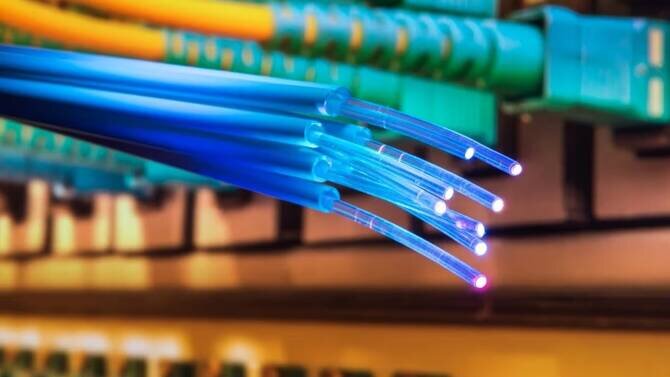
This represents a growth rate of nearly 260%.The expansion of fiber optic connections is part of Saudi Vision 2030's digital transformation agenda aimed at bolstering the country's digital infrastructure, increasing internet speeds, and fostering the development of a robust digital economy.Fiber optic technology uses light signals rather than electrical pulses to transmit data.
This approach results in faster data transfer rates over longer distances compared to traditional copper wire technologies.
The adoption of fiber optics has become pivotal for countries seeking to advance their telecommunications networks.As part of its efforts, the Kingdom is planning to leverage the infrastructure of the National Water Co. to extend fiber optic connections to an additional 3.5 million homes by 2030.
This initiative is projected to contribute up to SR5 billion ($1.33 billion) to the country's gross domestic product, based on estimates from the Communications and Information Technology Commission.In a move to further enhance its telecommunications infrastructure, the Communications, Space and Technology Commission signed an agreement with the Water Regulator in early 2023.
This memorandum of understanding (MOU) aims to double the utility of the National Water Co.'s infrastructure for fiber optic expansion, facilitating a wider deployment across Saudi Arabia.
The partnership seeks to share resources, information, and expertise between the two entities to ensure efficient and cost-effective network expansions.
By pooling resources and leveraging existing infrastructures such as water networks, the initiative aims to reduce costs associated with laying new cables and minimize environmental impacts from digging operations.
According to figures provided by Abdullah Al-Hariri, an advisor to the Minister of Communications and Information Technology, this figure has grown from 1.59 million in 2017 to 5.8 million by the end of last year.
This represents a growth rate of nearly 260%.The expansion of fiber optic connections is part of Saudi Vision 2030's digital transformation agenda aimed at bolstering the country's digital infrastructure, increasing internet speeds, and fostering the development of a robust digital economy.Fiber optic technology uses light signals rather than electrical pulses to transmit data.
This approach results in faster data transfer rates over longer distances compared to traditional copper wire technologies.
The adoption of fiber optics has become pivotal for countries seeking to advance their telecommunications networks.As part of its efforts, the Kingdom is planning to leverage the infrastructure of the National Water Co. to extend fiber optic connections to an additional 3.5 million homes by 2030.
This initiative is projected to contribute up to SR5 billion ($1.33 billion) to the country's gross domestic product, based on estimates from the Communications and Information Technology Commission.In a move to further enhance its telecommunications infrastructure, the Communications, Space and Technology Commission signed an agreement with the Water Regulator in early 2023.
This memorandum of understanding (MOU) aims to double the utility of the National Water Co.'s infrastructure for fiber optic expansion, facilitating a wider deployment across Saudi Arabia.
The partnership seeks to share resources, information, and expertise between the two entities to ensure efficient and cost-effective network expansions.
By pooling resources and leveraging existing infrastructures such as water networks, the initiative aims to reduce costs associated with laying new cables and minimize environmental impacts from digging operations.