Saudi Arabia Partners with International Universities to Boost Higher Education and Skills Training
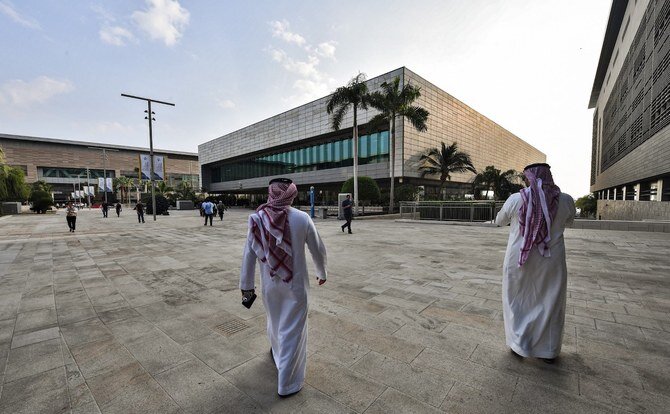
Saudi Arabia is expanding access to top-notch higher education for its students through partnerships with international universities.
Agreements have been reached with the University of Wollongong (Australia), Arizona State University, and Cintana Education (USA) to establish new campuses in the Kingdom.
These deals were announced at the Human Capability Initiative conference in Riyadh on Feb. 28-29.
A 2023 report revealed that Saudi Arabia's traditional education system is not adequately preparing the workforce for the modern labor market, leading to a significant skills gap.
The Saudi government aims to address this issue by creating a workforce aligned with Vision 2030, which focuses on economic diversification, reducing reliance on hydrocarbons, and developing high-skill industries.
The Kingdom of Saudi Arabia aims to become a regional education hub and leader in scientific research by attracting foreign universities and fostering local talent.
The "Study in Saudi Arabia" visa initiative was launched to make it easier for international students to study in the Kingdom, creating a global learning hub for over 132,000 students, academics, researchers, and professors.
The exchange of talent through collaboration with leading universities is intended to enhance knowledge creation and promote cross-cultural dialogue.
Additionally, the Saudi Ministry of Education announced a $38 million contribution to the Global Partnership for Education to help equip younger generations in lower-income countries with skills for future jobs.
Saudi Arabia formed new education partnerships with companies like Porsche, Hyundai, LinkedIn, and IE University, aiming to establish a new university and affiliated school in Riyadh.
The collaboration, which includes Arizona State University and Cintana Education, will offer internationally recognized education standards, foster research, and introduce innovative programs.
Fields of study will include science, technology, engineering, mathematics, economics, and the training of educational staff.
No opening date has been set yet.
The University of Wollongong in Australia received a license from Saudi ministries of education and investment in late February to establish a local branch in collaboration with Saudi Arabia's Digital Knowledge Company.
This is the first investment license given to a foreign university in Saudi Arabia, allowing legal operation and business activities.
UOW is ranked among the top 1% of universities globally (QS World Index 2024), making it a valuable addition to Saudi Arabia's educational sector.
This will be the second branch of UOW in the Arab Gulf states, following the University of Wollongong in Dubai, which was established in 1993.
Arab Gulf countries, including the UAE and Qatar, have formed partnerships with renowned international universities.
NYU and Sorbonne have campuses in Abu Dhabi since 2010 and 2006, respectively.
Carnegie Mellon University opened in Qatar in 2004, and Virginia Commonwealth University School of the Arts has been there since 1998.
In Saudi Arabia, a bylaw passed in 2019 allowed foreign universities to establish branches, aiming to enhance the quality of local universities (Arab News, Tagreed Al-Saraj).
Saudi Arabia's Minister of Education, Yousef Al-Benyan, welcomed the competition brought about by the establishment of foreign university branches in the Kingdom.
This decision was met with approval from Saudi students, who saw it as an opportunity for those unable to study abroad to access high-quality education domestically.
Al-Benyan visited educational institutions and universities in Chicago and Washington in early February to discuss investment opportunities in education in Saudi Arabia, with a focus on early years education, special needs students, and people with disabilities.
During his visit to the United States, Saudi Arabia's Minister of Education, Dr. Ahmed Al-Benyan, aimed to attract foreign direct investment in public and graduate education in the Kingdom.
He emphasized the importance of students in reflecting Saudi society's human, cultural, and social values.
The Ministry also seeks international cooperation to promote innovation through ed-tech.
Al-Benyan stressed the need for teachers to possess digital skills, including understanding artificial intelligence technology, at the Global Cybersecurity Forum in Riyadh.
With new partnerships with US and Australian universities, Saudi Arabia is working to establish world-class institutes, train skilled staff, and foster future generations of workers in advanced industries.
These deals were announced at the Human Capability Initiative conference in Riyadh on Feb. 28-29.
A 2023 report revealed that Saudi Arabia's traditional education system is not adequately preparing the workforce for the modern labor market, leading to a significant skills gap.
The Saudi government aims to address this issue by creating a workforce aligned with Vision 2030, which focuses on economic diversification, reducing reliance on hydrocarbons, and developing high-skill industries.
The Kingdom of Saudi Arabia aims to become a regional education hub and leader in scientific research by attracting foreign universities and fostering local talent.
The "Study in Saudi Arabia" visa initiative was launched to make it easier for international students to study in the Kingdom, creating a global learning hub for over 132,000 students, academics, researchers, and professors.
The exchange of talent through collaboration with leading universities is intended to enhance knowledge creation and promote cross-cultural dialogue.
Additionally, the Saudi Ministry of Education announced a $38 million contribution to the Global Partnership for Education to help equip younger generations in lower-income countries with skills for future jobs.
Saudi Arabia formed new education partnerships with companies like Porsche, Hyundai, LinkedIn, and IE University, aiming to establish a new university and affiliated school in Riyadh.
The collaboration, which includes Arizona State University and Cintana Education, will offer internationally recognized education standards, foster research, and introduce innovative programs.
Fields of study will include science, technology, engineering, mathematics, economics, and the training of educational staff.
No opening date has been set yet.
The University of Wollongong in Australia received a license from Saudi ministries of education and investment in late February to establish a local branch in collaboration with Saudi Arabia's Digital Knowledge Company.
This is the first investment license given to a foreign university in Saudi Arabia, allowing legal operation and business activities.
UOW is ranked among the top 1% of universities globally (QS World Index 2024), making it a valuable addition to Saudi Arabia's educational sector.
This will be the second branch of UOW in the Arab Gulf states, following the University of Wollongong in Dubai, which was established in 1993.
Arab Gulf countries, including the UAE and Qatar, have formed partnerships with renowned international universities.
NYU and Sorbonne have campuses in Abu Dhabi since 2010 and 2006, respectively.
Carnegie Mellon University opened in Qatar in 2004, and Virginia Commonwealth University School of the Arts has been there since 1998.
In Saudi Arabia, a bylaw passed in 2019 allowed foreign universities to establish branches, aiming to enhance the quality of local universities (Arab News, Tagreed Al-Saraj).
Saudi Arabia's Minister of Education, Yousef Al-Benyan, welcomed the competition brought about by the establishment of foreign university branches in the Kingdom.
This decision was met with approval from Saudi students, who saw it as an opportunity for those unable to study abroad to access high-quality education domestically.
Al-Benyan visited educational institutions and universities in Chicago and Washington in early February to discuss investment opportunities in education in Saudi Arabia, with a focus on early years education, special needs students, and people with disabilities.
During his visit to the United States, Saudi Arabia's Minister of Education, Dr. Ahmed Al-Benyan, aimed to attract foreign direct investment in public and graduate education in the Kingdom.
He emphasized the importance of students in reflecting Saudi society's human, cultural, and social values.
The Ministry also seeks international cooperation to promote innovation through ed-tech.
Al-Benyan stressed the need for teachers to possess digital skills, including understanding artificial intelligence technology, at the Global Cybersecurity Forum in Riyadh.
With new partnerships with US and Australian universities, Saudi Arabia is working to establish world-class institutes, train skilled staff, and foster future generations of workers in advanced industries.
Translation:
Translated by AI