Saudi Arabia Deepens Soccer Investment as LIV Golf Retreat Signals Shift in Sports Strategy
A new World Cup partnership highlights Riyadh’s continued football expansion even as its flagship LIV Golf project winds down under a major funding withdrawal.
Saudi Arabia’s sports strategy is undergoing a visible rebalancing, driven not by retreat from global sport, but by a shift in priorities within its sovereign wealth fund, the Public Investment Fund (PIF).
The latest move sees the kingdom deepen its involvement in international football through a formal World Cup partnership, even as it steps back from one of its most expensive sports ventures in golf.
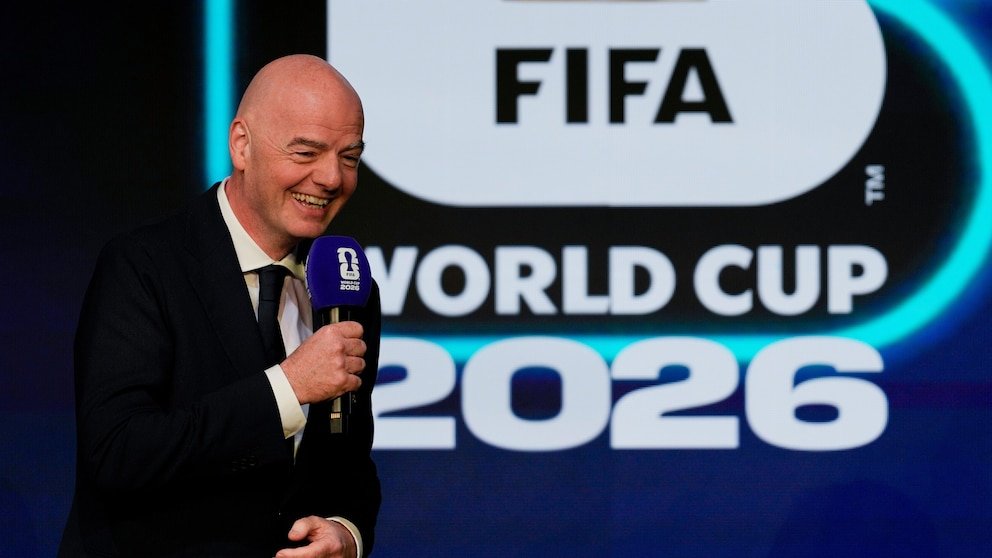
What is confirmed is that the PIF has become an “official tournament supporter” of the FIFA World Cup, extending its commercial footprint into the 2026 tournament cycle and reinforcing ties with global football governance.
The deal covers major international markets, including North America and Asia, and adds to a growing portfolio of Saudi-linked football investments.
These include ownership of English Premier League club Newcastle United, major sponsorship deals, and the broader ambition to position Saudi Arabia as a central hub in global football ahead of its role as host of the 2034 World Cup.
At the same time, the PIF has confirmed it will end financial support for LIV Golf after the 2026 season, effectively winding down the breakaway golf circuit it created in 2022. Over its lifespan, LIV was funded at a multi-billion-dollar scale and reshaped professional golf by attracting elite players with unprecedented contracts and prize money.
However, the league has struggled to secure long-term commercial viability through broadcasting, sponsorship, and audience growth.
Its future beyond 2026 now depends on finding external investors or restructuring its business model without sovereign backing.
The simultaneous expansion in football and contraction in golf is not contradictory but reflects internal prioritization.
Officials have described sport as a strategic investment sector, but one that must now align more closely with broader financial and economic goals under Saudi Arabia’s long-term transformation agenda.
That includes reducing open-ended international spending while focusing on assets with stronger global audience traction and clearer integration into existing commercial ecosystems.
The shift also exposes the limits of rapid, capital-intensive disruption in global sport.
Football already has entrenched institutions, stable media rights markets, and deep fan engagement.
Golf, by contrast, proved more difficult to structurally split from its established tours, leaving LIV dependent on sustained funding rather than organic commercial growth.
As that funding phase ends, the league faces a transition from expansion to survival.
The broader implication is a recalibration rather than a withdrawal.
Saudi Arabia remains one of the most influential external financiers in global sport, but its strategy is becoming more selective, favoring football as the primary platform for international visibility while scaling back projects that do not achieve self-sustaining commercial momentum.
The result is a clearer hierarchy within its sports portfolio, with football firmly at the center of its global ambitions.
The latest move sees the kingdom deepen its involvement in international football through a formal World Cup partnership, even as it steps back from one of its most expensive sports ventures in golf.
What is confirmed is that the PIF has become an “official tournament supporter” of the FIFA World Cup, extending its commercial footprint into the 2026 tournament cycle and reinforcing ties with global football governance.
The deal covers major international markets, including North America and Asia, and adds to a growing portfolio of Saudi-linked football investments.
These include ownership of English Premier League club Newcastle United, major sponsorship deals, and the broader ambition to position Saudi Arabia as a central hub in global football ahead of its role as host of the 2034 World Cup.
At the same time, the PIF has confirmed it will end financial support for LIV Golf after the 2026 season, effectively winding down the breakaway golf circuit it created in 2022. Over its lifespan, LIV was funded at a multi-billion-dollar scale and reshaped professional golf by attracting elite players with unprecedented contracts and prize money.
However, the league has struggled to secure long-term commercial viability through broadcasting, sponsorship, and audience growth.
Its future beyond 2026 now depends on finding external investors or restructuring its business model without sovereign backing.
The simultaneous expansion in football and contraction in golf is not contradictory but reflects internal prioritization.
Officials have described sport as a strategic investment sector, but one that must now align more closely with broader financial and economic goals under Saudi Arabia’s long-term transformation agenda.
That includes reducing open-ended international spending while focusing on assets with stronger global audience traction and clearer integration into existing commercial ecosystems.
The shift also exposes the limits of rapid, capital-intensive disruption in global sport.
Football already has entrenched institutions, stable media rights markets, and deep fan engagement.
Golf, by contrast, proved more difficult to structurally split from its established tours, leaving LIV dependent on sustained funding rather than organic commercial growth.
As that funding phase ends, the league faces a transition from expansion to survival.
The broader implication is a recalibration rather than a withdrawal.
Saudi Arabia remains one of the most influential external financiers in global sport, but its strategy is becoming more selective, favoring football as the primary platform for international visibility while scaling back projects that do not achieve self-sustaining commercial momentum.
The result is a clearer hierarchy within its sports portfolio, with football firmly at the center of its global ambitions.