Saudi Arabia Calls on Yemen’s Southern Separatists to Withdraw from Two Governorates
Riyadh urges Emirati-backed Southern Transitional Council to pull back amid mounting strains within anti-Houthi coalition
Saudi Arabia has publicly urged the United Arab Emirates-backed Southern Transitional Council (STC) in Yemen to withdraw its forces from the Hadramout and Al Mahra governorates, warning that their presence in those eastern provinces is undermining unity within the coalition fighting the Iran-aligned Houthi rebels.
The appeal, issued by the Saudi Foreign Ministry on Christmas Day, described the STC’s actions as an escalation that harms both the interests of the Yemeni people and the collective effort against the Houthis.
The STC moved into the two governorates earlier this month, seizing control of key territory and installations, a development that Saudi officials say has complicated efforts by the internationally recognised government and its allies.
Riyadh has backed the National Shield Forces, a large component of the government’s security apparatus, and has called on the STC to return to positions outside Hadramout and Al Mahra and hand over camps to those forces as part of ongoing mediation efforts aimed at restoring the previous status quo.
Saudi Arabia’s ministry stressed the importance of cooperation among all Yemeni factions and urged restraint to avoid destabilising security and increasing fragmentation.
The local authorities in Hadramout have welcomed Riyadh’s statement and the presence of a joint Saudi-UAE delegation in the governorate, reaffirming support for the call to withdraw STC forces.
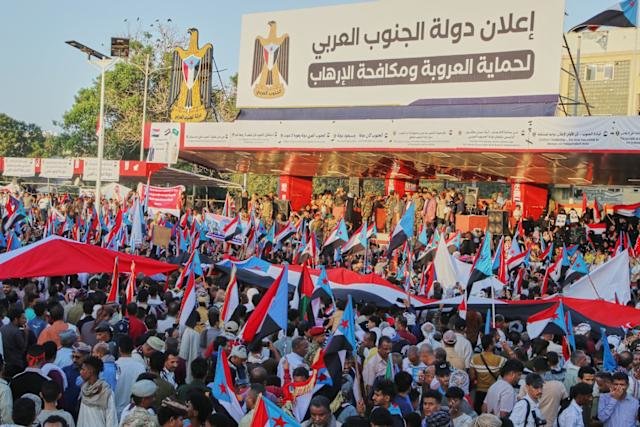
Demonstrations supporting the cause of South Yemen’s independence have been reported in Aden, where some political groups continue to press for the revival of a separate southern state that existed prior to Yemen’s unification in 1990.
The dispute has placed fresh pressure on relations between Saudi Arabia and the UAE, both of which have long supported Yemeni forces opposed to the Houthis but have also competed for influence in the war-torn country.
The broader conflict, which began after the Houthis seized the capital, Sanaa, in 2014, has drawn in a Saudi-led coalition and led to one of the world’s most persistent humanitarian crises.
Saudi officials emphasise that mediation remains ongoing to resolve the issue, even as complex political and military dynamics continue to shape Yemen’s future.
The appeal, issued by the Saudi Foreign Ministry on Christmas Day, described the STC’s actions as an escalation that harms both the interests of the Yemeni people and the collective effort against the Houthis.
The STC moved into the two governorates earlier this month, seizing control of key territory and installations, a development that Saudi officials say has complicated efforts by the internationally recognised government and its allies.
Riyadh has backed the National Shield Forces, a large component of the government’s security apparatus, and has called on the STC to return to positions outside Hadramout and Al Mahra and hand over camps to those forces as part of ongoing mediation efforts aimed at restoring the previous status quo.
Saudi Arabia’s ministry stressed the importance of cooperation among all Yemeni factions and urged restraint to avoid destabilising security and increasing fragmentation.
The local authorities in Hadramout have welcomed Riyadh’s statement and the presence of a joint Saudi-UAE delegation in the governorate, reaffirming support for the call to withdraw STC forces.
Demonstrations supporting the cause of South Yemen’s independence have been reported in Aden, where some political groups continue to press for the revival of a separate southern state that existed prior to Yemen’s unification in 1990.
The dispute has placed fresh pressure on relations between Saudi Arabia and the UAE, both of which have long supported Yemeni forces opposed to the Houthis but have also competed for influence in the war-torn country.
The broader conflict, which began after the Houthis seized the capital, Sanaa, in 2014, has drawn in a Saudi-led coalition and led to one of the world’s most persistent humanitarian crises.
Saudi officials emphasise that mediation remains ongoing to resolve the issue, even as complex political and military dynamics continue to shape Yemen’s future.