Saudi Arabia and Spain Forge Strategic Partnership Amid Expanding Gulf–EU Alignment
New agreement signed in Madrid formalizes deeper cooperation across energy, investment, and diplomacy, reflecting Riyadh’s push to diversify alliances beyond traditional Western partnerships.
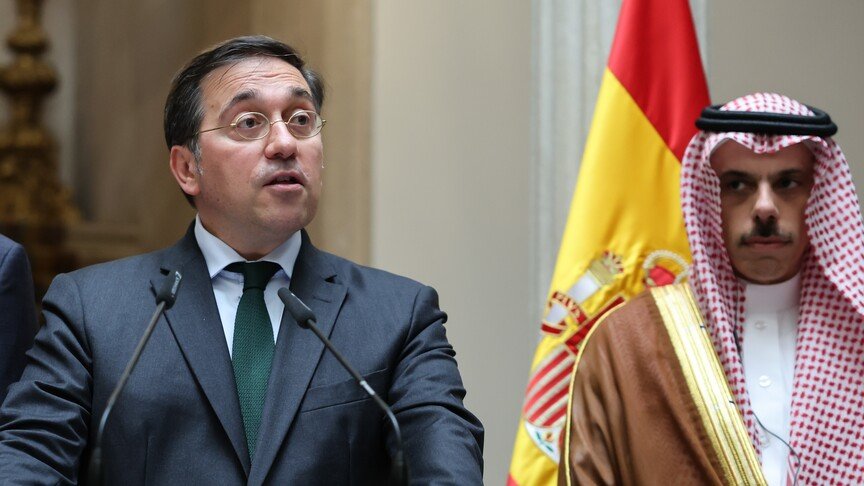
Saudi Arabia and Spain have signed a strategic partnership agreement during high-level talks in Madrid, marking a SYSTEM-LEVEL expansion of bilateral cooperation between a major Gulf economy and a leading European Union member state.
The agreement reflects a broader realignment in international economic and diplomatic relationships, where energy security, investment flows, and geopolitical hedging are increasingly intertwined.
What is confirmed is that senior officials from both countries met in Madrid to formalize a framework agreement designed to deepen cooperation across multiple sectors, including energy, infrastructure investment, trade, and cultural exchange.
The partnership elevates bilateral relations beyond traditional diplomatic engagement into a structured strategic format typically reserved for long-term, multi-sector alignment.
The mechanism of such agreements generally involves coordinated working groups and institutional channels that oversee investment projects, regulatory cooperation, and joint economic initiatives.
In practical terms, this allows Saudi Arabia’s sovereign investment entities and Spanish public and private institutions to pursue joint ventures with reduced political and bureaucratic friction.
Energy is a central pillar of the relationship.
Spain, like many European economies, has been actively seeking diversified energy partnerships following volatility in global fossil fuel markets.
Saudi Arabia, as one of the world’s largest oil exporters and a growing player in hydrogen and renewable investment, is positioning itself as a long-term energy partner not only for hydrocarbons but also for emerging clean energy technologies.
Investment cooperation is another key driver.
Saudi Arabia’s sovereign wealth strategy has increasingly focused on deploying capital into European infrastructure, technology, and industrial sectors.
Spain, with its large renewable energy market, logistics infrastructure, and strategic access to European trade networks, is seen as a high-value destination for such capital flows.
The agreement also carries geopolitical significance.
As global power blocs become more fragmented, Saudi Arabia has pursued a multi-alignment strategy, strengthening ties with both Western economies and emerging markets.
Partnerships with EU states such as Spain provide Riyadh with deeper access to European decision-making channels while offering Madrid expanded influence in Gulf economic networks.
For Spain, the agreement reinforces its role as a bridge between Europe and the wider Mediterranean and Gulf regions.
It also aligns with broader EU efforts to secure stable energy relationships and attract sovereign investment amid economic uncertainty and industrial transition pressures.
The immediate consequence of the agreement is the formalization of structured cooperation mechanisms that can accelerate bilateral projects.
The longer-term implication is a gradual tightening of economic and strategic interdependence between Gulf sovereign capital and European Union economies, reshaping how energy security and investment diplomacy are conducted across both regions.
The agreement reflects a broader realignment in international economic and diplomatic relationships, where energy security, investment flows, and geopolitical hedging are increasingly intertwined.
What is confirmed is that senior officials from both countries met in Madrid to formalize a framework agreement designed to deepen cooperation across multiple sectors, including energy, infrastructure investment, trade, and cultural exchange.
The partnership elevates bilateral relations beyond traditional diplomatic engagement into a structured strategic format typically reserved for long-term, multi-sector alignment.
The mechanism of such agreements generally involves coordinated working groups and institutional channels that oversee investment projects, regulatory cooperation, and joint economic initiatives.
In practical terms, this allows Saudi Arabia’s sovereign investment entities and Spanish public and private institutions to pursue joint ventures with reduced political and bureaucratic friction.
Energy is a central pillar of the relationship.
Spain, like many European economies, has been actively seeking diversified energy partnerships following volatility in global fossil fuel markets.
Saudi Arabia, as one of the world’s largest oil exporters and a growing player in hydrogen and renewable investment, is positioning itself as a long-term energy partner not only for hydrocarbons but also for emerging clean energy technologies.
Investment cooperation is another key driver.
Saudi Arabia’s sovereign wealth strategy has increasingly focused on deploying capital into European infrastructure, technology, and industrial sectors.
Spain, with its large renewable energy market, logistics infrastructure, and strategic access to European trade networks, is seen as a high-value destination for such capital flows.
The agreement also carries geopolitical significance.
As global power blocs become more fragmented, Saudi Arabia has pursued a multi-alignment strategy, strengthening ties with both Western economies and emerging markets.
Partnerships with EU states such as Spain provide Riyadh with deeper access to European decision-making channels while offering Madrid expanded influence in Gulf economic networks.
For Spain, the agreement reinforces its role as a bridge between Europe and the wider Mediterranean and Gulf regions.
It also aligns with broader EU efforts to secure stable energy relationships and attract sovereign investment amid economic uncertainty and industrial transition pressures.
The immediate consequence of the agreement is the formalization of structured cooperation mechanisms that can accelerate bilateral projects.
The longer-term implication is a gradual tightening of economic and strategic interdependence between Gulf sovereign capital and European Union economies, reshaping how energy security and investment diplomacy are conducted across both regions.