Saudi Arabia and Greece Deepen Strategic Ties in Athens Talks
Foreign ministers meet under strategic partnership council framework, advancing cooperation on energy, investment, and diplomatic mobility.
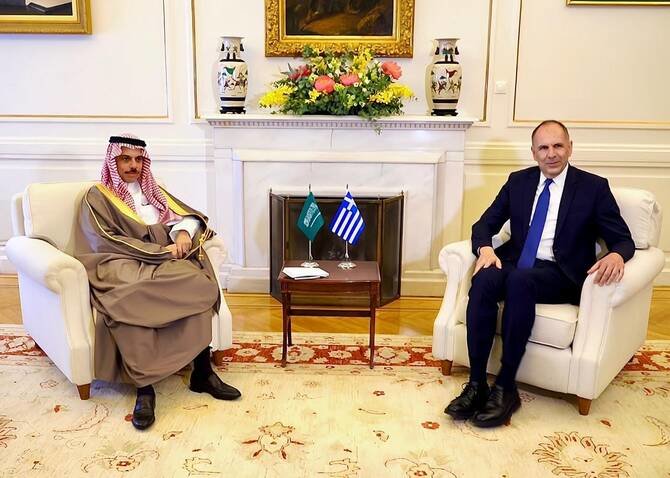
Saudi Arabia and Greece have reinforced their expanding strategic relationship through high-level talks in Athens between their foreign ministers, continuing a structured diplomatic framework designed to deepen cooperation across energy, investment, and regional policy coordination.
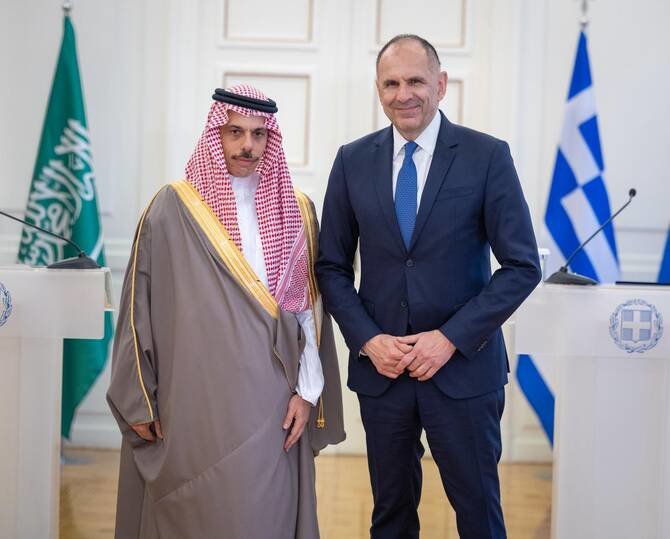
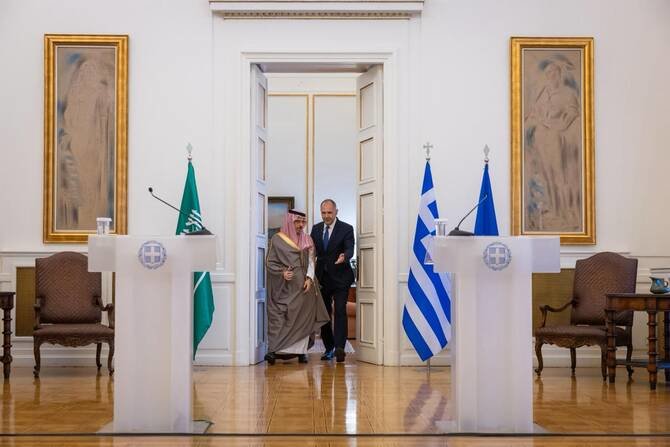
The meeting brought together Saudi Foreign Minister Prince Faisal bin Farhan and Greek Foreign Minister Giorgos Gerapetritis under the Saudi–Hellenic Strategic Partnership Council, an institutional mechanism established to organize bilateral cooperation across government sectors.
The council is designed to move relations beyond ad hoc diplomacy toward sustained, structured engagement supported by recurring ministerial and technical meetings.
A key outcome of the Athens discussions is the advancement of an agreement exempting diplomatic, service, and special passport holders from visa requirements.
While limited in scope, such arrangements typically streamline official travel and administrative coordination, making it easier for government officials and delegations to move between the two countries and maintain regular institutional contact.
The broader relationship between Riyadh and Athens has grown steadily since the early 2020s, expanding into energy infrastructure, investment cooperation, and connectivity projects.
Both countries have prioritized collaboration in electricity interconnection initiatives, renewable energy development, and broader efforts to link Gulf and European energy systems.
These initiatives reflect Greece’s role as an EU member state and regional transit hub, and Saudi Arabia’s position as a major energy exporter undergoing economic diversification under its long-term national development strategy.
Beyond energy, cooperation has extended into shipping, maritime security, and investment coordination.
These areas reflect shared interests in stabilizing trade routes and improving economic integration across the Eastern Mediterranean and broader Middle East region.
The partnership is also shaped by wider geopolitical conditions, including regional instability and shifting global energy markets, which have increased the strategic value of diversified alliances for both countries.
While no major new flagship projects were announced at the Athens meeting, the continuation of structured council-level engagement signals a sustained long-term approach rather than isolated diplomatic gestures.
The emphasis remains on incremental institutional development, including regular ministerial consultations and sector-specific working groups that gradually expand the scope of cooperation.
The immediate result of the talks is the reinforcement of an operational bilateral framework that facilitates ongoing coordination between Saudi Arabia and Greece.
The longer-term implication is a steadily deepening partnership linking European institutional networks with Gulf economic and energy strategy through formalized diplomatic channels.
The meeting brought together Saudi Foreign Minister Prince Faisal bin Farhan and Greek Foreign Minister Giorgos Gerapetritis under the Saudi–Hellenic Strategic Partnership Council, an institutional mechanism established to organize bilateral cooperation across government sectors.
The council is designed to move relations beyond ad hoc diplomacy toward sustained, structured engagement supported by recurring ministerial and technical meetings.
A key outcome of the Athens discussions is the advancement of an agreement exempting diplomatic, service, and special passport holders from visa requirements.
While limited in scope, such arrangements typically streamline official travel and administrative coordination, making it easier for government officials and delegations to move between the two countries and maintain regular institutional contact.
The broader relationship between Riyadh and Athens has grown steadily since the early 2020s, expanding into energy infrastructure, investment cooperation, and connectivity projects.
Both countries have prioritized collaboration in electricity interconnection initiatives, renewable energy development, and broader efforts to link Gulf and European energy systems.
These initiatives reflect Greece’s role as an EU member state and regional transit hub, and Saudi Arabia’s position as a major energy exporter undergoing economic diversification under its long-term national development strategy.
Beyond energy, cooperation has extended into shipping, maritime security, and investment coordination.
These areas reflect shared interests in stabilizing trade routes and improving economic integration across the Eastern Mediterranean and broader Middle East region.
The partnership is also shaped by wider geopolitical conditions, including regional instability and shifting global energy markets, which have increased the strategic value of diversified alliances for both countries.
While no major new flagship projects were announced at the Athens meeting, the continuation of structured council-level engagement signals a sustained long-term approach rather than isolated diplomatic gestures.
The emphasis remains on incremental institutional development, including regular ministerial consultations and sector-specific working groups that gradually expand the scope of cooperation.
The immediate result of the talks is the reinforcement of an operational bilateral framework that facilitates ongoing coordination between Saudi Arabia and Greece.
The longer-term implication is a steadily deepening partnership linking European institutional networks with Gulf economic and energy strategy through formalized diplomatic channels.