0:00
0:00
Pakistan’s Prime Minister Travels to Saudi Arabia After Discussions With Iranian Leadership
Shehbaz Sharif’s visit to Riyadh follows contacts with Tehran as Islamabad navigates mounting regional tensions and deep security ties with Saudi Arabia
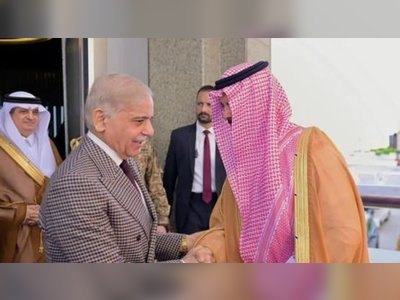
Pakistan’s Prime Minister Shehbaz Sharif has travelled to Saudi Arabia for high-level discussions after holding talks with Iranian leadership, a diplomatic move that reflects Islamabad’s efforts to manage intensifying tensions across the Middle East while maintaining close ties with key regional partners.
Sharif’s visit to Riyadh comes shortly after he communicated with Iran’s president amid a rapidly evolving regional security environment.
The trip is expected to include meetings with Saudi Crown Prince Mohammed bin Salman and other senior officials to discuss the growing instability in the region and the broader geopolitical situation.
Officials say the discussions will focus on regional security, energy markets and coordination between Pakistan and Saudi Arabia as the Middle East faces escalating military tensions.
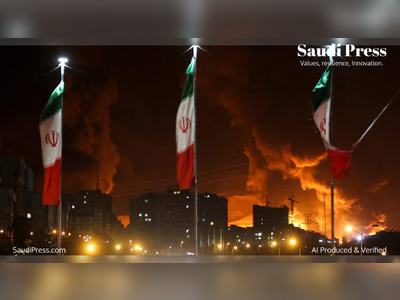
The talks are also expected to address the implications of recent drone and missile attacks across the Gulf region and the wider impact of the ongoing conflict involving Iran and Western-aligned forces.
The visit highlights Pakistan’s delicate diplomatic position.
The country shares a long land border with Iran but also maintains a historically close strategic partnership with Saudi Arabia, built on decades of political cooperation, economic ties and defence collaboration.
Relations between Islamabad and Riyadh were further strengthened last year when the two countries signed a mutual defence pact that commits both sides to support each other in the event of external aggression.
The agreement has elevated their longstanding security partnership and has become increasingly relevant as regional tensions rise.
Pakistani officials have repeatedly reaffirmed the strength of their relationship with Saudi Arabia, describing it as a cornerstone of the country’s foreign policy.
In recent statements, government representatives have emphasised that Pakistan would stand ready to support the kingdom if required, reflecting the depth of their strategic alignment.
At the same time, Islamabad has maintained diplomatic engagement with Tehran, seeking to prevent the broader conflict from destabilising its own borders and regional economic interests.
Analysts say this balancing act illustrates Pakistan’s effort to avoid being drawn directly into the expanding confrontation while preserving relationships with both neighbouring Iran and long-standing ally Saudi Arabia.
Sharif’s meetings in Riyadh are expected to focus on coordination between the two governments as the crisis continues to evolve.
With energy markets, regional security arrangements and diplomatic alliances all under pressure, the visit underscores Pakistan’s growing role in regional diplomacy during one of the Middle East’s most volatile periods in years.
Sharif’s visit to Riyadh comes shortly after he communicated with Iran’s president amid a rapidly evolving regional security environment.
The trip is expected to include meetings with Saudi Crown Prince Mohammed bin Salman and other senior officials to discuss the growing instability in the region and the broader geopolitical situation.
Officials say the discussions will focus on regional security, energy markets and coordination between Pakistan and Saudi Arabia as the Middle East faces escalating military tensions.
The talks are also expected to address the implications of recent drone and missile attacks across the Gulf region and the wider impact of the ongoing conflict involving Iran and Western-aligned forces.
The visit highlights Pakistan’s delicate diplomatic position.
The country shares a long land border with Iran but also maintains a historically close strategic partnership with Saudi Arabia, built on decades of political cooperation, economic ties and defence collaboration.
Relations between Islamabad and Riyadh were further strengthened last year when the two countries signed a mutual defence pact that commits both sides to support each other in the event of external aggression.
The agreement has elevated their longstanding security partnership and has become increasingly relevant as regional tensions rise.
Pakistani officials have repeatedly reaffirmed the strength of their relationship with Saudi Arabia, describing it as a cornerstone of the country’s foreign policy.
In recent statements, government representatives have emphasised that Pakistan would stand ready to support the kingdom if required, reflecting the depth of their strategic alignment.
At the same time, Islamabad has maintained diplomatic engagement with Tehran, seeking to prevent the broader conflict from destabilising its own borders and regional economic interests.
Analysts say this balancing act illustrates Pakistan’s effort to avoid being drawn directly into the expanding confrontation while preserving relationships with both neighbouring Iran and long-standing ally Saudi Arabia.
Sharif’s meetings in Riyadh are expected to focus on coordination between the two governments as the crisis continues to evolve.
With energy markets, regional security arrangements and diplomatic alliances all under pressure, the visit underscores Pakistan’s growing role in regional diplomacy during one of the Middle East’s most volatile periods in years.