Multinationals Deepen Commitments as Saudi Arabia Moves Beyond Being a 'Test Market'
AstroLabs CEO Roland Daher says the Kingdom is now seen by multinational companies as a serious target for long-term strategies, not just a place to test new markets.
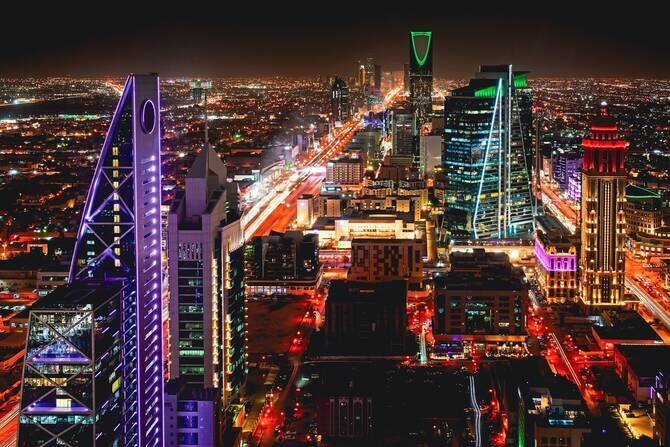
Riyadh: Saudi Arabia is no longer considered a market where multinational companies cautiously test their waters, but rather one they enter with clear strategies and long-term commitments.
This shift has been outlined by Roland Daher, CEO of business expansion platform AstroLabs.Daher points to the Kingdom’s effort to advance its Vision 2030 agenda aimed at diversifying its economy and positioning itself as a regional business hub.
Over 700 multinational companies have moved their regional headquarters to Riyadh by early 2026, surpassing the government's initial target of 500 by 2030.The seriousness of the interest is demonstrated by how quickly companies move from entry to execution.
According to Daher, firms are increasingly opening offices, establishing regional headquarters, hiring local staff, and building operational capacity soon after entering Saudi Arabia, reflecting a stronger commitment to a long-term presence in the Kingdom.The global mix of companies entering Saudi is also becoming more diverse.
Over half of the firms supported into Saudi Arabia through AstroLabs now come from outside the Middle East, North Africa, and Turkiye region, including firms from the Americas, Europe, and Asia.The expanding demand across various sectors linked to the large-scale development projects in Saudi Arabia drives the current wave of expansion.
Construction and manufacturing are among the fastest-growing areas, supported by major projects such as Diriyah Phase 2, Qiddiya, and King Salman International Airport.
The expected awarding of over $38 billion in contracts in the coming months sustains the demand for international firms.Artificial intelligence and digital infrastructure are also attracting global companies due to the expanding data ecosystem and recent investments in AI-related capacity.Tourism remains a major driver with 19.5 million pilgrims and Umrah performers recorded in 2025, creating sustained demand across hospitality, transport, and travel services.
Mining and manufacturing sectors are gaining momentum as Saudi Arabia works on localizing supply chains and developing industrial capacity, backed by an estimated $2.5 trillion in mineral resources.Looking forward, Daher anticipates the next wave of entering companies to be more specialized, focusing on IT and software, education, media, logistics, and food security sectors.The shift from incorporation to operational readiness is evident, with a focus on building a functioning business including hiring local talent, managing compliance, and developing market traction.
Companies understand that establishment in Saudi Arabia is only the starting point.The growing presence of multinational companies in the Kingdom is already reshaping parts of the Saudi economy.
There's an increase in active investment licenses from 6,000 in 2019 to 62,000 by the end of 2025, along with the creation of more than 1 million jobs, many filled by Saudi nationals.The next phase of impact is likely to concentrate on sectors that build long-term capacity including logistics, manufacturing, mining, tourism, and digital infrastructure.
Large international companies are also showing interest in establishing operations in Saudi Arabia, particularly in sectors where the Kingdom’s scale and direction are clear such as technology and infrastructure.Saudi Arabia's role as a regional starting point for expansion strategies is increasingly recognized by multinational companies with at least seven out of ten considering it their first market in the region.
This positions Saudi Arabia as a regional hub, facilitating entry into other Gulf markets.
This shift has been outlined by Roland Daher, CEO of business expansion platform AstroLabs.Daher points to the Kingdom’s effort to advance its Vision 2030 agenda aimed at diversifying its economy and positioning itself as a regional business hub.
Over 700 multinational companies have moved their regional headquarters to Riyadh by early 2026, surpassing the government's initial target of 500 by 2030.The seriousness of the interest is demonstrated by how quickly companies move from entry to execution.
According to Daher, firms are increasingly opening offices, establishing regional headquarters, hiring local staff, and building operational capacity soon after entering Saudi Arabia, reflecting a stronger commitment to a long-term presence in the Kingdom.The global mix of companies entering Saudi is also becoming more diverse.
Over half of the firms supported into Saudi Arabia through AstroLabs now come from outside the Middle East, North Africa, and Turkiye region, including firms from the Americas, Europe, and Asia.The expanding demand across various sectors linked to the large-scale development projects in Saudi Arabia drives the current wave of expansion.
Construction and manufacturing are among the fastest-growing areas, supported by major projects such as Diriyah Phase 2, Qiddiya, and King Salman International Airport.
The expected awarding of over $38 billion in contracts in the coming months sustains the demand for international firms.Artificial intelligence and digital infrastructure are also attracting global companies due to the expanding data ecosystem and recent investments in AI-related capacity.Tourism remains a major driver with 19.5 million pilgrims and Umrah performers recorded in 2025, creating sustained demand across hospitality, transport, and travel services.
Mining and manufacturing sectors are gaining momentum as Saudi Arabia works on localizing supply chains and developing industrial capacity, backed by an estimated $2.5 trillion in mineral resources.Looking forward, Daher anticipates the next wave of entering companies to be more specialized, focusing on IT and software, education, media, logistics, and food security sectors.The shift from incorporation to operational readiness is evident, with a focus on building a functioning business including hiring local talent, managing compliance, and developing market traction.
Companies understand that establishment in Saudi Arabia is only the starting point.The growing presence of multinational companies in the Kingdom is already reshaping parts of the Saudi economy.
There's an increase in active investment licenses from 6,000 in 2019 to 62,000 by the end of 2025, along with the creation of more than 1 million jobs, many filled by Saudi nationals.The next phase of impact is likely to concentrate on sectors that build long-term capacity including logistics, manufacturing, mining, tourism, and digital infrastructure.
Large international companies are also showing interest in establishing operations in Saudi Arabia, particularly in sectors where the Kingdom’s scale and direction are clear such as technology and infrastructure.Saudi Arabia's role as a regional starting point for expansion strategies is increasingly recognized by multinational companies with at least seven out of ten considering it their first market in the region.
This positions Saudi Arabia as a regional hub, facilitating entry into other Gulf markets.