Hungary's Pater Magyar Sworn in as PM, Promising Change and EU Reconciliation
New Prime Minister Pater Magyar vows to restore democratic institutions, combat corruption, and mend ties with the European Union.
BUDAPEST: Hungary’s Pater Magyar took his oath of office on Saturday, marking a significant shift in the country’s political landscape as he became the new prime minister.
This transition comes after the center-right Tisza party defeated Viktor Orbán's nationalist-populist Fidesz in what has been described as a stunning blow, securing more votes and seats in parliament than any other party in Hungary’s post-Communist history.
The victory granted Tisza a two-thirds parliamentary majority, enabling it to roll back many of the policies that contributed to Orbán’s reputation as a far-right authoritarian.
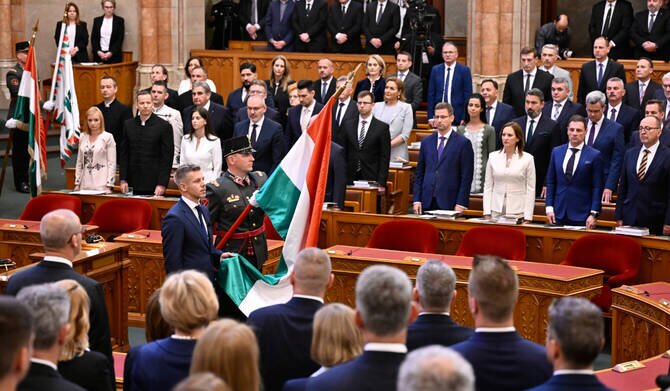
Magyar's swearing-in ceremony took place at the sprawling neo-Gothic parliament building, where he was joined by 140 representatives from his party.
With Tisza now controlling 141 seats in the 199-seat parliament, and Orban’s Fidesz-KDNP coalition reduced to 52 seats, Magyar has the mandate to transform Hungary's political dynamics within the EU.
Previously, Orbán had frequently vetoed key decisions and most recently concerning support for Ukraine, straining Hungary's relationship with the bloc.
In his inaugural speech, Magyar emphasized his commitment to restoring democratic institutions, governmental checks and balances, and combating alleged corruption.
He underscored a shift from autocratic rule to public service, promising not to 'rule' but to 'serve his homeland.' The new prime minister also called for an all-day celebration at Kossuth Square outside Parliament to mark the end of Orbán's era, reflecting both the excitement and high expectations of Hungarians.
Magyar’s government is expected to focus on repairing Hungary’s ties with the EU, a move that could unlock approximately €17 billion ($20 billion) in frozen EU funds over rule-of-law and corruption concerns.
This financial influx is crucial for reviving Hungary's stagnant economy, which has suffered for four years under Orbán’s leadership.
The new government, comprising 54 women lawmakers – the most in Hungary’s history and a significant increase from the period of Orbán’s rule – aims to restore democratic norms and guide Hungary back toward Western democracies.
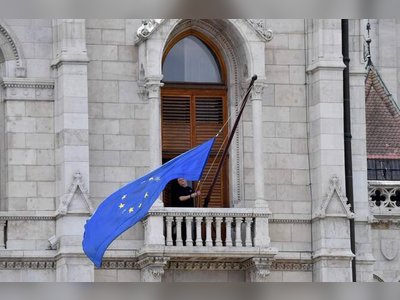
The EU flag was raised on Parliament’s facade for the first time since 2014, signaling a potential re-engagement with Europe.
Magyar plans to establish a National Asset Recovery and Protection Office to investigate and recover public funds misused during Orbán's tenure.
Additionally, he intends to suspend the news services of Hungary’s public broadcaster until objectivity can be restored, reflecting his commitment to transparency and accountability.
In his speech, Magyar acknowledged the mandate for change and reconciliation, stressing the necessity to confront past abuses for a just future.
This transition in Hungary represents not only a political shift but also a complex journey toward restoring democratic norms, aligning with EU values, and promoting justice and reconciliation.
This transition comes after the center-right Tisza party defeated Viktor Orbán's nationalist-populist Fidesz in what has been described as a stunning blow, securing more votes and seats in parliament than any other party in Hungary’s post-Communist history.
The victory granted Tisza a two-thirds parliamentary majority, enabling it to roll back many of the policies that contributed to Orbán’s reputation as a far-right authoritarian.
Magyar's swearing-in ceremony took place at the sprawling neo-Gothic parliament building, where he was joined by 140 representatives from his party.
With Tisza now controlling 141 seats in the 199-seat parliament, and Orban’s Fidesz-KDNP coalition reduced to 52 seats, Magyar has the mandate to transform Hungary's political dynamics within the EU.
Previously, Orbán had frequently vetoed key decisions and most recently concerning support for Ukraine, straining Hungary's relationship with the bloc.
In his inaugural speech, Magyar emphasized his commitment to restoring democratic institutions, governmental checks and balances, and combating alleged corruption.
He underscored a shift from autocratic rule to public service, promising not to 'rule' but to 'serve his homeland.' The new prime minister also called for an all-day celebration at Kossuth Square outside Parliament to mark the end of Orbán's era, reflecting both the excitement and high expectations of Hungarians.
Magyar’s government is expected to focus on repairing Hungary’s ties with the EU, a move that could unlock approximately €17 billion ($20 billion) in frozen EU funds over rule-of-law and corruption concerns.
This financial influx is crucial for reviving Hungary's stagnant economy, which has suffered for four years under Orbán’s leadership.
The new government, comprising 54 women lawmakers – the most in Hungary’s history and a significant increase from the period of Orbán’s rule – aims to restore democratic norms and guide Hungary back toward Western democracies.
The EU flag was raised on Parliament’s facade for the first time since 2014, signaling a potential re-engagement with Europe.
Magyar plans to establish a National Asset Recovery and Protection Office to investigate and recover public funds misused during Orbán's tenure.
Additionally, he intends to suspend the news services of Hungary’s public broadcaster until objectivity can be restored, reflecting his commitment to transparency and accountability.
In his speech, Magyar acknowledged the mandate for change and reconciliation, stressing the necessity to confront past abuses for a just future.
This transition in Hungary represents not only a political shift but also a complex journey toward restoring democratic norms, aligning with EU values, and promoting justice and reconciliation.