Jordan Unveils Energy Strategy Focusing on Gas Expansion and Green Hydrogen
Risha gas field expansion and green hydrogen production target 40% renewables in power mix by 2035
RIYADH: Jordan's cabinet has endorsed a new energy strategy for the period 2025–2035, aiming to expand the Risha gas field and initiate green hydrogen production of around 500,000 tonnes by 2035.
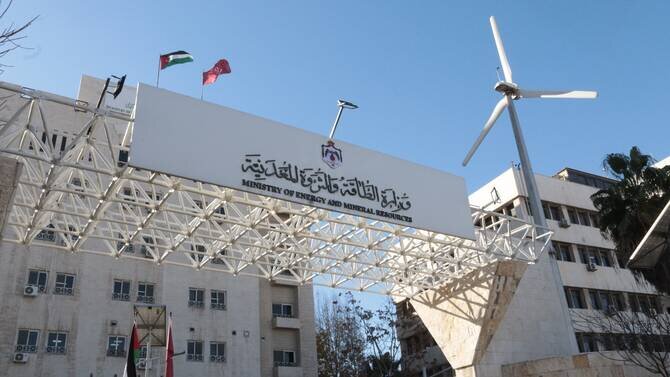
The Ministry of Energy and Mineral Resources emphasizes that this ten-year plan will serve as a guiding document for policies, programs, and investments in the sector, with an emphasis on developing domestic energy resources, enhancing economic competitiveness, and establishing a flexible and sustainable energy system.
The strategy signifies broader regional efforts to bolster energy security, reduce dependence on imports, and meet increasing demand amidst global market fluctuations.
Key features of the plan include prioritizing renewable energy sources, targeting a 40% share in the electricity mix by 2035 through additions of solar and wind power generation capacity.
A significant component is the planned expansion of the Risha gas field, with production expected to rise from 418 million cubic feet per day by 2029 to nearly double, reaching 812 million cubic feet per day by 2035.
Construction of a pipeline connecting the Risha field to the Arab Gas Pipeline is set to begin in 2029.
Jordan aims to increase natural gas use across industrial sectors, projecting demand at approximately 173 million cubic feet daily by 2035.
Infrastructure development will extend distribution networks in Amman and Zarqa to cater to residential, commercial, and industrial consumers.
The production of commercial hydrogen is scheduled to commence by 2030 and scale up to around 500,000 tonnes annually by 2035.
To address rising electricity demand, the strategy entails expanding combined-cycle power generation between 2027 and 2030 along with investments in energy storage solutions such as battery systems and pumped-storage projects.
Efficiency improvements across the grid are also targeted, aiming to reduce electricity losses to 8% by 2035.
Demand-side reforms include implementing time-of-use tariffs across all sectors by September to help manage consumption peaks.
The strategy promotes a shift towards cleaner energy in transport, with electric vehicles expected to account for 60% of new car sales.
Additionally, compressed natural gas is slated for adoption, especially for heavy-duty vehicles.
The government stresses the importance of self-reliance through increased utilization of domestic natural gas and renewable resources, enhancing the reliability of Jordan's energy sector.
This approach reflects regional efforts to balance energy security with a cleaner power mix.
Neighboring countries such as the UAE aim for net zero emissions by 2050, while Saudi Arabia targets about half its electricity from renewables by 2030, and Qatar is expanding liquefied natural gas production alongside increased solar generation initiatives as Gulf nations diversify their energy matrices.
The Ministry of Energy and Mineral Resources emphasizes that this ten-year plan will serve as a guiding document for policies, programs, and investments in the sector, with an emphasis on developing domestic energy resources, enhancing economic competitiveness, and establishing a flexible and sustainable energy system.
The strategy signifies broader regional efforts to bolster energy security, reduce dependence on imports, and meet increasing demand amidst global market fluctuations.
Key features of the plan include prioritizing renewable energy sources, targeting a 40% share in the electricity mix by 2035 through additions of solar and wind power generation capacity.
A significant component is the planned expansion of the Risha gas field, with production expected to rise from 418 million cubic feet per day by 2029 to nearly double, reaching 812 million cubic feet per day by 2035.
Construction of a pipeline connecting the Risha field to the Arab Gas Pipeline is set to begin in 2029.
Jordan aims to increase natural gas use across industrial sectors, projecting demand at approximately 173 million cubic feet daily by 2035.
Infrastructure development will extend distribution networks in Amman and Zarqa to cater to residential, commercial, and industrial consumers.
The production of commercial hydrogen is scheduled to commence by 2030 and scale up to around 500,000 tonnes annually by 2035.
To address rising electricity demand, the strategy entails expanding combined-cycle power generation between 2027 and 2030 along with investments in energy storage solutions such as battery systems and pumped-storage projects.
Efficiency improvements across the grid are also targeted, aiming to reduce electricity losses to 8% by 2035.
Demand-side reforms include implementing time-of-use tariffs across all sectors by September to help manage consumption peaks.
The strategy promotes a shift towards cleaner energy in transport, with electric vehicles expected to account for 60% of new car sales.
Additionally, compressed natural gas is slated for adoption, especially for heavy-duty vehicles.
The government stresses the importance of self-reliance through increased utilization of domestic natural gas and renewable resources, enhancing the reliability of Jordan's energy sector.
This approach reflects regional efforts to balance energy security with a cleaner power mix.
Neighboring countries such as the UAE aim for net zero emissions by 2050, while Saudi Arabia targets about half its electricity from renewables by 2030, and Qatar is expanding liquefied natural gas production alongside increased solar generation initiatives as Gulf nations diversify their energy matrices.