Iranian President Calls for Electricity Conservation Amid Ongoing Tensions
President Masoud Pezeshkian urges Iranian citizens to reduce their electricity consumption, citing efforts by the US and Israel to create dissatisfaction.
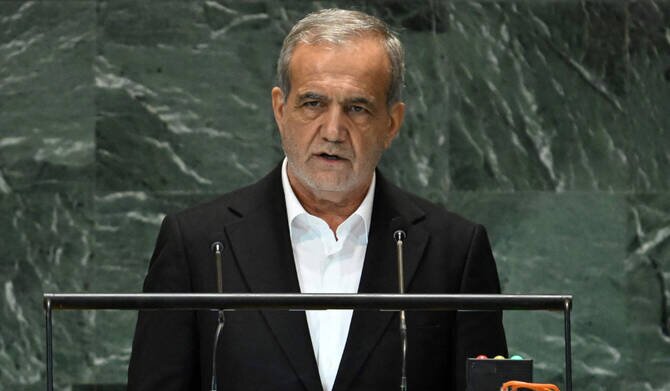
TEHRAN: In a bid to manage energy resources amid ongoing geopolitical tensions with the United States and Israel, Iranian President Masoud Pezeshkian has called on the nation to conserve electricity.
The president emphasized that while there are currently no shortages, the external pressures aim to foster discontent among the populace.
During his address on state TV, President Pezeshkian requested Iranians to cut their energy consumption by simple means such as reducing the number of lights used at home.
He stated, "We have asked our dear people, who are now ready and present on the ground, a simple request.
And that is to reduce their own electricity and energy consumption".
The president emphasized the necessity of controlling consumption without requiring immediate sacrifices from the public.
The call for conservation comes amid a backdrop where Iran has been facing no reported power cuts in Tehran despite the US-Israeli campaign against its infrastructure.
Pezeshkian accused these adversaries of targeting critical infrastructure to impose a blockade, aiming to turn current satisfaction into discontent.
Before the escalation of tensions, Iran grappled with frequent power outages during peak winter and summer months due to high demand.
The country generates nearly four-fifths of its electricity from natural gas, thanks to its substantial gas reserves.
The remaining energy is produced using low-quality heavy fuel oil, known as mazout, primarily utilized in older power stations.
Despite being self-sufficient in natural gas resources, the aging infrastructure, lack of investment, and the impact of severe international sanctions have hindered Iran's electricity grid from meeting demand effectively.
President Pezeshkian has previously launched energy-saving campaigns to address these challenges.
In light of recent events, the call for electricity conservation is seen as a strategic move to mitigate potential supply disruptions and bolster national resilience against external pressures.
The president emphasized that while there are currently no shortages, the external pressures aim to foster discontent among the populace.
During his address on state TV, President Pezeshkian requested Iranians to cut their energy consumption by simple means such as reducing the number of lights used at home.
He stated, "We have asked our dear people, who are now ready and present on the ground, a simple request.
And that is to reduce their own electricity and energy consumption".
The president emphasized the necessity of controlling consumption without requiring immediate sacrifices from the public.
The call for conservation comes amid a backdrop where Iran has been facing no reported power cuts in Tehran despite the US-Israeli campaign against its infrastructure.
Pezeshkian accused these adversaries of targeting critical infrastructure to impose a blockade, aiming to turn current satisfaction into discontent.
Before the escalation of tensions, Iran grappled with frequent power outages during peak winter and summer months due to high demand.
The country generates nearly four-fifths of its electricity from natural gas, thanks to its substantial gas reserves.
The remaining energy is produced using low-quality heavy fuel oil, known as mazout, primarily utilized in older power stations.
Despite being self-sufficient in natural gas resources, the aging infrastructure, lack of investment, and the impact of severe international sanctions have hindered Iran's electricity grid from meeting demand effectively.
President Pezeshkian has previously launched energy-saving campaigns to address these challenges.
In light of recent events, the call for electricity conservation is seen as a strategic move to mitigate potential supply disruptions and bolster national resilience against external pressures.