Humans Have Known How to Joke for At Least 13 Million Years, Study Suggests
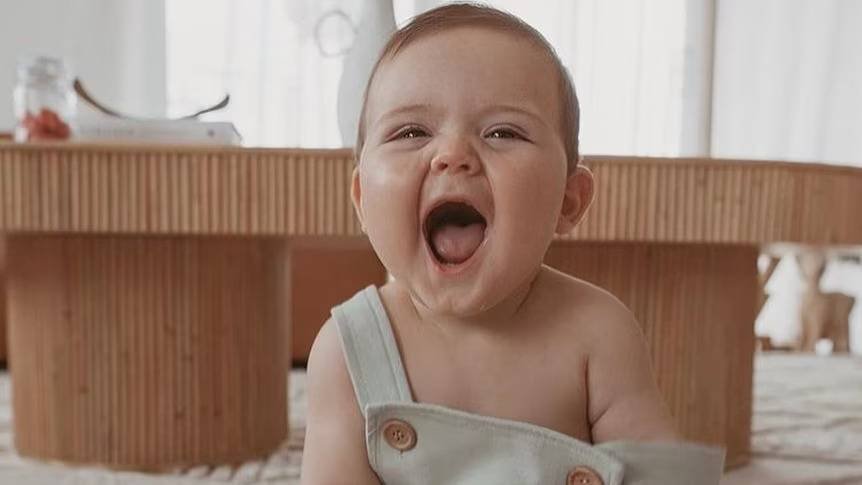
From their earliest days, humans have understood how to jest and tease even before uttering their first words.
These behaviors hold significant importance for interaction and social development among humans. A recent study published in the Proceedings of the Royal Society Biological Sciences journal suggests that the ability to tease others starts in humans as young as eight months old. Furthermore, this behavior is not limited to humans; similar antics have been observed in other primates, such as certain monkeys and chimpanzees, indicating that the evolution of such behavior in general began at least 13 million years ago.
According to primatologist Isabel Laumer of the University of California and the Max Planck Institute for Animal Behavior, "Great apes are an ideal model for teasing and joking. They resemble humans when it comes to engaging in social play, as they can laugh and show signs of understanding others' reactions within these playful social interactions." The study revealed that, while the teasing of infants might not have evolved to the sophistication of adult verbal jokes and humor, it seemingly relies on the same behavioral and cognitive principles.
The researchers document that by 12 months of age, children typically demonstrate three types of behaviors aimed at teasing others and attracting their attention: 1) showing objects to others and then suddenly snatching them away, 2) engaging in provocative and disobedient acts like committing an unacceptable act or refusing expected behavior, and 3) annoying others by trying to take objects while being used. These behaviors are frequently repeated, with children often looking at their parent, smiling, and awaiting an emotional reaction.
Children can also differentiate between positive and negative responses from others and generally cease behaviors that do not receive approval from their social environment. Researchers suggest that such behaviors occur during times of emotional neutrality or boredom, with the fundamental aim being to attract others for play or to explore the social boundaries of behavior.
As part of the study, a research team from the United States and Germany recorded behavioral patterns in a group of great apes, including nine baboons, four orangutans, and four gorillas at San Diego Zoo in the US, as well as 17 chimpanzees at Leipzig Zoo in Germany. The apes were observed in rich environments within enclosures and outdoor spaces, fed multiple times per day, and video-recorded for extended periods totaling 75 hours between 2016 and 2019. These recordings captured spontaneous social interactions involving teasing, harassment, and provocative behavior while excluding footage displaying unjustified aggression.
The study confirmed that the tested primates engaged in social behaviors based on teasing and mocking with all four species displaying intentional provocative behaviors typically accompanied by indicators of play. A total of 18 different teasing behaviors were observed, such as pulling hair, poking fingers, and hiding objects from others, mostly aimed at attracting attention or inciting a reaction.
Moreover, the apes demonstrated a relatively complex understanding of others' expectations a crucial criterion for social teasing alongside engaging in the same three approaches that human children employ to draw adults' attention and engage them in play, as reported by the German Press Agency (DPA).
Citing anthropologist Erica Cartmill from Indiana University, the Popular Science website highlighted that primates commonly wave their hands or show items within others' line of sight, then look directly at them after a poke or slap, making it almost impossible for the other to ignore the playful behavior. In some rare instances, the primates used expressive gestures or facial expressions to indicate their desire to tease or play, a behavior comparable to smiling in humans.
Researcher Laumer affirms that "from an evolutionary perspective, the fact that the four patterns of teasing and humor found in great apes parallel those observed in human children suggests that teasing and playfulness, along with their cognitive requirements, likely appeared in our earliest ancestors at least 13 million years ago."
According to primatologist Isabel Laumer of the University of California and the Max Planck Institute for Animal Behavior, "Great apes are an ideal model for teasing and joking. They resemble humans when it comes to engaging in social play, as they can laugh and show signs of understanding others' reactions within these playful social interactions." The study revealed that, while the teasing of infants might not have evolved to the sophistication of adult verbal jokes and humor, it seemingly relies on the same behavioral and cognitive principles.
The researchers document that by 12 months of age, children typically demonstrate three types of behaviors aimed at teasing others and attracting their attention: 1) showing objects to others and then suddenly snatching them away, 2) engaging in provocative and disobedient acts like committing an unacceptable act or refusing expected behavior, and 3) annoying others by trying to take objects while being used. These behaviors are frequently repeated, with children often looking at their parent, smiling, and awaiting an emotional reaction.
Children can also differentiate between positive and negative responses from others and generally cease behaviors that do not receive approval from their social environment. Researchers suggest that such behaviors occur during times of emotional neutrality or boredom, with the fundamental aim being to attract others for play or to explore the social boundaries of behavior.
As part of the study, a research team from the United States and Germany recorded behavioral patterns in a group of great apes, including nine baboons, four orangutans, and four gorillas at San Diego Zoo in the US, as well as 17 chimpanzees at Leipzig Zoo in Germany. The apes were observed in rich environments within enclosures and outdoor spaces, fed multiple times per day, and video-recorded for extended periods totaling 75 hours between 2016 and 2019. These recordings captured spontaneous social interactions involving teasing, harassment, and provocative behavior while excluding footage displaying unjustified aggression.
The study confirmed that the tested primates engaged in social behaviors based on teasing and mocking with all four species displaying intentional provocative behaviors typically accompanied by indicators of play. A total of 18 different teasing behaviors were observed, such as pulling hair, poking fingers, and hiding objects from others, mostly aimed at attracting attention or inciting a reaction.
Moreover, the apes demonstrated a relatively complex understanding of others' expectations a crucial criterion for social teasing alongside engaging in the same three approaches that human children employ to draw adults' attention and engage them in play, as reported by the German Press Agency (DPA).
Citing anthropologist Erica Cartmill from Indiana University, the Popular Science website highlighted that primates commonly wave their hands or show items within others' line of sight, then look directly at them after a poke or slap, making it almost impossible for the other to ignore the playful behavior. In some rare instances, the primates used expressive gestures or facial expressions to indicate their desire to tease or play, a behavior comparable to smiling in humans.
Researcher Laumer affirms that "from an evolutionary perspective, the fact that the four patterns of teasing and humor found in great apes parallel those observed in human children suggests that teasing and playfulness, along with their cognitive requirements, likely appeared in our earliest ancestors at least 13 million years ago."