Saudi Press

Saudi Arabia and the world
Tuesday, Jan 13, 2026

EU’s von der Leyen calls for tougher policy on China ahead of Beijing visit

EU’s von der Leyen calls for tougher policy on China ahead of Beijing visit

EU will ‘reassess’ 2020 trade deal with China, and introduce a new strategy on economic security, Commission chief says.

Europe needs to be "bolder" on China, which has become “more repressive at home and more assertive abroad,” according to the president of the European Commission.

In a scathing speech ahead of her visit to China next week, Ursula von der Leyen on Thursday warned Beijing not to side with Moscow in bringing compromised peace to Ukraine, saying: “How China continues to interact with Putin’s war will be a determining factor for EU-China relations going forward.”

She implied, for the first time, that the EU could terminate pursuing a landmark trade deal with China, which was clinched in 2020 but subsequently stalled by the European Parliament after some of its members were sanctioned by Beijing.

“We have to recognize that the world and China have changed in the last three years — and we need to reassess CAI in light of our wider China strategy,” she said at an event co-hosted by the European Policy Center and Merics, referring to the China trade deal, known as Comprehensive Agreement on Investment.

While von der Leyen has commented critically on China in the past, this is the first time the EU chief has given a full speech on the bloc's relations with Beijing. Pointing to the situation in Taiwan, human rights violations in Xinjiang, and economic retaliations against Lithuania, she said: "These escalatory actions point to a China that is becoming more repressive at home and more assertive abroad."

“We are concerned by what is behind this return to the global stage,” said von der Leyen, who will be traveling to China next week with French President Emmanuel Macron. “We have seen a very deliberate hardening of China's overall strategic posture for some time. And it has now been matched by a ratcheting up of increasingly assertive actions.”

She was especially critical of the ties between Xi Jinping and Vladimir Putin, the Chinese and Russian leaders, who met last week in Moscow.

"Most telling," von der Leyen said, "were President Xi’s parting words to Putin on the steps outside the Kremlin when he said: 'Right now there are changes, the likes of which we haven’t seen for 100 years. And we are the ones driving these changes together.'"

The Chinese Communist Party’s "clear goal is a systemic change of the international order with China at its center ... We have seen the show of friendship in Moscow which says a thousand words about this new vision for the international order," she said.

She also called on EU countries to make "bolder and faster use" of new economic tools against China, including screening of foreign subsidies and a new policy against economic coercion. The Council of the EU, representing the EU member states, has been wary of over-empowering the Commission to take decisions on punishing coercive countries.

Amid what she described as an "unbalanced" economic relationship, von der Leyen said the EU will introduce a new Economic Security Strategy later this year.

"Europe should develop a targeted instrument on outbound investment. This would relate to a small number of sensitive technologies where investment can lead to the development of military capabilities that pose risks to national security," she said. "We need to ensure that our companies' capital, expertise, and knowledge are not used to enhance the military and intelligence capabilities of those who are also systemic rivals."
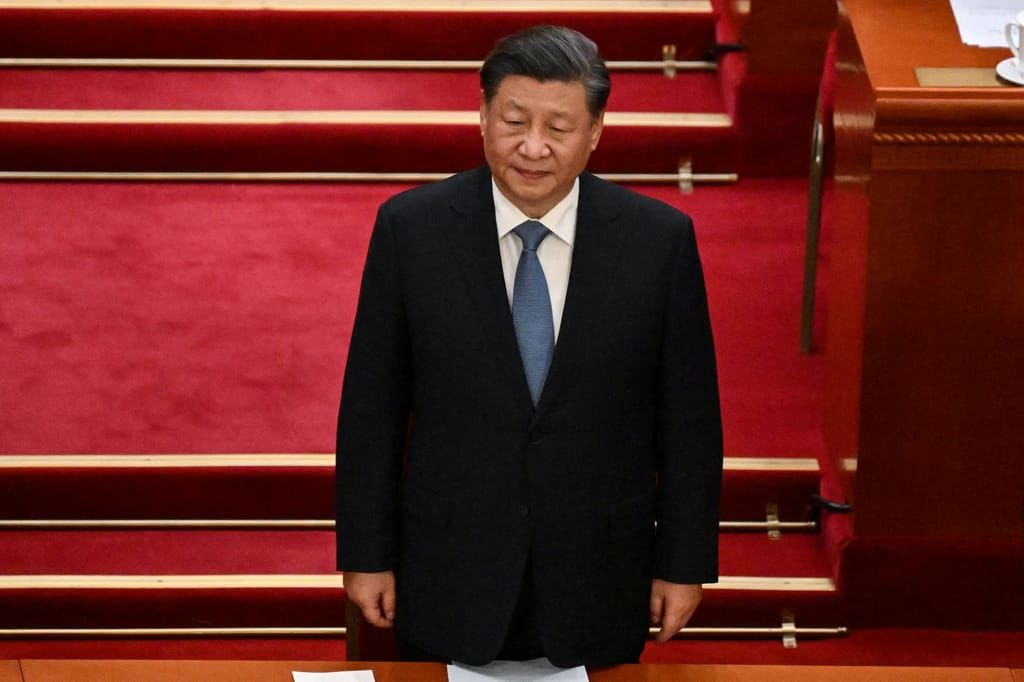
Von der Leyen was especially critical of the ties between Xi Jinping and Vladimir Putin who met last week in Moscow


The EU, she added, needs to "define its future relationship with China" in sensitive high-tech areas such as microelectronics, quantum computing, robotics, artificial intelligence and biotech.

Despite all the rallying calls for defensive action, von der Leyen ended the speech with a note of cautious optimism. "China is a fascinating and complex mix of history, progress and challenges. And it will define this century," she said.

"But our story about how we relate to China is not yet fully written — and it need not be a defensive one."

Newsletter

Related Articles

Saudi Press
0:00
0:00
Close
Trump Designates Saudi Arabia a Major Non-NATO Ally, Elevating US–Riyadh Defense Partnership
Trump Organization Deepens Saudi Property Focus with $10 Billion Luxury Developments
There is no sovereign immunity for poisoning millions with drugs.
Mohammed bin Salman’s Global Standing: Strategic Partner in Transition Amid Debate Over His Role
Saudi Arabia Opens Property Market to Foreign Buyers in Landmark Reform
The U.S. State Department’s account in Persian: “President Trump is a man of action. If you didn’t know it until now, now you do—do not play games with President Trump.”
CNN’s Ranking of Israel’s Women’s Rights Sparks Debate After Misleading Global Index Comparison
Saudi Arabia’s Shifting Regional Alignment Raises Strategic Concerns in Jerusalem
OPEC+ Holds Oil Output Steady Amid Member Tensions and Market Oversupply
Iranian Protests Intensify as Another Revolutionary Guard Member Is Killed and Khamenei Blames the West
President Trump Says United States Will Administer Venezuela Until a Secure Leadership Transition
Delta Force Identified as Unit Behind U.S. Operation That Captured Venezuela’s President
Trump Announces U.S. Large-Scale Strike on Venezuela, Declares President Maduro and Wife Captured
Saudi-UAE Rift Adds Complexity to Middle East Diplomacy as Trump Signals Firm Leadership
OPEC+ to Keep Oil Output Policy Unchanged Despite Saudi-UAE Tensions Over Yemen
Saudi Arabia and UAE at Odds in Yemen Conflict as Southern Offensive Deepens Gulf Rift
Abu Dhabi ‘Capital of Capital’: How Abu Dhabi Rose as a Sovereign Wealth Power
Diamonds Are Powering a New Quantum Revolution
Trump Threatens Strikes Against Iran if Nuclear Programme Is Restarted
Why Saudi Arabia May Recalibrate Its US Spending Commitments Amid Rising China–America Rivalry
Riyadh Air’s First Boeing 787-9 Dreamliner Completes Initial Test Flight, Advancing Saudi Carrier’s Launch
Saudi Arabia’s 2025: A Pivotal Year of Global Engagement and Domestic Transformation
Saudi Arabia to Introduce Sugar-Content Based Tax on Sweetened Drinks from January 2026
Saudi Hotels Prepare for New Hospitality Roles as Alcohol Curbs Ease
Global Airports Forum Highlights Saudi Arabia’s Emergence as a Leading Aviation Powerhouse
Saudi Arabia Weighs Strategic Choice on Iran Amid Regional Turbulence
Not Only F-35s: Saudi Arabia to Gain Access to the World’s Most Sensitive Technology
Saudi Arabia Condemns Sydney Bondi Beach Shooting and Expresses Solidarity with Australia
Washington Watches Beijing–Riyadh Rapprochement as Strategic Balance Shifts
Saudi Arabia Urges Stronger Partnerships and Efficient Aid Delivery at OCHA Donor Support Meeting in Geneva
Saudi Arabia’s Vision 2030 Drives Measurable Lift in Global Reputation and Influence
Alcohol Policies Vary Widely Across Muslim-Majority Countries, With Many Permitting Consumption Under Specific Rules
Saudi Arabia Clarifies No Formal Ban on Photography at Holy Mosques for Hajj 2026
Libya and Saudi Arabia Sign Strategic MoU to Boost Telecommunications Cooperation
Elon Musk’s xAI Announces Landmark 500-Megawatt AI Data Center in Saudi Arabia
Israel Moves to Safeguard Regional Stability as F-35 Sales Debate Intensifies
Cardi B to Make Historic Saudi Arabia Debut at Soundstorm 2025 Festival
U.S. Democratic Lawmakers Raise National Security and Influence Concerns Over Paramount’s Hostile Bid for Warner Bros. Discovery
Hackers Are Hiding Malware in Open-Source Tools and IDE Extensions
Traveling to USA? Homeland Security moving toward requiring foreign travelers to share social media history
Wall Street Analysts Clash With Riyadh Over Saudi Arabia’s Deficit Outlook
Trump and Saudi Crown Prince Cement $1 Trillion-Plus Deals in High-Profile White House Summit
Saudi Arabia Opens Alcohol Sales to Wealthy Non-Muslim Residents Under New Access Rules
U.S.–Saudi Rethink Deepens — Washington Moves Ahead Without Linking Riyadh to Israel Normalisation
Saudi Arabia and Israel Deprioritise Diplomacy: Normalisation No Longer a Middle-East Priority
Saudi Arabia Positions Itself as the Backbone of the Global AI Era
As Trump Deepens Ties with Saudi Arabia, Push for Israel Normalization Takes a Back Seat
Thai Food Village Debuts at Saudi Feast Food Festival 2025 Under Thai Commerce Minister Suphajee’s Lead
Saudi Arabia Sharpens Its Strategic Vision as Economic Transformation Enters New Phase
Saudi Arabia Projects $44 Billion Budget Shortfall in 2026 as Economy Rebalances
×