
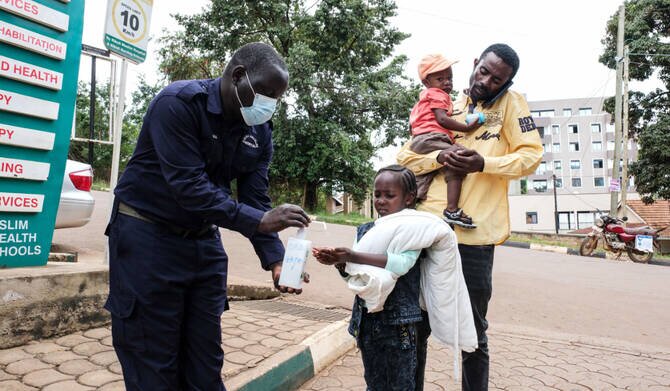
Ebola Outbreak in Congo Continues to Spread With No Vaccine Available
The Democratic Republic of Congo is facing a new Ebola outbreak with a high lethality rate, as health officials warn that no specific vaccine or treatment exists for the current strain.
A new Ebola outbreak in the Democratic Republic of Congo has caused significant concern as it continues to spread with a reported death toll of 80.
The outbreak, which affects the Bundibugyo strain, lacks both a vaccine and specific treatment, leading health officials to express alarm over its high lethality rate of up to 50%.
According to the Africa Centers for Disease Control and Prevention, the latest outbreak was confirmed in Ituri province, near the borders with Uganda and South Sudan, further exacerbating concerns about potential cross-border transmission due to significant population movements in the region.
The patient zero identified as a nurse who reported symptoms resembling Ebola to a health facility in Bunia on April 24th has contributed to the rapid spread of the disease.
Symptoms include fever, hemorrhaging, and vomiting.
The outbreak's rapid progression has raised the risk of further transmission, with an initial report indicating 65 deaths out of 246 suspected cases notified by the DRC's Health Ministry.
While this marks the 17th outbreak in the DRC since the virus was first identified in 1976, it is critical to note that vaccines are only currently available for the Zaire strain, which has a higher fatality rate ranging from 60% to 90%.
The previous outbreak occurred last August and resulted in at least 34 deaths before being declared eradicated in December.
This latest episode follows the deadliest outbreak in the DRC between 2018 and 2020, claiming nearly 2,300 lives.
Ebola, believed to have originated from bats, is a highly contagious viral disease spread through direct contact with bodily fluids.
It causes severe bleeding and organ failure.
The World Health Organization has reported that mortality rates during outbreaks over the past half-century have ranged from 25% up to 90%.
Given the severity of Ebola and its potential for rapid transmission in affected communities, the WHO is prepared to airlift medical equipment, including infection prevention gear, to the DRC.
The challenge lies in transporting resources across a country with extensive geographical areas and limited communications infrastructure.
Health officials emphasize the urgent need for continued vigilance and support as efforts are made to contain the outbreak and prevent further loss of life.
The outbreak, which affects the Bundibugyo strain, lacks both a vaccine and specific treatment, leading health officials to express alarm over its high lethality rate of up to 50%.
According to the Africa Centers for Disease Control and Prevention, the latest outbreak was confirmed in Ituri province, near the borders with Uganda and South Sudan, further exacerbating concerns about potential cross-border transmission due to significant population movements in the region.
The patient zero identified as a nurse who reported symptoms resembling Ebola to a health facility in Bunia on April 24th has contributed to the rapid spread of the disease.
Symptoms include fever, hemorrhaging, and vomiting.
The outbreak's rapid progression has raised the risk of further transmission, with an initial report indicating 65 deaths out of 246 suspected cases notified by the DRC's Health Ministry.
While this marks the 17th outbreak in the DRC since the virus was first identified in 1976, it is critical to note that vaccines are only currently available for the Zaire strain, which has a higher fatality rate ranging from 60% to 90%.
The previous outbreak occurred last August and resulted in at least 34 deaths before being declared eradicated in December.
This latest episode follows the deadliest outbreak in the DRC between 2018 and 2020, claiming nearly 2,300 lives.
Ebola, believed to have originated from bats, is a highly contagious viral disease spread through direct contact with bodily fluids.
It causes severe bleeding and organ failure.
The World Health Organization has reported that mortality rates during outbreaks over the past half-century have ranged from 25% up to 90%.
Given the severity of Ebola and its potential for rapid transmission in affected communities, the WHO is prepared to airlift medical equipment, including infection prevention gear, to the DRC.
The challenge lies in transporting resources across a country with extensive geographical areas and limited communications infrastructure.
Health officials emphasize the urgent need for continued vigilance and support as efforts are made to contain the outbreak and prevent further loss of life.