Ancient Route Revival: Modern Gateway for Iraqi Hajj Pilgrims
Jadidat Arar Port revives Darb Zubaydah's legacy, showcasing Saudi Arabia’s blend of history and modern logistics.
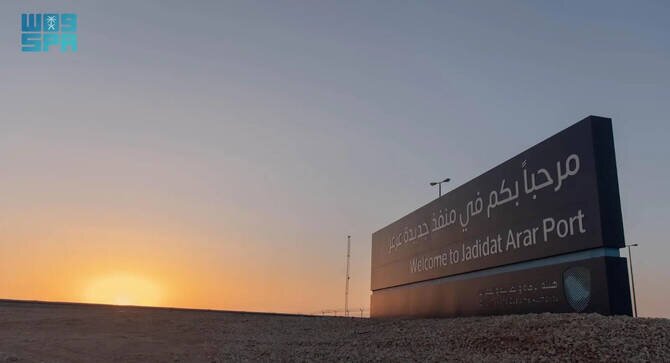
ARAR: Saudi Arabia’s Northern Borders Region serves as a gateway for thousands of Hajj pilgrims arriving overland from Iraq, breathing new life into the ancient Darb Zubaydah route through today’s Jadidat Arar border crossing.
This revival connects with the historic past while embracing modern logistics.Darb Zubaydah was an important Islamic trade and pilgrimage route stretching roughly 1,400 km across the Arabian Peninsula, connecting Kufa in present-day Iraq to Makkah.
Named after Zubaydah bint Jaafar, wife of Abbasid Caliph Harun Al-Rashid, it was a hallmark of early Islamic infrastructure designed to facilitate Hajj travel.During its peak in the Abbasid era, Darb Zubaydah featured remarkable engineering for its time, including wells for reliable water supply and strategically placed reservoirs and ponds.
Rest stations offered protection from the harsh desert environment, while stone markers guided travelers at intervals, often near water sources or crossroads.Though modern transportation has reduced reliance on caravan routes, Northern Borders Region retains its historic role as a key transit corridor.
Today, this function is centered on Jadidat Arar Port, which has streamlined procedures and offers comprehensive services for smooth pilgrim movement.
Authorities provide health screening, logistical coordination, and guidance to ensure safe passage toward the holy cities.The transformation from ancient paths to modern infrastructure reflects Saudi Arabia’s dedication to preserving cultural heritage while enhancing the Hajj experience with technology and planning.
This integration of historical pathways with contemporary systems underscores a commitment to uphold centuries-old pilgrimage traditions alongside operational efficiency.Pilgrims passing through Jadidat Arar retrace steps taken by many before them, from marked desert paths of Abbasid times to a modern corridor designed for one of the world’s largest annual religious gatherings.
The Northern Borders region has evolved into a regulated and strategically managed entry point, linking past and present in serving Hajj pilgrims.
This revival connects with the historic past while embracing modern logistics.Darb Zubaydah was an important Islamic trade and pilgrimage route stretching roughly 1,400 km across the Arabian Peninsula, connecting Kufa in present-day Iraq to Makkah.
Named after Zubaydah bint Jaafar, wife of Abbasid Caliph Harun Al-Rashid, it was a hallmark of early Islamic infrastructure designed to facilitate Hajj travel.During its peak in the Abbasid era, Darb Zubaydah featured remarkable engineering for its time, including wells for reliable water supply and strategically placed reservoirs and ponds.
Rest stations offered protection from the harsh desert environment, while stone markers guided travelers at intervals, often near water sources or crossroads.Though modern transportation has reduced reliance on caravan routes, Northern Borders Region retains its historic role as a key transit corridor.
Today, this function is centered on Jadidat Arar Port, which has streamlined procedures and offers comprehensive services for smooth pilgrim movement.
Authorities provide health screening, logistical coordination, and guidance to ensure safe passage toward the holy cities.The transformation from ancient paths to modern infrastructure reflects Saudi Arabia’s dedication to preserving cultural heritage while enhancing the Hajj experience with technology and planning.
This integration of historical pathways with contemporary systems underscores a commitment to uphold centuries-old pilgrimage traditions alongside operational efficiency.Pilgrims passing through Jadidat Arar retrace steps taken by many before them, from marked desert paths of Abbasid times to a modern corridor designed for one of the world’s largest annual religious gatherings.
The Northern Borders region has evolved into a regulated and strategically managed entry point, linking past and present in serving Hajj pilgrims.