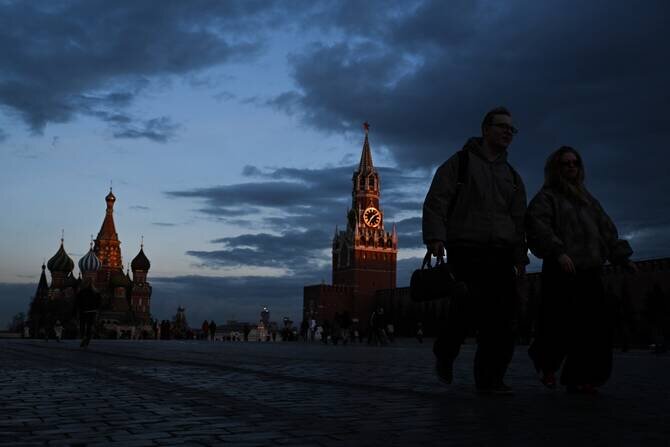
Muscovites Rediscover Russian Roots Amid War in Ukraine
In the midst of Russia's increasing isolation from the West, many Muscovites are seeking comfort and identity by reconnecting with their traditional Russian heritage.
At a cooking school in Moscow, Yulia Fedishova was preparing a "smetannik": a traditional Slavic layer cake with a sour cream topping.
This "Lunch a la Russe" master class is just one example of how many Muscovites are trying to reconnect with their ancestral roots amid the war in Ukraine.
The Kremlin has encouraged this trend as Russia faces deepening isolation from the West.
Yulia, a 27-year-old corporate trainer, explained, "In such troubling times, you want to return to something familiar, to become closer to your roots in order to find calmness and balance".
Before the war, an appreciation for traditional pastimes and cuisine may have been considered provincial in Russia, but now it is gaining popularity.
With limited travel opportunities to Europe and an ultra-patriotic drive from the Kremlin, many Russians are turning towards the tastes and styles of their Tsarist and Cold War-era ancestors.
Village foods like cloudberries and jam made from pine cones are again popular ingredients in Moscow cafes.
Visits to the banya (Russian steam bath) have surged, replacing modern spas.
President Vladimir Putin even noted the resurgence of the kokoshnik, an elaborate traditional Russian headdress.
The Kremlin chief stated, "I've been told that we have a revival of a Russian tradition — young women are going to events, or going out to bars and so on, wearing kokoshniks and traditional Russian outfits".
The drive towards reconnecting with Russia's past comes from both the top and bottom.
While Putin promotes the rejection of Western values, organic and cultural initiatives also arise from below.
Foreign social networks are banned or restricted, independent media have been forced into exile, and Western society is often portrayed as decadent and godless by officials and on state TV. Cultural links with the West have diminished since Russia's military actions in 2022.
There are no direct flights to the West, and obtaining a visa for the EU or the United States has become more complicated.
Natalia, a well-off 39-year-old from Moscow, explained her decision not to travel to Europe anymore: "I don't want to go there anymore," she said, criticizing what she called "passport discrimination".
She added, "I've never supported the West's policy of lumping us all together regardless of our views — just as I've never supported what's happening in our country now".
The shift towards a pro-Russian identity has been significant.
In the early 2010s, two-thirds of Russians described themselves as pro-European.
However, this number has reversed according to Denis Volkov, head of the Levada Center independent pollster.
Nationalism and patriotism are also on the rise.
The proportion who see Russia as "one of the best countries in the world" has more than doubled since the mid-1990s — up from 36 percent to 76 percent.
In fashion, brands have launched collections featuring classic embroidery and floral patterns.
Tvoye brand's "Russian vibes" line, for example, includes prints of babushkas (Russian grandmas) and distinctive Russian window frames on T-shirts.
Interior designer Anna Loseva stated, "This is our new kind of patriotism".
Her clients now prefer authentic items over Western-standardized ones.
The revival of tradition has also been seen in the restaurant industry.
Alexei Kochkarev's OKN restaurant combines the look of an old Orthodox monastery with Scandinavian minimalism.
He explained that this dualism is a response to external pressure and part of a national awakening, yet he believes it is unnecessary to choose between Russia and Europe.
Ultimately, Muscovites are rediscovering their Russian roots in reaction to the current political climate but remain culturally connected to the West.
This "Lunch a la Russe" master class is just one example of how many Muscovites are trying to reconnect with their ancestral roots amid the war in Ukraine.
The Kremlin has encouraged this trend as Russia faces deepening isolation from the West.
Yulia, a 27-year-old corporate trainer, explained, "In such troubling times, you want to return to something familiar, to become closer to your roots in order to find calmness and balance".
Before the war, an appreciation for traditional pastimes and cuisine may have been considered provincial in Russia, but now it is gaining popularity.
With limited travel opportunities to Europe and an ultra-patriotic drive from the Kremlin, many Russians are turning towards the tastes and styles of their Tsarist and Cold War-era ancestors.
Village foods like cloudberries and jam made from pine cones are again popular ingredients in Moscow cafes.
Visits to the banya (Russian steam bath) have surged, replacing modern spas.
President Vladimir Putin even noted the resurgence of the kokoshnik, an elaborate traditional Russian headdress.
The Kremlin chief stated, "I've been told that we have a revival of a Russian tradition — young women are going to events, or going out to bars and so on, wearing kokoshniks and traditional Russian outfits".
The drive towards reconnecting with Russia's past comes from both the top and bottom.
While Putin promotes the rejection of Western values, organic and cultural initiatives also arise from below.
Foreign social networks are banned or restricted, independent media have been forced into exile, and Western society is often portrayed as decadent and godless by officials and on state TV. Cultural links with the West have diminished since Russia's military actions in 2022.
There are no direct flights to the West, and obtaining a visa for the EU or the United States has become more complicated.
Natalia, a well-off 39-year-old from Moscow, explained her decision not to travel to Europe anymore: "I don't want to go there anymore," she said, criticizing what she called "passport discrimination".
She added, "I've never supported the West's policy of lumping us all together regardless of our views — just as I've never supported what's happening in our country now".
The shift towards a pro-Russian identity has been significant.
In the early 2010s, two-thirds of Russians described themselves as pro-European.
However, this number has reversed according to Denis Volkov, head of the Levada Center independent pollster.
Nationalism and patriotism are also on the rise.
The proportion who see Russia as "one of the best countries in the world" has more than doubled since the mid-1990s — up from 36 percent to 76 percent.
In fashion, brands have launched collections featuring classic embroidery and floral patterns.
Tvoye brand's "Russian vibes" line, for example, includes prints of babushkas (Russian grandmas) and distinctive Russian window frames on T-shirts.
Interior designer Anna Loseva stated, "This is our new kind of patriotism".
Her clients now prefer authentic items over Western-standardized ones.
The revival of tradition has also been seen in the restaurant industry.
Alexei Kochkarev's OKN restaurant combines the look of an old Orthodox monastery with Scandinavian minimalism.
He explained that this dualism is a response to external pressure and part of a national awakening, yet he believes it is unnecessary to choose between Russia and Europe.
Ultimately, Muscovites are rediscovering their Russian roots in reaction to the current political climate but remain culturally connected to the West.