A shifting regional order: how Pakistan, Turkey, Saudi Arabia and Egypt are positioning themselves as new geopolitical brokers
A loose four-state coordination framework is emerging amid Middle East conflict dynamics, with mediation efforts, security coordination and energy concerns reshaping regional power balances
A system-driven realignment in Middle Eastern diplomacy is reshaping how regional conflicts are managed, as Pakistan, Turkey, Saudi Arabia and Egypt increasingly coordinate diplomatic initiatives that position them as intermediary powers between rival blocs rather than passive stakeholders.
The emerging structure is not a formal alliance or military pact.
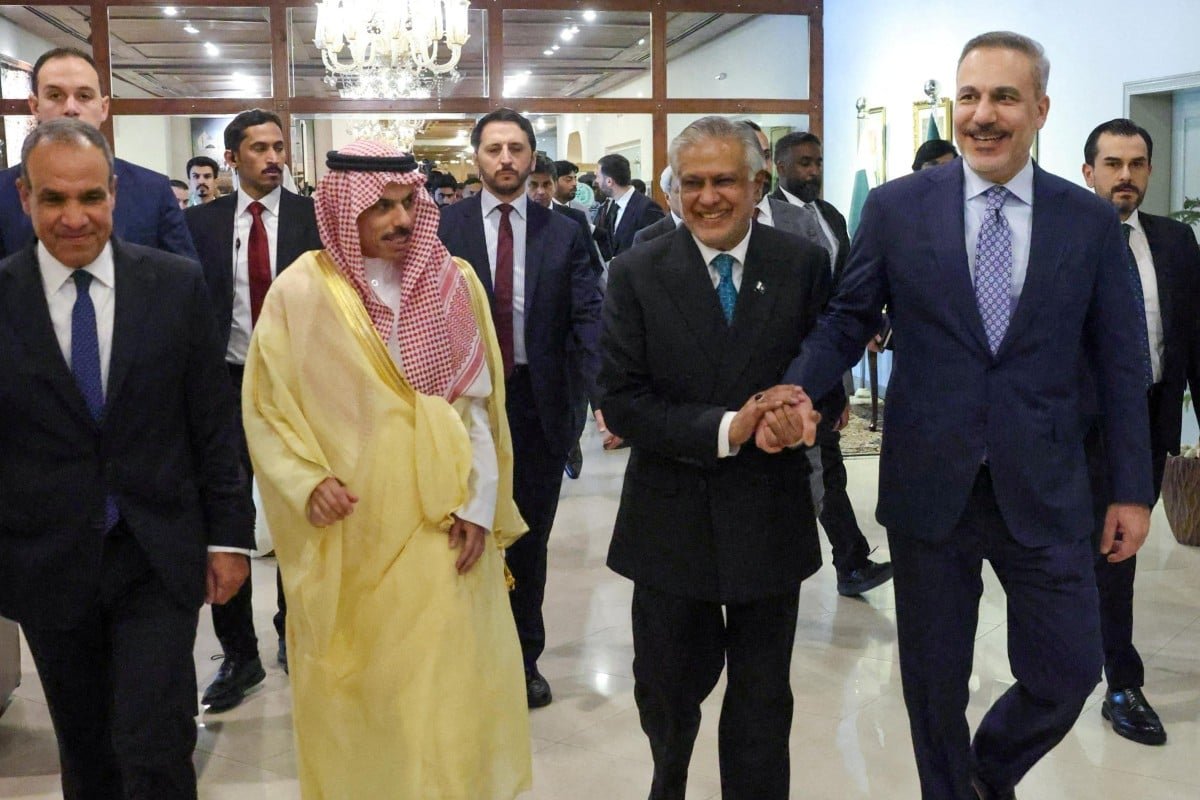
What is confirmed is a pattern of repeated high-level engagement among the four states, including foreign minister-level meetings in Islamabad and parallel diplomatic channels aimed at managing escalation risks tied to the Iran-Israel-US conflict environment.
These engagements have been explicitly framed around de-escalation, maritime security, and post-conflict stabilization rather than ideological alignment.
The most visible development is the creation of an informal coordination mechanism that has repeatedly convened in Pakistan.
These meetings have brought together Turkey’s foreign ministry leadership, Saudi Arabia’s top diplomats, Egypt’s foreign minister, and Pakistani officials in structured talks focused on ceasefire pathways and crisis containment.
The grouping has also explored operational issues such as maritime traffic stability in the Strait of Hormuz, a critical global energy chokepoint, where disruptions have already affected shipping flows and regional insurance costs.
What is confirmed is that these states have begun acting as a collective diplomatic channel between Washington and Tehran in parallel with traditional Western-led frameworks.
Pakistan, in particular, has played a hosting and facilitation role, positioning itself as a neutral venue for indirect communication.
Egypt and Turkey have contributed diplomatic outreach capacity due to their longstanding regional ties, while Saudi Arabia’s participation reflects its central role in Gulf security and energy stability.
The underlying mechanism driving this alignment is strategic hedging.
Each of the four states maintains distinct relationships with the United States, China, and regional rivals such as Iran and Israel.
None is seeking a binding alliance.
Instead, they are increasing diplomatic coordination to reduce exposure to uncontrolled escalation in a region where state-to-state conflict risks have increased since the Gaza war and subsequent regional spillovers.
Saudi Arabia’s role is shaped by its energy dominance and its long-term objective of stabilizing its economic transformation agenda, which depends on predictable regional conditions.
Turkey’s participation reflects its dual positioning as a NATO member and an assertive regional actor with influence in Syria, the Caucasus, and parts of North Africa.
Egypt contributes geographic leverage through control of the Suez Canal corridor and its traditional role in Arab diplomacy.
Pakistan adds nuclear deterrence status and proximity to both Gulf energy markets and Iranian strategic depth.
The stakes of this coordination are significant because it reflects a partial vacuum in traditional crisis management structures.
The United States remains the primary external security guarantor in the region, but its partners are increasingly attempting to construct supplementary diplomatic mechanisms that can respond faster to regional shocks and reduce reliance on external intervention.
This does not replace existing alliances but adds a parallel layer of negotiation capacity.
At the same time, the emerging framework is fragile.
The participating states do not share a unified security doctrine, and their bilateral relationships have historically fluctuated between cooperation and competition.
Turkey and Egypt only recently restored full diplomatic normalization after years of tension.
Saudi Arabia’s regional priorities do not always align with Pakistan’s security concerns.
These internal divergences limit institutional depth.
The immediate consequences are already visible in the form of expanded diplomatic traffic, coordinated statements on de-escalation, and joint calls for managing maritime risk in energy corridors.
If sustained, this pattern could gradually formalize into a recurring consultation mechanism for regional crises, particularly those involving Gulf security, Iran-related escalation cycles, and post-conflict reconstruction planning.
For now, the development signals not a new alliance but a recalibration of influence: regional powers increasingly acting as first responders to instability in their own neighborhood, shaping negotiations before external actors fully engage.
The emerging structure is not a formal alliance or military pact.
What is confirmed is a pattern of repeated high-level engagement among the four states, including foreign minister-level meetings in Islamabad and parallel diplomatic channels aimed at managing escalation risks tied to the Iran-Israel-US conflict environment.
These engagements have been explicitly framed around de-escalation, maritime security, and post-conflict stabilization rather than ideological alignment.
The most visible development is the creation of an informal coordination mechanism that has repeatedly convened in Pakistan.
These meetings have brought together Turkey’s foreign ministry leadership, Saudi Arabia’s top diplomats, Egypt’s foreign minister, and Pakistani officials in structured talks focused on ceasefire pathways and crisis containment.
The grouping has also explored operational issues such as maritime traffic stability in the Strait of Hormuz, a critical global energy chokepoint, where disruptions have already affected shipping flows and regional insurance costs.
What is confirmed is that these states have begun acting as a collective diplomatic channel between Washington and Tehran in parallel with traditional Western-led frameworks.
Pakistan, in particular, has played a hosting and facilitation role, positioning itself as a neutral venue for indirect communication.
Egypt and Turkey have contributed diplomatic outreach capacity due to their longstanding regional ties, while Saudi Arabia’s participation reflects its central role in Gulf security and energy stability.
The underlying mechanism driving this alignment is strategic hedging.
Each of the four states maintains distinct relationships with the United States, China, and regional rivals such as Iran and Israel.
None is seeking a binding alliance.
Instead, they are increasing diplomatic coordination to reduce exposure to uncontrolled escalation in a region where state-to-state conflict risks have increased since the Gaza war and subsequent regional spillovers.
Saudi Arabia’s role is shaped by its energy dominance and its long-term objective of stabilizing its economic transformation agenda, which depends on predictable regional conditions.
Turkey’s participation reflects its dual positioning as a NATO member and an assertive regional actor with influence in Syria, the Caucasus, and parts of North Africa.
Egypt contributes geographic leverage through control of the Suez Canal corridor and its traditional role in Arab diplomacy.
Pakistan adds nuclear deterrence status and proximity to both Gulf energy markets and Iranian strategic depth.
The stakes of this coordination are significant because it reflects a partial vacuum in traditional crisis management structures.
The United States remains the primary external security guarantor in the region, but its partners are increasingly attempting to construct supplementary diplomatic mechanisms that can respond faster to regional shocks and reduce reliance on external intervention.
This does not replace existing alliances but adds a parallel layer of negotiation capacity.
At the same time, the emerging framework is fragile.
The participating states do not share a unified security doctrine, and their bilateral relationships have historically fluctuated between cooperation and competition.
Turkey and Egypt only recently restored full diplomatic normalization after years of tension.
Saudi Arabia’s regional priorities do not always align with Pakistan’s security concerns.
These internal divergences limit institutional depth.
The immediate consequences are already visible in the form of expanded diplomatic traffic, coordinated statements on de-escalation, and joint calls for managing maritime risk in energy corridors.
If sustained, this pattern could gradually formalize into a recurring consultation mechanism for regional crises, particularly those involving Gulf security, Iran-related escalation cycles, and post-conflict reconstruction planning.
For now, the development signals not a new alliance but a recalibration of influence: regional powers increasingly acting as first responders to instability in their own neighborhood, shaping negotiations before external actors fully engage.