Thailand Cancels 25-Year-Old Agreement with Cambodia on Joint Energy Exploration
Thailand's decision to scrap the 2001 agreement follows two rounds of armed conflict last year and is part of Prime Minister Anutin Charnvirakul's election campaign pledge.
Bangkok, Thailand – On Tuesday, Thailand terminated a 25-year-old agreement with Cambodia for joint offshore energy exploration.
The Thai cabinet's decision to cancel the 2001 Memorandum of Understanding (MOU) 44, which aimed to develop a framework for hydrocarbon exploration in overlapping areas of the Gulf of Thailand, has been anticipated and follows two rounds of armed conflict between the countries last year.
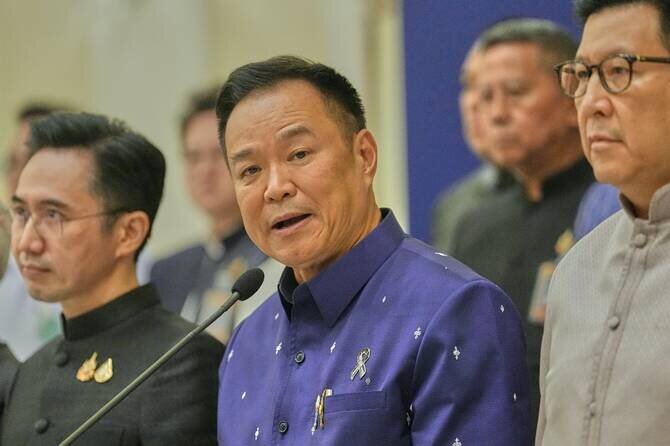
According to Prime Minister Anutin Charnvirakul, the cancellation is not related to border conflicts but rather a long-overdue policy move.
He emphasized that no progress had been made on the agreement in 25 years.
Cambodia's government has yet to comment on Thailand's announcement.
Phnom Penh previously expressed regret over Thailand's plan to withdraw unilaterally from the MOU and reaffirmed its commitment to it.
Despite multiple meetings, little progress has been achieved under MOU 44 due to political instability in Thailand, ongoing disputes between the two nations, and opposition from Thai nationalists.
The agreement proposed a dual-track approach, allowing for joint exploration of offshore oil and gas while parallel negotiations on formal demarcation took place.
Thai officials now intend to rely on the UN Convention on the Law of the Sea (UNCLOS) for future negotiations.
A ceasefire has been in effect since late December after two rounds of clashes along their 817-km border, resulting in nearly 150 deaths and the displacement of hundreds of thousands of people.
Each side blames the other for triggering these conflicts.
The Thai cabinet's decision to cancel the 2001 Memorandum of Understanding (MOU) 44, which aimed to develop a framework for hydrocarbon exploration in overlapping areas of the Gulf of Thailand, has been anticipated and follows two rounds of armed conflict between the countries last year.
According to Prime Minister Anutin Charnvirakul, the cancellation is not related to border conflicts but rather a long-overdue policy move.
He emphasized that no progress had been made on the agreement in 25 years.
Cambodia's government has yet to comment on Thailand's announcement.
Phnom Penh previously expressed regret over Thailand's plan to withdraw unilaterally from the MOU and reaffirmed its commitment to it.
Despite multiple meetings, little progress has been achieved under MOU 44 due to political instability in Thailand, ongoing disputes between the two nations, and opposition from Thai nationalists.
The agreement proposed a dual-track approach, allowing for joint exploration of offshore oil and gas while parallel negotiations on formal demarcation took place.
Thai officials now intend to rely on the UN Convention on the Law of the Sea (UNCLOS) for future negotiations.
A ceasefire has been in effect since late December after two rounds of clashes along their 817-km border, resulting in nearly 150 deaths and the displacement of hundreds of thousands of people.
Each side blames the other for triggering these conflicts.