Taiwan Independence: President Lai Ching-te's Stance on Sovereignty
President Lai Ching-te reiterates that 'Taiwan independence' means the island is not subordinate to Beijing and its future must be decided by its people.
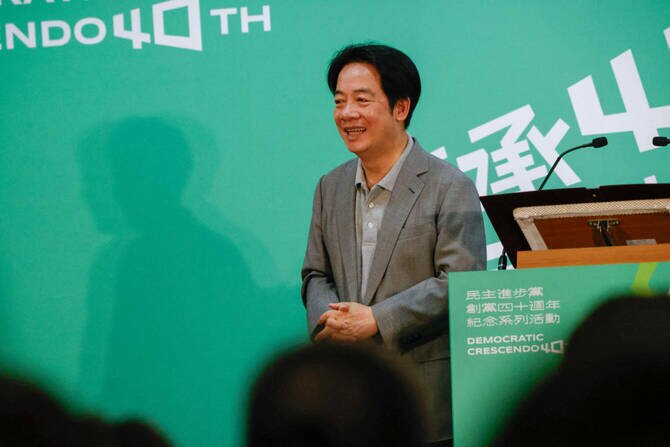
In a recent address in Taipei, President Lai Ching-te of Taiwan elaborated on what he described as the straightforward concept of 'Taiwan independence.' He emphasized that this term signifies the island's distinct sovereignty, independent from any claims made by Beijing.
The Democratic Progressive Party (DPP), under whose leadership Lai serves, passed a resolution in 1999 affirming that Taiwan is already an independent sovereign entity known as the Republic of China.
This stance asserts that Taiwan's autonomy cannot be infringed upon or annexed, and its future must be determined by the Taiwanese people alone.
Lai clarified that 'Taiwan independence' unequivocally means that Taiwan does not belong to nor recognize the authority of the People's Republic of China.
Furthermore, he highlighted the historical fact that the defeated Republic of China government established itself in Taiwan in 1949 following a civil war with the Communists who formed the People’s Republic of China.
President Lai also underscored the inclusive nature of the Republic of China, which encompasses not just Taiwan but also the outlying islands of Penghu, Kinmen, and Matsu.
These territories have become integrally tied to Taiwan over decades, he argued, making any distinction between them arbitrary.
The statement by President Lai comes amid growing tensions concerning Taiwan's international status, especially in light of recent high-level diplomatic engagements, including a meeting between U.S. President Donald Trump and Chinese leader Xi Jinping that raised questions about potential shifts in U.S. support for the island.
Despite these uncertainties, Lai maintained a firm stance on the sovereignty of Taiwan, reinforcing the belief among Taiwanese citizens that their destiny should be determined by themselves alone.
The Democratic Progressive Party (DPP), under whose leadership Lai serves, passed a resolution in 1999 affirming that Taiwan is already an independent sovereign entity known as the Republic of China.
This stance asserts that Taiwan's autonomy cannot be infringed upon or annexed, and its future must be determined by the Taiwanese people alone.
Lai clarified that 'Taiwan independence' unequivocally means that Taiwan does not belong to nor recognize the authority of the People's Republic of China.
Furthermore, he highlighted the historical fact that the defeated Republic of China government established itself in Taiwan in 1949 following a civil war with the Communists who formed the People’s Republic of China.
President Lai also underscored the inclusive nature of the Republic of China, which encompasses not just Taiwan but also the outlying islands of Penghu, Kinmen, and Matsu.
These territories have become integrally tied to Taiwan over decades, he argued, making any distinction between them arbitrary.
The statement by President Lai comes amid growing tensions concerning Taiwan's international status, especially in light of recent high-level diplomatic engagements, including a meeting between U.S. President Donald Trump and Chinese leader Xi Jinping that raised questions about potential shifts in U.S. support for the island.
Despite these uncertainties, Lai maintained a firm stance on the sovereignty of Taiwan, reinforcing the belief among Taiwanese citizens that their destiny should be determined by themselves alone.